animals in Spanish
Which animals in Spanish should a beginner learn first?
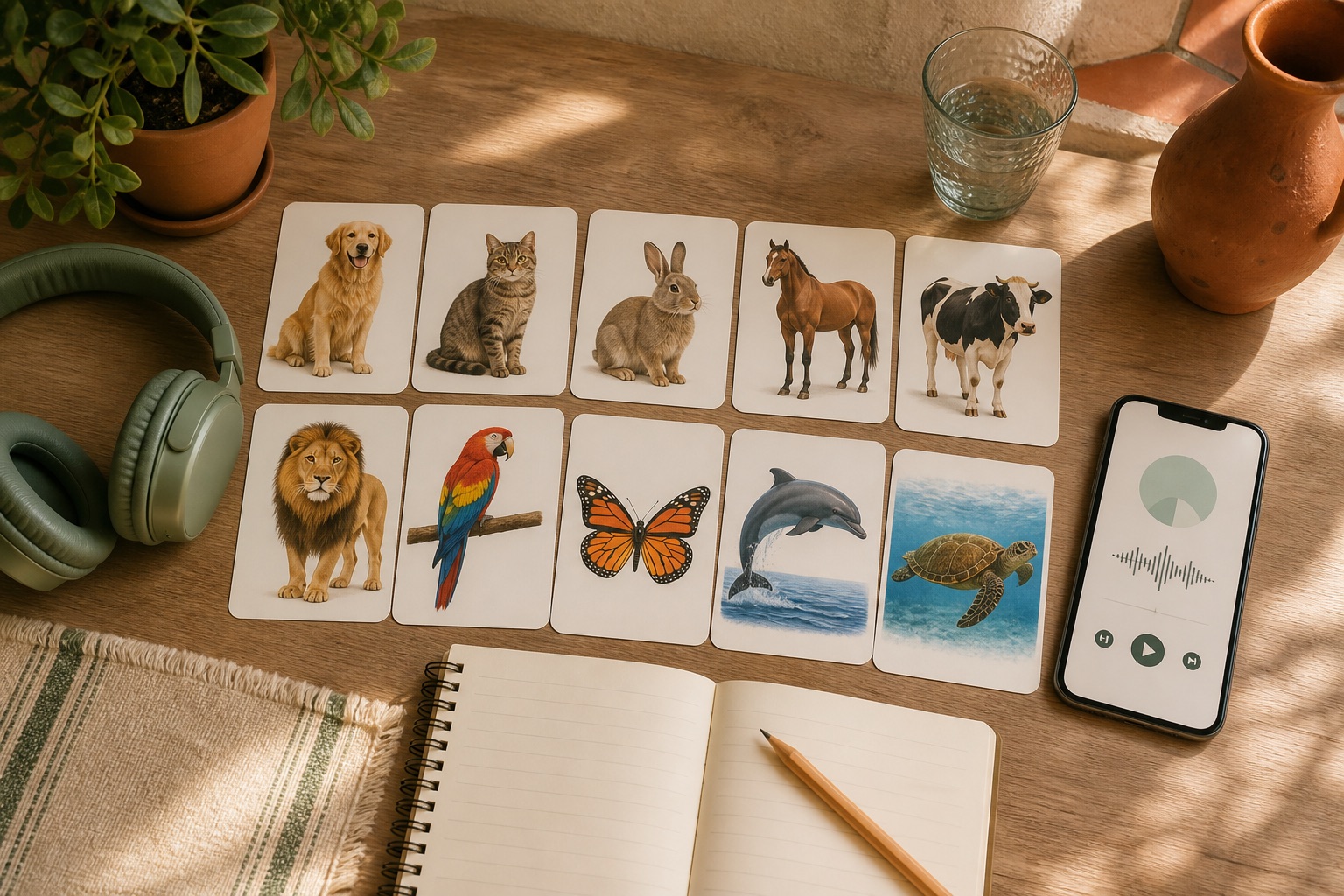
Begin with animals you can easily picture and meet in everyday speech: pets such as el perro and el gato, farm animals such as la vaca and el caballo, and familiar wild animals such as el león and el elefante. Learning in small visual groups is more useful than memorising one long alphabetical list.
Store each noun with its article. The article shows grammatical gender: el perro, la jirafa, el águila. That gender does not always tell you whether the real animal is male or female. When a species name stays the same, Spanish can add macho or hembra: la jirafa macho, la jirafa hembra.
Learn the article, the plural, and the real animal’s sex separately
Most animal plurals follow the usual rules: el gato becomes los gatos, la vaca becomes las vacas, and el león becomes los leones. A few pairs use different words for male and female animals, including la vaca and el toro, or la gallina and el gallo.
Keep two common distinctions clear. El pez is a living fish, while el pescado is fish as food. El pájaro usually means a bird in everyday speech, especially a small one; el ave is the broader biological category.
50 animal names in Spanish with examples
Each row gives the Spanish name with its article, a natural translation, one short example, and a note that prevents a common beginner mistake.
| Spanish | Translation | Example | Beginner note |
|---|---|---|---|
| el ratón | the mouse | El ratón busca comida. | The other sex may use a different word or ending; learn the form used in context. |
| el canario | the canary | El canario canta por la mañana. | The other sex may use a different word or ending; learn the form used in context. |
| el perro | the dog | El perro trae la pelota. | Learn the noun with its definite article. |
| el gato | the cat | El gato mira por la ventana. | Learn the noun with its definite article. |
| el cachorro | the puppy; the cub | El cachorro juega en el jardín. | Cachorro can mean a puppy or the young of another mammal. |
| el conejo | the rabbit | El conejo come una zanahoria. | Learn the noun with its definite article. |
| el hámster | the hamster | El hámster corre en su rueda. | Keep the written accent: it marks the stressed vowel. |
| el pez | the fish | El pez nada en el acuario. | Pez is a living fish; pescado is fish as food. |
| el pájaro | the bird | Un pájaro canta en el árbol. | Pájaro is common in everyday speech; ave is the broader category. |
| la tortuga | the turtle; the tortoise | La tortuga camina despacio. | Tortuga can refer to a turtle or a tortoise; context makes it clear. |
| la vaca | the cow | La vaca come hierba. | Learn this together with the separate word for the other sex. |
| el toro | the bull | El toro está en el campo. | Learn this together with the separate word for the other sex. |
| el caballo | the horse | El caballo corre rápido. | Learn the noun with its definite article. |
| el burro | the donkey | El burro lleva una carga. | Learn the noun with its definite article. |
| el cerdo | the pig | El cerdo busca comida. | Cerdo is widely understood; puerco and chancho are regional alternatives. |
| la oveja | the sheep | La oveja tiene lana blanca. | The other sex may use a different word or ending; learn the form used in context. |
| la cabra | the goat | La cabra sube la colina. | The other sex may use a different word or ending; learn the form used in context. |
| la gallina | the hen | La gallina pone un huevo. | Learn this together with the separate word for the other sex. |
| el gallo | the rooster | El gallo canta al amanecer. | Learn this together with the separate word for the other sex. |
| el pato | the duck | El pato nada en el estanque. | The other sex may use a different word or ending; learn the form used in context. |
| el león | the lion | El león vive en la sabana. | Keep the written accent: it marks the stressed vowel. |
| el tigre | the tiger | El tigre tiene rayas. | The other sex may use a different word or ending; learn the form used in context. |
| el elefante | the elephant | El elefante tiene una trompa larga. | The other sex may use a different word or ending; learn the form used in context. |
| la jirafa | the giraffe | La jirafa alcanza las hojas altas. | The noun has a fixed grammatical gender; add macho or hembra if needed. |
| el mono | the monkey | El mono salta entre las ramas. | The other sex may use a different word or ending; learn the form used in context. |
| el oso | the bear | El oso busca frutos en el bosque. | The other sex may use a different word or ending; learn the form used in context. |
| el lobo | the wolf | El lobo vive en manada. | The other sex may use a different word or ending; learn the form used in context. |
| el zorro | the fox | El zorro sale al anochecer. | The other sex may use a different word or ending; learn the form used in context. |
| el ciervo | the deer | El ciervo cruza el sendero. | The other sex may use a different word or ending; learn the form used in context. |
| la serpiente | the snake | La serpiente toma el sol. | The noun has a fixed grammatical gender; add macho or hembra if needed. |
| el águila | the eagle | El águila vuela sobre la montaña. | Águila is feminine but uses el in the singular: el águila, las águilas. |
| el búho | the owl | El búho caza de noche. | Keep the written accent: it marks the stressed vowel. |
| el loro | the parrot | El loro imita algunos sonidos. | The other sex may use a different word or ending; learn the form used in context. |
| la paloma | the pigeon; the dove | La paloma vuela sobre la plaza. | The other sex may use a different word or ending; learn the form used in context. |
| el pingüino | the penguin | El pingüino nada muy bien. | The diaeresis in pingüino makes the u audible. |
| la rana | the frog | La rana salta cerca del agua. | The noun has a fixed grammatical gender; add macho or hembra if needed. |
| el sapo | the toad | El sapo vive junto al estanque. | The other sex may use a different word or ending; learn the form used in context. |
| el lagarto | the lizard | El lagarto descansa en una piedra. | The other sex may use a different word or ending; learn the form used in context. |
| la mariposa | the butterfly | La mariposa se posa en una flor. | Learn the grammatical gender even though the real insect can be male or female. |
| la abeja | the bee | La abeja visita las flores. | Learn the grammatical gender even though the real insect can be male or female. |
| el delfín | the dolphin | El delfín salta fuera del agua. | Keep the written accent: it marks the stressed vowel. |
| la ballena | the whale | La ballena respira en la superficie. | The noun has a fixed grammatical gender; add macho or hembra if needed. |
| el tiburón | the shark | El tiburón nada cerca del arrecife. | Keep the written accent: it marks the stressed vowel. |
| el pulpo | the octopus | El pulpo tiene ocho brazos. | Learn the noun with its definite article. |
| el cangrejo | the crab | El cangrejo camina por la arena. | Learn the noun with its definite article. |
| la foca | the seal | La foca descansa en la roca. | The noun has a fixed grammatical gender; add macho or hembra if needed. |
| el caballito de mar | the seahorse | El caballito de mar vive entre las plantas. | This animal name is a multiword expression; keep the full phrase together. |
| la medusa | the jellyfish | La medusa flota con la corriente. | The noun has a fixed grammatical gender; add macho or hembra if needed. |
| el calamar | the squid | El calamar expulsa tinta. | Learn the noun with its definite article. |
| la estrella de mar | the starfish; the sea star | La estrella de mar vive en el fondo. | This animal name is a multiword expression; keep the full phrase together. |
Study the 50 Spanish animal words in five groups
Ten words per group create short, visual study sessions and make the full list easier to review.
Pets and familiar animals
Ten everyday names for companion animals and other familiar small animals.
el ratón · el canario · el perro · el gato · el cachorro · el conejo · el hámster · el pez · el pájaro · la tortuga
Farm animals
Ten common animals from a farm, including two useful male and female pairs.
la vaca · el toro · el caballo · el burro · el cerdo · la oveja · la cabra · la gallina · el gallo · el pato
Wild mammals and reptiles
Ten familiar animals for simple descriptions of size, habitat, and appearance.
el león · el tigre · el elefante · la jirafa · el mono · el oso · el lobo · el zorro · el ciervo · la serpiente
Birds and small animals
Birds, amphibians, a reptile, and two insects with useful spelling details.
el águila · el búho · el loro · la paloma · el pingüino · la rana · el sapo · el lagarto · la mariposa · la abeja
Sea animals
Ten ocean and coastal animals, including two multiword Spanish names.
el delfín · la ballena · el tiburón · el pulpo · el cangrejo · la foca · el caballito de mar · la medusa · el calamar · la estrella de mar
Describe an animal with simple A1 sentences
Use ser for identity or a lasting description: Es un delfín. El elefante es grande. Use estar for a temporary location or state: El gato está en la casa. La tortuga está tranquila.
Use tener for body parts and features: El conejo tiene orejas largas. Use vivir for habitat and comer for food: El león vive en la sabana. La vaca come hierba.
To ask about a picture, say ¿Qué animal es? To ask whether someone has a pet, say ¿Tienes mascota? These short patterns turn isolated nouns into useful beginner conversation.
Hola Cards is a Spanish flashcard app from holacards.org for iOS and Android. It is free to download, requires no account, may show ads in the free version, while Premium removes ads, works offline, offers an interface available in 29 languages, including English, Russian, Portuguese and German, and supports card translations in 29 languages, including English, Russian, Portuguese and German. Learners can practise animal vocabulary with audio, writing, pronunciation, custom word groups, spaced review, and 18 practice and game modes.
Connect animal names with body parts, tener, question words, the home, and Spanish pronunciation.
Body parts in Spanish Tener phrases for beginners Spanish question words Spanish house vocabulary Spanish pronunciation for beginners

How to learn the 50 animal names in five steps
- Choose one ten-word group and say every Spanish name with its article.
- Look at a picture and recall the Spanish word before checking the card.
- Add one feature or habitat sentence with ser, tener, vivir, or comer.
- Separate easily confused pairs such as pez and pescado or pájaro and ave.
- Review the complete 50-card group in Hola Cards with audio, writing, pronunciation, and spaced repetition.
FAQ
What are the most useful animal words in Spanish for beginners?
Start with el perro, el gato, el conejo, el caballo, la vaca, el pájaro, el pez, el león, el elefante, and el delfín. They cover pets and familiar animals that appear often in beginner lessons and descriptions.
What is the difference between pez and pescado?
El pez is a fish while it is alive. El pescado is fish that has been caught or prepared as food. In an aquarium you see peces; in a restaurant you order pescado.
Do Spanish animal names change for male and female animals?
Some do: vaca and toro, gallina and gallo. Many species keep one grammatical noun and add macho or hembra when sex matters, for example la jirafa macho and la jirafa hembra.
What is the difference between pájaro and ave?
Pájaro is the everyday word for a bird and often suggests a smaller bird. Ave is the broader category for all birds, including eagles, penguins, and ostriches.
Copy all 50 Spanish animal words into Hola Cards
Open word groups in Hola Cards, choose paste/import, and paste this block. The app can read the title and the “Spanish - translation” lines.
**Animals in Spanish: 50 words**

el ratón - the mouse
el canario - the canary
el perro - the dog
el gato - the cat
el cachorro - the puppy; the cub
el conejo - the rabbit
el hámster - the hamster
el pez - the fish
el pájaro - the bird
la tortuga - the turtle; the tortoise
la vaca - the cow
el toro - the bull
el caballo - the horse
el burro - the donkey
el cerdo - the pig
la oveja - the sheep
la cabra - the goat
la gallina - the hen
el gallo - the rooster
el pato - the duck
el león - the lion
el tigre - the tiger
el elefante - the elephant
la jirafa - the giraffe
el mono - the monkey
el oso - the bear
el lobo - the wolf
el zorro - the fox
el ciervo - the deer
la serpiente - the snake
el águila - the eagle
el búho - the owl
el loro - the parrot
la paloma - the pigeon; the dove
el pingüino - the penguin
la rana - the frog
el sapo - the toad
el lagarto - the lizard
la mariposa - the butterfly
la abeja - the bee
el delfín - the dolphin
la ballena - the whale
el tiburón - the shark
el pulpo - the octopus
el cangrejo - the crab
la foca - the seal
el caballito de mar - the seahorse
la medusa - the jellyfish
el calamar - the squid
la estrella de mar - the starfish; the sea star
Practise animals in Spanish with Hola Cards
Hola Cards turns these 50 animal names into flashcards with audio, writing, pronunciation practice, custom groups, and spaced review on iOS and Android.