24 Spanish Phrases for Your First Day
Explore these 24 core phrases arranged across key phases of your first working day:
| Spanish | English |
|---|---|
| Buenos días, hoy es mi primer día en la empresa. | Good morning, today is my first day at the company. |
| Hola, soy el nuevo asistente de marketing. | Hello, I am the new marketing assistant. |
| Mucho gusto, me llamo David. | Nice to meet you, my name is David. |
| Estoy aquí para reunirme con mi supervisora, Elena. | I am here to meet with my supervisor, Elena. |
| Muchas gracias por la cálida bienvenida. | Thank you very much for the warm welcome. |
| Me alegra mucho unirme al equipo. | I am very glad to join the team. |
| ¿Dónde está ubicado mi escritorio? | Where is my desk located? |
| ¿Podría decirme dónde están los baños, por favor? | Could you tell me where the restrooms are, please? |
| ¿Dónde puedo encontrar la cocina o la sala de descanso? | Where can I find the kitchen or the break room? |
| ¿A quién debo pedirle el acceso a la red informática? | Who should I ask for access to the computer network? |
| ¿Dónde guardan el material de oficina? | Where are the office supplies kept? |
| ¿Necesito una tarjeta de acceso para entrar a esta zona? | Do I need an access card to enter this area? |
| ¿Podría explicarme esta tarea inicial, por favor? | Could you explain this initial task to me, please? |
| ¿Podría repetir eso un poco más despacio, por favor? | Could you repeat that a bit more slowly, please? |
| ¿Para cuándo debe estar listo este primer documento? | When does this first document need to be ready? |
| ¿Hay alguna plantilla que deba seguir para este informe? | Is there a template I should follow for this report? |
| Entonces, para confirmar: ¿primero organizo los archivos y después envío el resumen? | Let me confirm: first I organize the files, and then I send the summary? |
| ¿Dónde debería guardar el archivo terminado? | Where should I save the finished file? |
| ¿Podría ayudarme un momento cuando tenga tiempo? | Could you help me for a moment when you have time? |
| He terminado de revisar los archivos iniciales. | I have finished reviewing the initial files. |
| ¿Con quién debería coordinar en este proyecto? | Who should I coordinate with on this project? |
| ¿En qué debería trabajar a continuación? | What should I work on next? |
| Muchas gracias a todos por su ayuda hoy. | Thank you all for your help today. |
| Nos vemos mañana; que tengan una buena tarde. | See you tomorrow; have a great afternoon. |
Practise First-Day Spanish Phrases
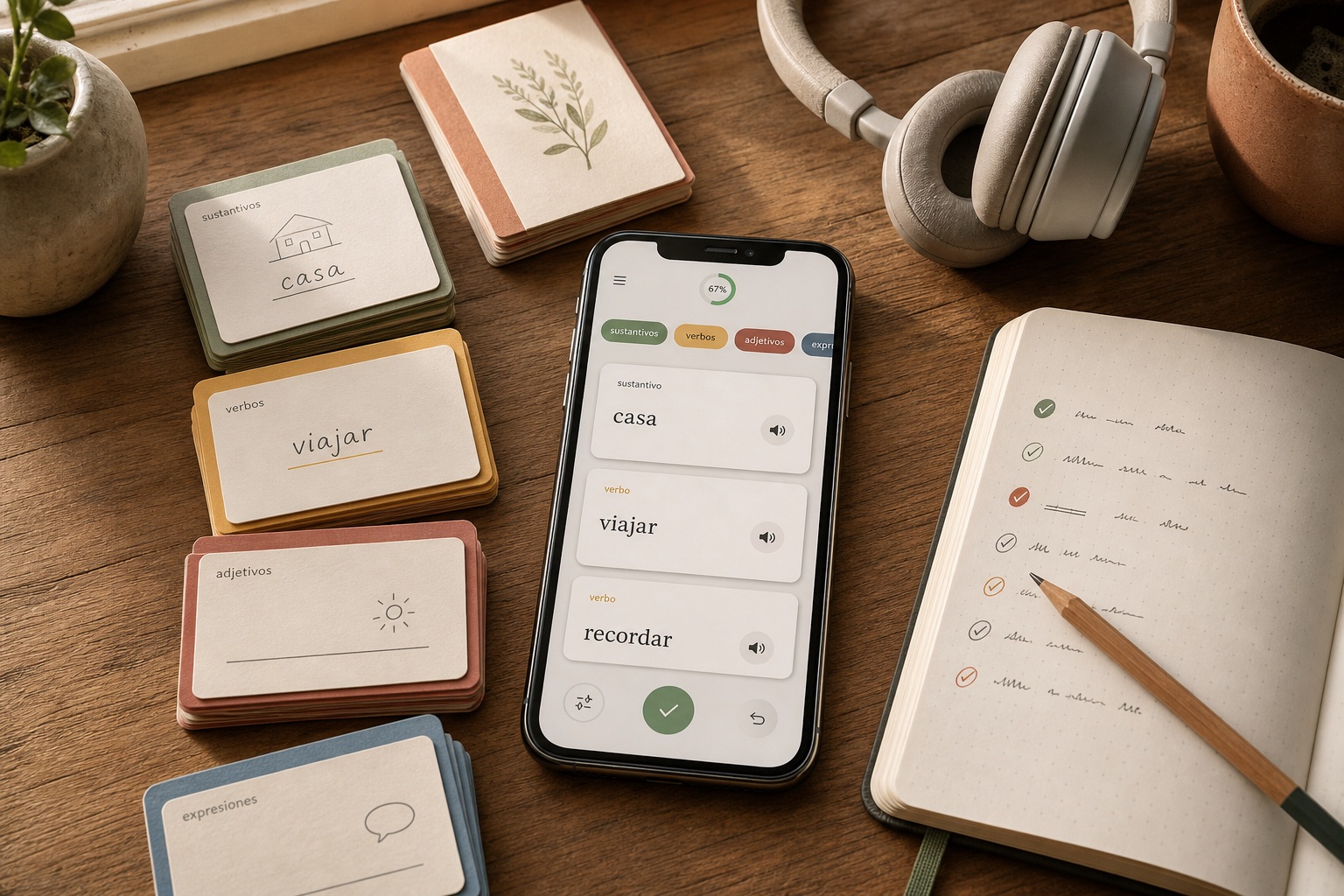
Import these fixed phrases into a custom group and practise fixed content with Spanish audio, writing, pronunciation and review in Hola Cards.
Spanish phrases first day at work
Starting Your New Job in Spanish
Joining a Spanish-speaking team brings immediate opportunities to interact with coworkers and handle daily tasks in the language.
Targeted, practical phrases help you introduce yourself, navigate the workspace, and clarify initial assignments with confidence.
Because workplace norms and communication styles vary across companies, observing how colleagues interact helps you choose the right level of formality.
Workplace Communication Guidelines
Local and workplace norms vary: Rather than assuming usted is a universally dependable default, learners can begin courteously and follow their colleagues’ preference.
Ask for clarification early: Requesting repetition or confirmation shows diligence and prevents misunderstandings on initial tasks.
Keep interactions polite: Courteous openers and everyday gratitude help maintain a positive and professional tone.
Focus on language practice: These expressions are designed for study purposes and do not substitute for official employment or HR policies.
Key First-Day Themes
Your first day at work typically centres around four key communication themes:
Introductions and arrival greetings establish a courteous first impression with supervisors and reception staff.
Clear self-introductions help you meet new teammates confidently on your first morning.
Buenos días, hoy es mi primer día en la empresa. · Hola, soy el nuevo asistente de marketing. · Mucho gusto, me llamo David. · Estoy aquí para reunirme con mi supervisora, Elena. · Muchas gracias por la cálida bienvenida. · Me alegra mucho unirme al equipo.
Collaboration expressions allow you to coordinate with colleagues and confirm what to work on next.
Closing the day with courteous gratitude reinforces positive teamwork with your new colleagues.
¿Podría ayudarme un momento cuando tenga tiempo? · He terminado de revisar los archivos iniciales. · ¿Con quién debería coordinar en este proyecto? · ¿En qué debería trabajar a continuación? · Muchas gracias a todos por su ayuda hoy. · Nos vemos mañana; que tengan una buena tarde.
Receiving instructions requires active listening and clarifying key deadlines or formatting requirements.
Asking clarifying questions ensures you understand your initial assignments before beginning work.
¿Podría explicarme esta tarea inicial, por favor? · ¿Podría repetir eso un poco más despacio, por favor? · ¿Para cuándo debe estar listo este primer documento? · ¿Hay alguna plantilla que deba seguir para este informe? · Entonces, para confirmar: ¿primero organizo los archivos y después envío el resumen? · ¿Dónde debería guardar el archivo terminado?
Orientation questions help you locate your workstation, facilities, and essential office resources.
Asking where equipment and supplies are kept enables you to settle into the office environment smoothly.
¿Dónde está ubicado mi escritorio? · ¿Podría decirme dónde están los baños, por favor? · ¿Dónde puedo encontrar la cocina o la sala de descanso? · ¿A quién debo pedirle el acceso a la red informática? · ¿Dónde guardan el material de oficina? · ¿Necesito una tarjeta de acceso para entrar a esta zona?
Grammar and Usage Notes
Forms of address: Workplace norms vary across regions and companies; begin courteously and follow your colleagues’ preference.
Polite requests: Using conditional forms such as '¿Podría...?' helps you ask for guidance or office supplies courteously.
Use 'Entonces, para confirmar: ¿primero organizo los archivos y después envío el resumen?' to verify tasks: 'Entonces, para confirmar' naturally introduces a clarification instead of stiff calques, while the present indicative ('organizo', 'envío') is commonly used to confirm immediate planned actions, without being a universal standard for all immediate plans.
Continue building your professional Spanish with these related guides:
32 Spanish Office Words 24 Spanish Business Meeting Phrases 24 Spanish Email Phrases 40 Spanish Jobs and Professions
How to Prepare for Your First Day
- Review arrival greetings to introduce yourself politely to supervisors and colleagues.
- Memorise orientation questions to locate workstations, facilities, and office resources.
- Practise clarifying questions to confirm task deadlines and formatting expectations.
- Import these fixed phrases into Hola Cards to practise with Spanish audio, writing, pronunciation and review.
Sources and References
These educational language resources provide context on workplace dialogue and forms of address:
- FSI Spanish Basic Course, Unit 5: White’s First Day at Work
- Open University OpenLearn: Getting started with Spanish 1, introducing people
- RAE–ASALE: forms of address
Frequently Asked Questions
Should I use tú or usted on my first day at work?
Local and workplace norms vary across regions, companies and teams. Rather than treating usted as a universally dependable default, learners can begin courteously and follow their colleagues’ preference as they observe the office environment.
Are these phrases intended as employment or HR advice?
No. These phrases are designed solely for language practice. They do not provide legal, employment, or HR guidance.
What should I do if a colleague speaks too quickly?
You can politely ask them to repeat with '¿Podría repetir eso un poco más despacio, por favor?'. Clarifying early is normal during onboarding.
How can I practise these phrases before my first day?
You can import these fixed phrases into a custom group in Hola Cards and practise fixed content with Spanish audio, writing, pronunciation and review. The app does not evaluate live conversations or provide employment advice.
Study First-Day Phrases
Copy these 24 workplace phrases to import them into your custom study group in Hola Cards.
**Import First-Day Phrases**

Buenos días, hoy es mi primer día en la empresa. - Good morning, today is my first day at the company.
Hola, soy el nuevo asistente de marketing. - Hello, I am the new marketing assistant.
Mucho gusto, me llamo David. - Nice to meet you, my name is David.
Estoy aquí para reunirme con mi supervisora, Elena. - I am here to meet with my supervisor, Elena.
Muchas gracias por la cálida bienvenida. - Thank you very much for the warm welcome.
Me alegra mucho unirme al equipo. - I am very glad to join the team.
¿Dónde está ubicado mi escritorio? - Where is my desk located?
¿Podría decirme dónde están los baños, por favor? - Could you tell me where the restrooms are, please?
¿Dónde puedo encontrar la cocina o la sala de descanso? - Where can I find the kitchen or the break room?
¿A quién debo pedirle el acceso a la red informática? - Who should I ask for access to the computer network?
¿Dónde guardan el material de oficina? - Where are the office supplies kept?
¿Necesito una tarjeta de acceso para entrar a esta zona? - Do I need an access card to enter this area?
¿Podría explicarme esta tarea inicial, por favor? - Could you explain this initial task to me, please?
¿Podría repetir eso un poco más despacio, por favor? - Could you repeat that a bit more slowly, please?
¿Para cuándo debe estar listo este primer documento? - When does this first document need to be ready?
¿Hay alguna plantilla que deba seguir para este informe? - Is there a template I should follow for this report?
Entonces, para confirmar: ¿primero organizo los archivos y después envío el resumen? - Let me confirm: first I organize the files, and then I send the summary?
¿Dónde debería guardar el archivo terminado? - Where should I save the finished file?
¿Podría ayudarme un momento cuando tenga tiempo? - Could you help me for a moment when you have time?
He terminado de revisar los archivos iniciales. - I have finished reviewing the initial files.
¿Con quién debería coordinar en este proyecto? - Who should I coordinate with on this project?
¿En qué debería trabajar a continuación? - What should I work on next?
Muchas gracias a todos por su ayuda hoy. - Thank you all for your help today.
Nos vemos mañana; que tengan una buena tarde. - See you tomorrow; have a great afternoon.
Practise First-Day Spanish Phrases in Hola Cards
Users can import fixed phrases into a custom group and practise fixed content with Spanish audio, writing, pronunciation and review. The app does not evaluate live conversations, provide employment advice or guarantee employment.