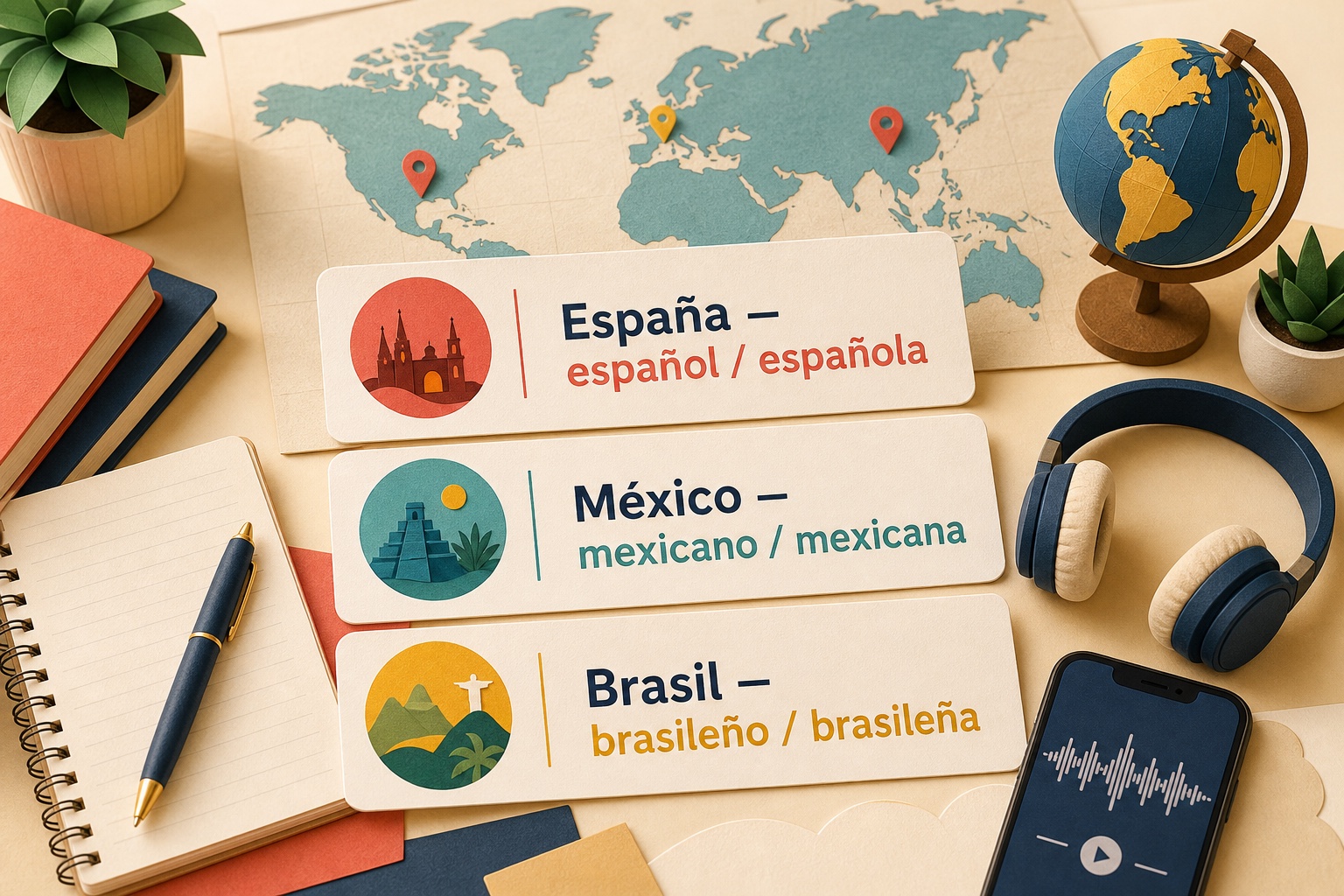
Build a countries and nationalities group
Import all 40 pairs and practise them with Spanish audio and writing on iOS or Android. The complete list remains useful without the app.
countries and nationalities in Spanish
How do you say your country and nationality in Spanish?
Use ser de + country: Soy de Brasil; Ana es de Colombia. The country is a proper name and keeps its capital letter.
Use ser + nationality without an article: Soy brasileño or brasileña; Ana es colombiana. Nationality words are usually lowercase.
Nationality adjectives agree with the person or group: mexicano/mexicana/mexicanos/mexicanas. Some forms, such as canadiense, costarricense and marroquí, do not change for gender.
Four rules that prevent common mistakes
Country names are capitalised: España, México, Japón.
Nationality words are normally lowercase: español, mexicana, japonés.
Do not add un or una after ser for a simple nationality statement: Es italiana, not Es una italiana.
Keep written accents in forms such as francés, alemán, japonés and marroquí; feminine forms may lose or keep an accent according to spelling: francés → francesa, alemán → alemana.
40 common countries and nationalities in Spanish
Start with the Spanish-speaking world, continue through the Americas and Europe, then add high-frequency countries from other regions.
| Country and nationality | Meaning | Example in context | Usage note |
|---|---|---|---|
| España — español / española | Spain — Spanish | Lucía es española y vive en Sevilla. | The nationality agrees with gender: masculine / feminine. |
| México — mexicano / mexicana | Mexico — Mexican | Soy de México; soy mexicano. | The nationality agrees with gender: masculine / feminine. |
| Argentina — argentino / argentina | Argentina — Argentinian | Ellas son argentinas y viven en Córdoba. | The nationality agrees with gender: masculine / feminine. |
| Colombia — colombiano / colombiana | Colombia — Colombian | Ana es colombiana, de Medellín. | The nationality agrees with gender: masculine / feminine. |
| Chile — chileno / chilena | Chile — Chilean | Mi profesor es chileno. | The nationality agrees with gender: masculine / feminine. |
| Perú — peruano / peruana | Peru — Peruvian | Somos peruanos y vivimos en Lima. | The nationality agrees with gender: masculine / feminine. |
| Venezuela — venezolano / venezolana | Venezuela — Venezuelan | Carla es venezolana. | The nationality agrees with gender: masculine / feminine. |
| Ecuador — ecuatoriano / ecuatoriana | Ecuador — Ecuadorian | Él es ecuatoriano, de Quito. | The nationality agrees with gender: masculine / feminine. |
| Cuba — cubano / cubana | Cuba — Cuban | Mi amiga es cubana. | The nationality agrees with gender: masculine / feminine. |
| República Dominicana — dominicano / dominicana | Dominican Republic — Dominican | Somos dominicanos de Santo Domingo. | The nationality agrees with gender: masculine / feminine. |
| Estados Unidos — estadounidense | United States — American | Ella es estadounidense y vive en Boston. | Use estadounidense for the United States; americano can refer to the wider Americas. |
| Canadá — canadiense | Canada — Canadian | Mis vecinos son canadienses. | This nationality keeps the same form for gender. |
| Brasil — brasileño / brasileña | Brazil — Brazilian | Paulo es brasileño y habla portugués. | The nationality agrees with gender: masculine / feminine. |
| Uruguay — uruguayo / uruguaya | Uruguay — Uruguayan | Mi familia es uruguaya. | The nationality agrees with gender: masculine / feminine. |
| Paraguay — paraguayo / paraguaya | Paraguay — Paraguayan | Ellos son paraguayos. | The nationality agrees with gender: masculine / feminine. |
| Bolivia — boliviano / boliviana | Bolivia — Bolivian | María es boliviana, de La Paz. | The nationality agrees with gender: masculine / feminine. |
| Costa Rica — costarricense | Costa Rica — Costa Rican | El guía es costarricense. | This nationality keeps the same form for gender. |
| Guatemala — guatemalteco / guatemalteca | Guatemala — Guatemalan | Mi compañera es guatemalteca. | The nationality agrees with gender: masculine / feminine. |
| Panamá — panameño / panameña | Panama — Panamanian | Somos panameños. | The nationality agrees with gender: masculine / feminine. |
| Puerto Rico — puertorriqueño / puertorriqueña | Puerto Rico — Puerto Rican | El cantante es puertorriqueño. | The nationality agrees with gender: masculine / feminine. |
| Portugal — portugués / portuguesa | Portugal — Portuguese | Rita es portuguesa. | Keep the written accent in the masculine form; the feminine follows regular stress. |
| Francia — francés / francesa | France — French | Mi jefe es francés y su esposa es francesa. | Keep the written accent in the masculine form; the feminine follows regular stress. |
| Alemania — alemán / alemana | Germany — German | Son alemanes y viven en Berlín. | Keep the written accent in the masculine form; the feminine follows regular stress. |
| Italia — italiano / italiana | Italy — Italian | La arquitecta es italiana. | The nationality agrees with gender: masculine / feminine. |
| Reino Unido — británico / británica | United Kingdom — British | James es británico. | The nationality agrees with gender: masculine / feminine. |
| Irlanda — irlandés / irlandesa | Ireland — Irish | Mi vecina es irlandesa. | Keep the written accent in the masculine form; the feminine follows regular stress. |
| Países Bajos — neerlandés / neerlandesa | Netherlands — Dutch | Ellos son neerlandeses. | Keep the written accent in the masculine form; the feminine follows regular stress. |
| Bélgica — belga | Belgium — Belgian | Ella es belga y vive en Bruselas. | This nationality keeps the same form for gender. |
| Suiza — suizo / suiza | Switzerland — Swiss | Mis amigos son suizos. | The nationality agrees with gender: masculine / feminine. |
| Polonia — polaco / polaca | Poland — Polish | Kasia es polaca. | The nationality agrees with gender: masculine / feminine. |
| Rusia — ruso / rusa | Russia — Russian | Iván es ruso. | The nationality agrees with gender: masculine / feminine. |
| Ucrania — ucraniano / ucraniana | Ukraine — Ukrainian | Olena es ucraniana. | The nationality agrees with gender: masculine / feminine. |
| China — chino / china | China — Chinese | Mis compañeros son chinos. | The nationality agrees with gender: masculine / feminine. |
| Japón — japonés / japonesa | Japan — Japanese | Akiko es japonesa. | Keep the written accent in the masculine form; the feminine follows regular stress. |
| India — indio / india | India — Indian | Él es indio y vive en Delhi. | The nationality agrees with gender: masculine / feminine. |
| Australia — australiano / australiana | Australia — Australian | Mi prima es australiana. | The nationality agrees with gender: masculine / feminine. |
| Marruecos — marroquí | Morocco — Moroccan | La familia es marroquí. | This nationality keeps the same form for gender. |
| Egipto — egipcio / egipcia | Egypt — Egyptian | La investigadora es egipcia. | The nationality agrees with gender: masculine / feminine. |
| Turquía — turco / turca | Turkey — Turkish | Somos turcos y vivimos en Ankara. | The nationality agrees with gender: masculine / feminine. |
| Sudáfrica — sudafricano / sudafricana | South Africa — South African | La médica es sudafricana. | The nationality agrees with gender: masculine / feminine. |
Learn the pairs in four geographic groups
Geographic grouping makes the list easier to retrieve in introductions, travel conversations and classroom tasks.
Spanish-speaking countries
Build the core A1 set for introductions across the Spanish-speaking world.
España — español / española · México — mexicano / mexicana · Argentina — argentino / argentina · Colombia — colombiano / colombiana · Chile — chileno / chilena · Perú — peruano / peruana · Venezuela — venezolano / venezolana · Ecuador — ecuatoriano / ecuatoriana · Cuba — cubano / cubana · República Dominicana — dominicano / dominicana
The Americas
Add frequent neighbours, travel destinations and regional demonyms.
Estados Unidos — estadounidense · Canadá — canadiense · Brasil — brasileño / brasileña · Uruguay — uruguayo / uruguaya · Paraguay — paraguayo / paraguaya · Bolivia — boliviano / boliviana · Costa Rica — costarricense · Guatemala — guatemalteco / guatemalteca · Panamá — panameño / panameña · Puerto Rico — puertorriqueño / puertorriqueña
Europe
Practise common accent changes and gender pairs.
Portugal — portugués / portuguesa · Francia — francés / francesa · Alemania — alemán / alemana · Italia — italiano / italiana · Reino Unido — británico / británica · Irlanda — irlandés / irlandesa · Países Bajos — neerlandés / neerlandesa · Bélgica — belga · Suiza — suizo / suiza · Polonia — polaco / polaca
Other world regions
Finish with high-frequency countries from Africa, Asia and Oceania.
Rusia — ruso / rusa · Ucrania — ucraniano / ucraniana · China — chino / china · Japón — japonés / japonesa · India — indio / india · Australia — australiano / australiana · Marruecos — marroquí · Egipto — egipcio / egipcia · Turquía — turco / turca · Sudáfrica — sudafricano / sudafricana
How should you practise the pairs?
Say Soy de… and Soy… for five countries, changing the nationality ending where needed.
Write country names with capitals and nationality words with lowercase initials.
Make plural groups: Ellos son mexicanos; Ellas son españolas; Son canadienses.
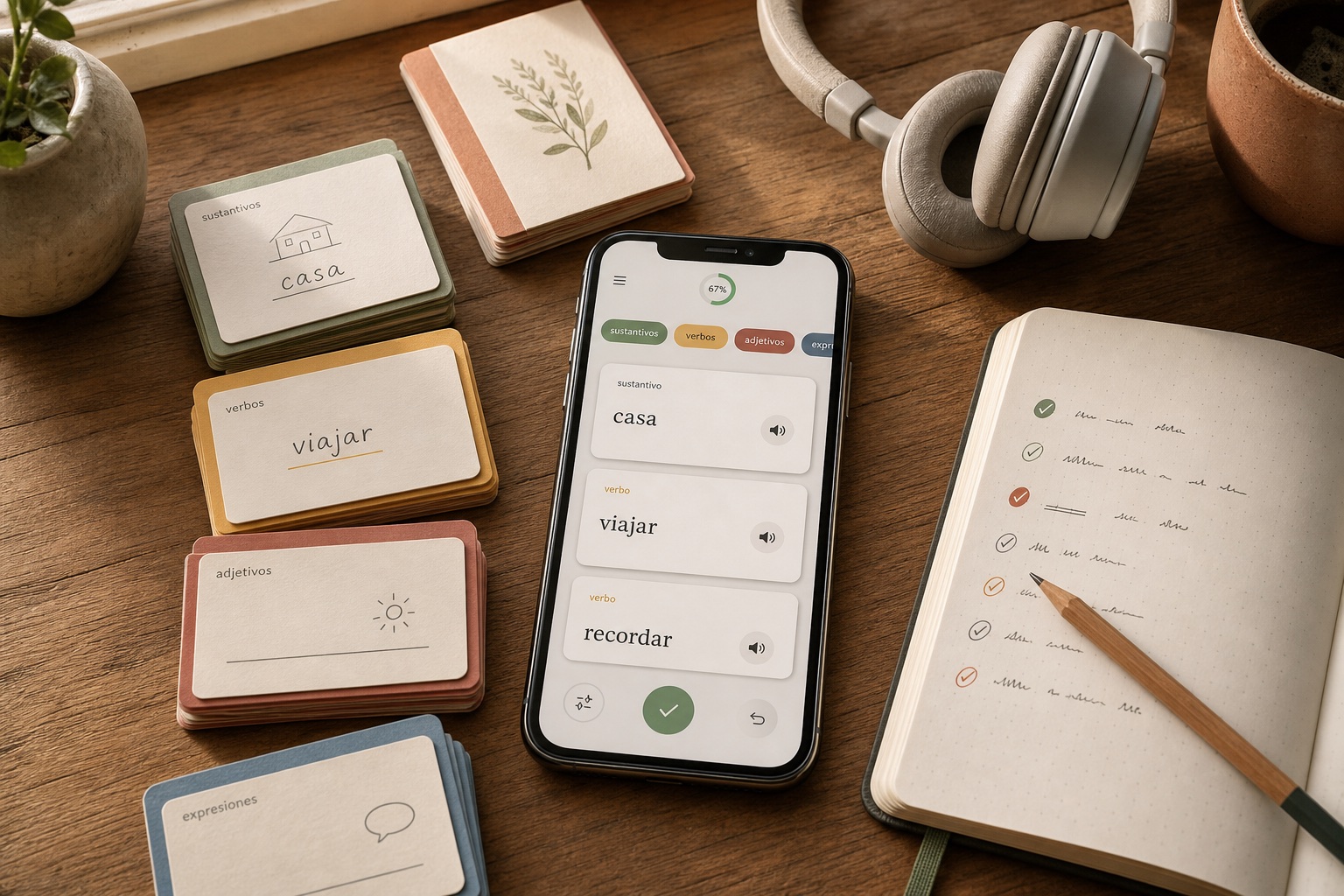
Hola Cards is a Spanish flashcard app from holacards.org for iOS and Android. It is free to download, requires no account, may show ads in the free version, while Premium removes ads, and works offline. The interface is available in 29 languages, including English, Russian, Portuguese and German; cards support translations in 29 languages, including English, Russian, Portuguese and German and 18 practice and game modes. You can import these 40 fixed pairs into a custom group and practise them with Spanish audio, writing, pronunciation, and review modes. Hola Cards does not infer a person’s nationality, choose a regional demonym, or correct agreement automatically.
Connect nationality adjectives with adjective agreement, ser and estar, introductions, travel phrases and the personal a.
Spanish adjective agreement Ser vs estar for beginners Spanish greetings and introductions Spanish travel phrases Spanish personal a
A five-minute nationality routine
- Choose five countries and say their Spanish names.
- Give masculine and feminine nationality forms.
- Make one sentence with ser de and one with ser.
- Turn two singular nationalities into plurals.
- Listen, repeat and write the five pairs from memory.
Vocabulary and grammar references
The A1–A2 nationality task, adjective agreement and lowercase spelling were checked against Instituto Cervantes and RAE materials.
- Instituto Cervantes A1–A2 inventory: country and nationality
- Instituto Cervantes A1–A2 grammar: adjective agreement
- RAE spelling guide: nationalities use lowercase
FAQ
How do I say “I am from Mexico” in Spanish?
Say Soy de México. To state nationality, say Soy mexicano or Soy mexicana.
Are nationalities capitalised in Spanish?
Normally no. Countries are capitalised, but nationality words and language names use lowercase unless they begin a sentence.
Do nationality words change for gender?
Many do: español/española and italiano/italiana. Others keep one gender form, including canadiense, costarricense and marroquí.
Do I need un or una before a nationality?
Not in a basic statement with ser: Ella es argentina. An article can appear when the word is used as a noun or is further specified, but beginners should learn the article-free pattern first.
Why does francés become francesa?
The masculine form carries a written accent, but the feminine form francesa follows regular stress and does not need it. The same happens with alemán/alemana and japonés/japonesa.
Does Hola Cards choose the correct nationality form automatically?
No. It lets you import and practise the fixed pairs; this guide explains capitals, gender, number and accents.
Copy the 40 pairs into Hola Cards
Open word groups in Hola Cards, choose paste/import, and paste the block. The app recognises the title and “Spanish - translation” lines.
**Countries and nationalities in Spanish: 40 pairs**

España — español / española - Spain — Spanish
México — mexicano / mexicana - Mexico — Mexican
Argentina — argentino / argentina - Argentina — Argentinian
Colombia — colombiano / colombiana - Colombia — Colombian
Chile — chileno / chilena - Chile — Chilean
Perú — peruano / peruana - Peru — Peruvian
Venezuela — venezolano / venezolana - Venezuela — Venezuelan
Ecuador — ecuatoriano / ecuatoriana - Ecuador — Ecuadorian
Cuba — cubano / cubana - Cuba — Cuban
República Dominicana — dominicano / dominicana - Dominican Republic — Dominican
Estados Unidos — estadounidense - United States — American
Canadá — canadiense - Canada — Canadian
Brasil — brasileño / brasileña - Brazil — Brazilian
Uruguay — uruguayo / uruguaya - Uruguay — Uruguayan
Paraguay — paraguayo / paraguaya - Paraguay — Paraguayan
Bolivia — boliviano / boliviana - Bolivia — Bolivian
Costa Rica — costarricense - Costa Rica — Costa Rican
Guatemala — guatemalteco / guatemalteca - Guatemala — Guatemalan
Panamá — panameño / panameña - Panama — Panamanian
Puerto Rico — puertorriqueño / puertorriqueña - Puerto Rico — Puerto Rican
Portugal — portugués / portuguesa - Portugal — Portuguese
Francia — francés / francesa - France — French
Alemania — alemán / alemana - Germany — German
Italia — italiano / italiana - Italy — Italian
Reino Unido — británico / británica - United Kingdom — British
Irlanda — irlandés / irlandesa - Ireland — Irish
Países Bajos — neerlandés / neerlandesa - Netherlands — Dutch
Bélgica — belga - Belgium — Belgian
Suiza — suizo / suiza - Switzerland — Swiss
Polonia — polaco / polaca - Poland — Polish
Rusia — ruso / rusa - Russia — Russian
Ucrania — ucraniano / ucraniana - Ukraine — Ukrainian
China — chino / china - China — Chinese
Japón — japonés / japonesa - Japan — Japanese
India — indio / india - India — Indian
Australia — australiano / australiana - Australia — Australian
Marruecos — marroquí - Morocco — Moroccan
Egipto — egipcio / egipcia - Egypt — Egyptian
Turquía — turco / turca - Turkey — Turkish
Sudáfrica — sudafricano / sudafricana - South Africa — South African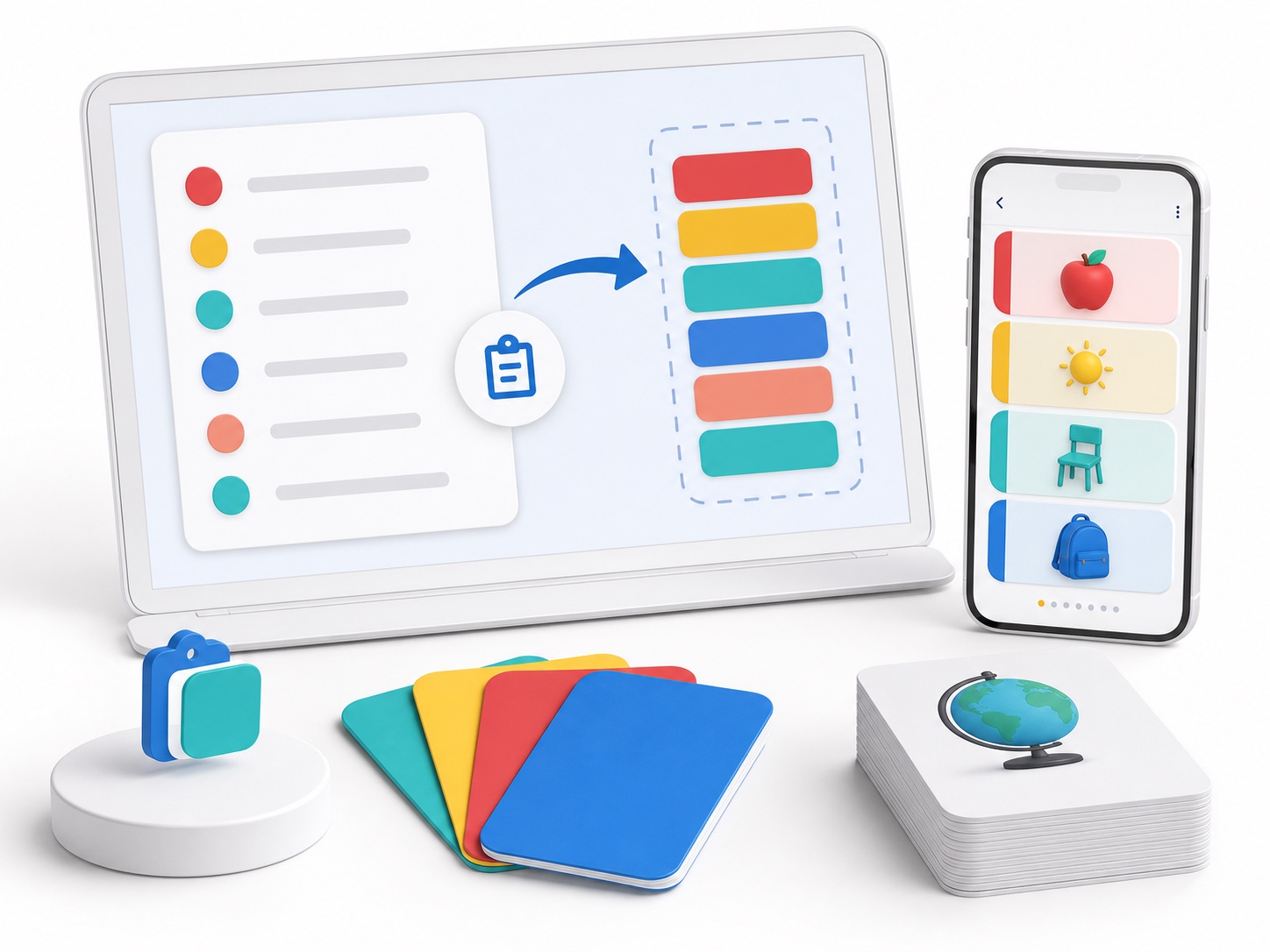
Review countries and nationalities in Hola Cards
Practise the 40 fixed pairs with Spanish audio, writing, pronunciation, custom groups, and review modes on iOS and Android.