Keep beach-safety Spanish in one group
Copy the phrases into Hola Cards on iOS or Android, or practise them directly from this guide.
Spanish beach safety phrases
Six stages for a safer beach visit
Read the flags and signs.
Ask about the water conditions.
Find the lifeguard and supervised area.
Keep children within sight.
Plan shade, water and first aid.
Follow the final instructions before leaving.
Useful beach-safety distinctions
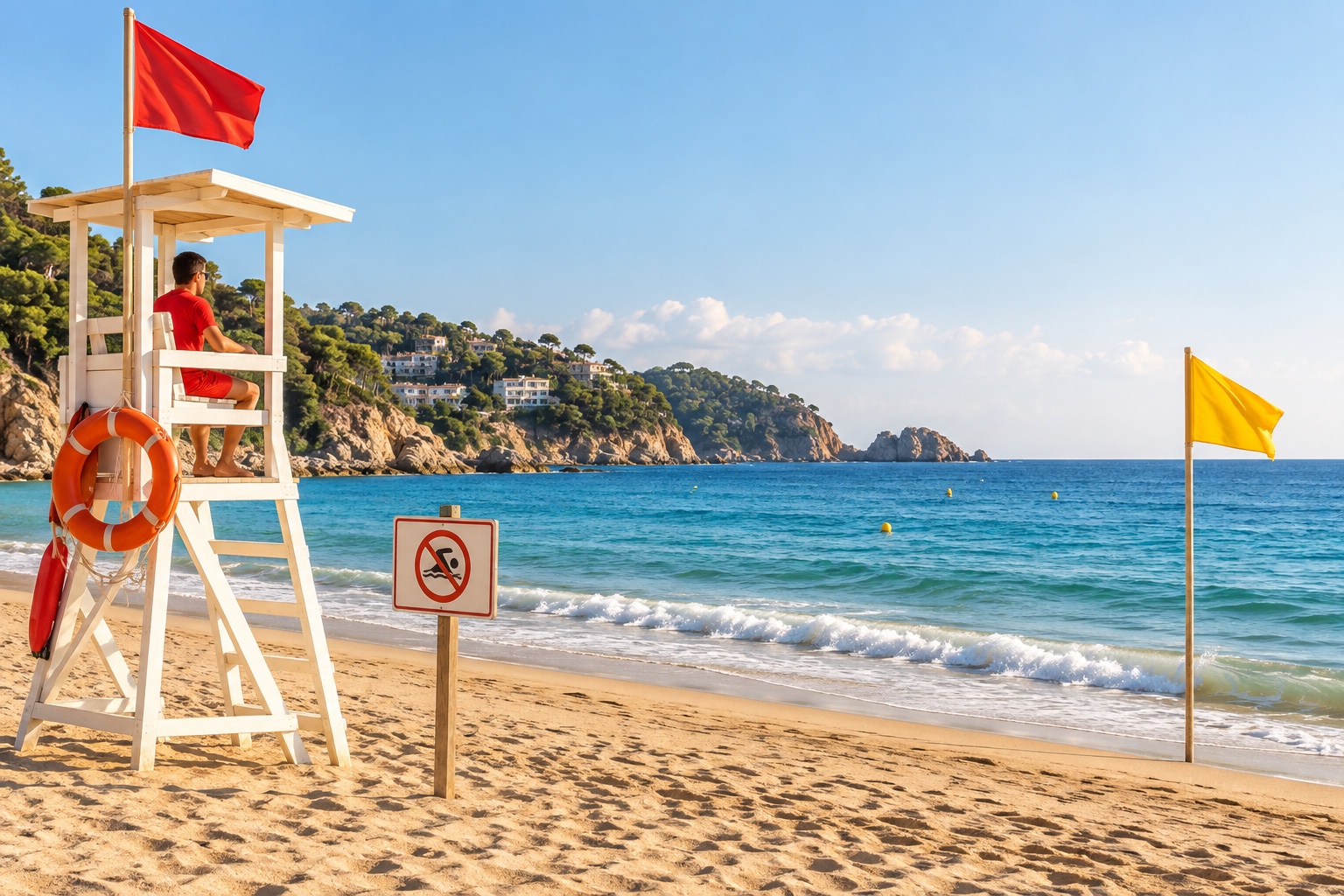
bandera roja means a red flag and usually signals a serious restriction; check the local sign.
zona vigilada means a supervised area.
corriente is a current; ask about corrientes fuertes before entering.
This guide supports communication and does not replace a lifeguard or local emergency guidance.
Spanish beach safety phrases
Learn 24 Spanish beach safety phrases for flags, currents, lifeguards, sun, children and asking for help.
| Spanish | Translation | Example | Note |
|---|---|---|---|
| ¿Qué significa esta bandera? | What does this flag mean? | Practise this phrase before visiting the beach. | Local beach rules and conditions vary; confirm them with staff. |
| ¿Está permitido nadar hoy? | Is swimming allowed today? | Practise this phrase before visiting the beach. | Local beach rules and conditions vary; confirm them with staff. |
| ¿Dónde está la zona vigilada? | Where is the supervised area? | Practise this phrase before visiting the beach. | Local beach rules and conditions vary; confirm them with staff. |
| ¿Hay una bandera roja? | Is there a red flag? | Practise this phrase before visiting the beach. | Local beach rules and conditions vary; confirm them with staff. |
| ¿Hay corrientes fuertes? | Are there strong currents? | Practise this phrase before visiting the beach. | Local beach rules and conditions vary; confirm them with staff. |
| El agua está muy fría. | The water is very cold. | Practise this phrase before visiting the beach. | Local beach rules and conditions vary; confirm them with staff. |
| No voy a entrar al agua. | I am not going into the water. | Practise this phrase before visiting the beach. | Local beach rules and conditions vary; confirm them with staff. |
| ¿Dónde puedo entrar con seguridad? | Where can I enter safely? | Practise this phrase before visiting the beach. | Local beach rules and conditions vary; confirm them with staff. |
| ¿Dónde está el socorrista? | Where is the lifeguard? | Practise this phrase before visiting the beach. | Local beach rules and conditions vary; confirm them with staff. |
| Necesito ayuda, por favor. | I need help, please. | Practise this phrase before visiting the beach. | Local beach rules and conditions vary; confirm them with staff. |
| Una persona necesita ayuda en el agua. | Someone needs help in the water. | Practise this phrase before visiting the beach. | Local beach rules and conditions vary; confirm them with staff. |
| ¿Puede llamar a una ambulancia? | Can you call an ambulance? | Practise this phrase before visiting the beach. | Local beach rules and conditions vary; confirm them with staff. |
| No pierda de vista a los niños. | Do not lose sight of the children. | Practise this phrase before visiting the beach. | Local beach rules and conditions vary; confirm them with staff. |
| Mi hijo se ha perdido. | My son has gone missing. | Practise this phrase before visiting the beach. | Local beach rules and conditions vary; confirm them with staff. |
| ¿Ha visto a una niña con un sombrero amarillo? | Have you seen a girl with a yellow hat? | Practise this phrase before visiting the beach. | Local beach rules and conditions vary; confirm them with staff. |
| Quédese cerca de la orilla. | Stay close to the shore. | Practise this phrase before visiting the beach. | Local beach rules and conditions vary; confirm them with staff. |
| ¿Dónde hay sombra? | Where is there shade? | Practise this phrase before visiting the beach. | Local beach rules and conditions vary; confirm them with staff. |
| Necesito beber agua. | I need to drink water. | Practise this phrase before visiting the beach. | Local beach rules and conditions vary; confirm them with staff. |
| Tengo la piel quemada. | My skin is sunburned. | Practise this phrase before visiting the beach. | Local beach rules and conditions vary; confirm them with staff. |
| ¿Hay un puesto de primeros auxilios? | Is there a first-aid station? | Practise this phrase before visiting the beach. | Local beach rules and conditions vary; confirm them with staff. |
| ¿A qué hora cierran la playa? | What time does the beach close? | Practise this phrase before visiting the beach. | Local beach rules and conditions vary; confirm them with staff. |
| ¿Dónde está la salida? | Where is the exit? | Practise this phrase before visiting the beach. | Local beach rules and conditions vary; confirm them with staff. |
| Gracias por la información. | Thank you for the information. | Practise this phrase before visiting the beach. | Local beach rules and conditions vary; confirm them with staff. |
| Voy a seguir las indicaciones. | I will follow the instructions. | Practise this phrase before visiting the beach. | Local beach rules and conditions vary; confirm them with staff. |
Practise by situation
Say one phrase from each stage so you can handle the next question or instruction.
Flags and signs
Useful beach-safety phrases for this situation.
¿Qué significa esta bandera? · ¿Está permitido nadar hoy? · ¿Dónde está la zona vigilada? · ¿Hay una bandera roja?
Water conditions
Useful beach-safety phrases for this situation.
¿Hay corrientes fuertes? · El agua está muy fría. · No voy a entrar al agua. · ¿Dónde puedo entrar con seguridad?
Lifeguard and emergencies
Useful beach-safety phrases for this situation.
¿Dónde está el socorrista? · Necesito ayuda, por favor. · Una persona necesita ayuda en el agua. · ¿Puede llamar a una ambulancia?
Children
Useful beach-safety phrases for this situation.
No pierda de vista a los niños. · Mi hijo se ha perdido. · ¿Ha visto a una niña con un sombrero amarillo? · Quédese cerca de la orilla.
Sun and first aid
Useful beach-safety phrases for this situation.
¿Dónde hay sombra? · Necesito beber agua. · Tengo la piel quemada. · ¿Hay un puesto de primeros auxilios?
Finish safely
Useful beach-safety phrases for this situation.
¿A qué hora cierran la playa? · ¿Dónde está la salida? · Gracias por la información. · Voy a seguir las indicaciones.
Two short beach-safety dialogues
Visitor: ¿Qué significa esta bandera? Lifeguard: Hoy no se permite nadar.
Visitor: ¿Dónde está el socorrista? Staff: Está junto a la torre.
Connect beach safety with weather, water and practical beach vocabulary.
Spanish beach vocabulary Spanish weather vocabulary Spanish swimming pool phrases

A five-minute beach-safety drill
- Ask what the flag means.
- Check currents and the supervised area.
- Practise two requests for lifeguard help.
- Say one phrase about children and one about shade.
- Finish by confirming the exit and instructions.
Beach-language references
Core meanings were checked against the RAE dictionary and common facility terminology.
FAQ
How do I ask what a flag means?
Say ¿Qué significa esta bandera?
How do I ask about strong currents?
Say ¿Hay corrientes fuertes?
How do I find the lifeguard?
Say ¿Dónde está el socorrista?
How do I ask for first aid?
Say ¿Hay un puesto de primeros auxilios?
Does Hola Cards replace beach-safety instructions?
No. It helps practise fixed Spanish phrases; follow the lifeguard and local emergency guidance.
Copy the 24 beach-safety phrases
Save the block or paste it into a custom group in the Hola Cards mobile app.
**Beach-safety Spanish: 24 phrases**

¿Qué significa esta bandera? - What does this flag mean?
¿Está permitido nadar hoy? - Is swimming allowed today?
¿Dónde está la zona vigilada? - Where is the supervised area?
¿Hay una bandera roja? - Is there a red flag?
¿Hay corrientes fuertes? - Are there strong currents?
El agua está muy fría. - The water is very cold.
No voy a entrar al agua. - I am not going into the water.
¿Dónde puedo entrar con seguridad? - Where can I enter safely?
¿Dónde está el socorrista? - Where is the lifeguard?
Necesito ayuda, por favor. - I need help, please.
Una persona necesita ayuda en el agua. - Someone needs help in the water.
¿Puede llamar a una ambulancia? - Can you call an ambulance?
No pierda de vista a los niños. - Do not lose sight of the children.
Mi hijo se ha perdido. - My son has gone missing.
¿Ha visto a una niña con un sombrero amarillo? - Have you seen a girl with a yellow hat?
Quédese cerca de la orilla. - Stay close to the shore.
¿Dónde hay sombra? - Where is there shade?
Necesito beber agua. - I need to drink water.
Tengo la piel quemada. - My skin is sunburned.
¿Hay un puesto de primeros auxilios? - Is there a first-aid station?
¿A qué hora cierran la playa? - What time does the beach close?
¿Dónde está la salida? - Where is the exit?
Gracias por la información. - Thank you for the information.
Voy a seguir las indicaciones. - I will follow the instructions.
Review beach-safety Spanish in Hola Cards
Save this group before your next beach visit. Available for iOS and Android.