Build Core Spanish Vocabulary
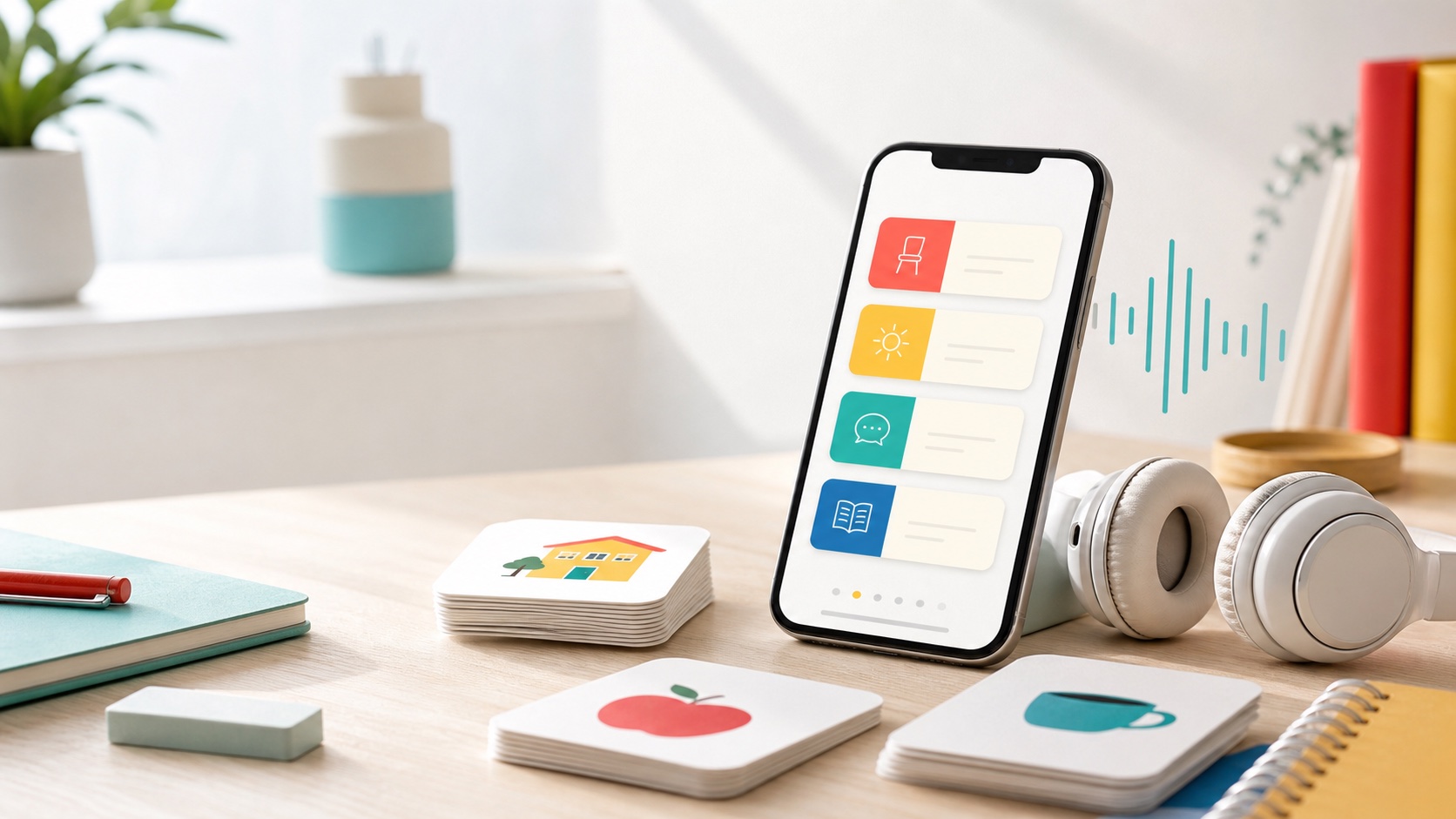
Practice high-frequency catalog words to strengthen word recognition before your next listening session.
why does spanish sound so fast
The Illusion of Speed and the Science of Speech Rates
When learners say Spanish sounds fast, they are describing an impression rather than an objective fact about language difficulty. Speech rate—often measured in syllables per second—is an acoustic metric that researchers can quantify in controlled recordings, but a listener’s sense of speed reflects subjective perceptual processing. The cited cross-language study analyzes acoustic syllable rates and information density in native speech, but it does not measure learner perception or explain why an individual listener struggles to comprehend spoken Spanish.
Linguistic research clarifies this discussion by distinguishing syllables per second from information density and overall information rate. In a 2019 study published in Science Advances by Coupé and colleagues, researchers investigated how different languages package semantic content. Their findings suggest that languages balance syllable rate against information density per syllable, with higher syllable rates often corresponding to lower information density per syllable to maintain a relatively stable transmission rate.
To investigate these patterns, the authors analyzed 170 adult native speakers across 17 languages from 9 language families reading standardized texts, totaling approximately 240,000 syllables. Across the study sample, the modeled mean speech rate was 6.63 syllables per second (SD 1.15), and the mean modeled information rate was 39.15 bits per second (SD 5.10). These figures represent overall model means across all tested languages rather than a specific rate for Spanish.
What the Research Measures and What It Leaves Unanswered
Interpreting scientific findings responsibly requires examining how experiments are structured. In the Coupé study, participants read 15 standardized texts at a normal rate after familiarizing themselves with the content, and pauses longer than 150 milliseconds were excluded from calculations. This procedure captured controlled, rehearsed reading in quiet conditions, which differs substantially from spontaneous conversation where speakers hesitate, repeat thoughts, change tone, and vary their rhythm unpredictably.
The research also documented variation across individual speakers, with estimated rates ranging from about 4.3 to 9.1 syllables per second across the multi-language dataset. This span reflects differences among individual participants rather than a range for Spanish alone. While the researchers inferred an overall trade-off between syllable speed and information density, they noted that casual informal speech might weaken this relationship.
Crucially, the paper evaluated only seventeen languages and clear read speech, so it does not rank all world languages, characterize every Spanish dialect, or diagnose individual listening difficulties. The authors did not identify a single physical cause for why a learner feels overwhelmed by native audio. Knowing that laboratory speakers average several syllables per second cannot predict the specific speed of a casual conversation or voice message, nor does it measure listener perception.
Vocabulary Warm-Up: Common Spanish Words by Syllable Count
Familiarize yourself with these common Spanish words as a gentle lexical warm-up before listening practice.
| Spanish Word | English Translation |
|---|---|
| sol | sun |
| mar | sea |
| pan | bread |
| luz | light |
| casa | house |
| agua | water |
| vida | life |
| tiempo | time |
| camino | path |
| amigo | friend |
| mañana | morning |
| ventana | window |
Syllable Structure and Auditory Processing
Understanding how words are constructed across syllable counts helps prepare your memory for natural speech.
One-Syllable Foundations
Single-syllable terms provide compact acoustic units where you can recognize clear vowels without tracking transitions between internal syllables.
sol · mar · pan · luz
Two-Syllable Words
Two-syllable words introduce rhythmic cadence and standard stress patterns, helping you notice how syllables connect in everyday speech.
casa · agua · vida · tiempo
Three-Syllable Vocabulary
Three-syllable vocabulary requires sustained attention across multiple sounds, training your memory to hold longer phonetic units before resolving their meaning.
camino · amigo · mañana · ventana
Why Native Speech Feels Rapid: Subjective Cognitive Factors
Your personal impression of speech rate involves cognitive factors that the 2019 reading study did not measure. Plausible individual factors—not tested in that cross-language study—include vocabulary familiarity and lexical recognition. When you hear a thoroughly familiar word such as mar or sol, your memory may recognize its meaning promptly. When an unfamiliar word appears, a learner might hesitate while deciphering it, creating a personal impression that speech is rapid even when the acoustic syllable rate remains steady.
Other plausible individual factors not investigated in the read-speech study include phonetic reductions, regional accents, working memory limits, and listener fatigue. In everyday conversation, native speakers frequently soften consonants or blend vowels, creating forms that diverge from textbook pronunciation. In addition, processing an unfamiliar accent or listening under fatigue can strain working memory. These are plausible individual influences on how fast speech feels to a listener, rather than factors established by the laboratory study, which examined only rehearsed read speech.
Distinguishing subjective perception from measurable syllable rate and information density clarifies why isolated vocabulary practice serves only as an initial warm-up. Practicing individual catalog words like tiempo or camino does not recreate conversational dialogue, assess listening speed, or alter information density. Instead, gradual vocabulary familiarity provides a plausible foundation for word recognition, potentially freeing cognitive resources so a learner feels less overwhelmed during subsequent listening practice.
Explore related guides to strengthen your Spanish pronunciation and listening foundations:
Spanish listening practice app Spanish connected speech Spanish vowel sounds Spanish pronunciation for beginners
How to Practice: Combining Vocabulary Warm-Ups with Listening
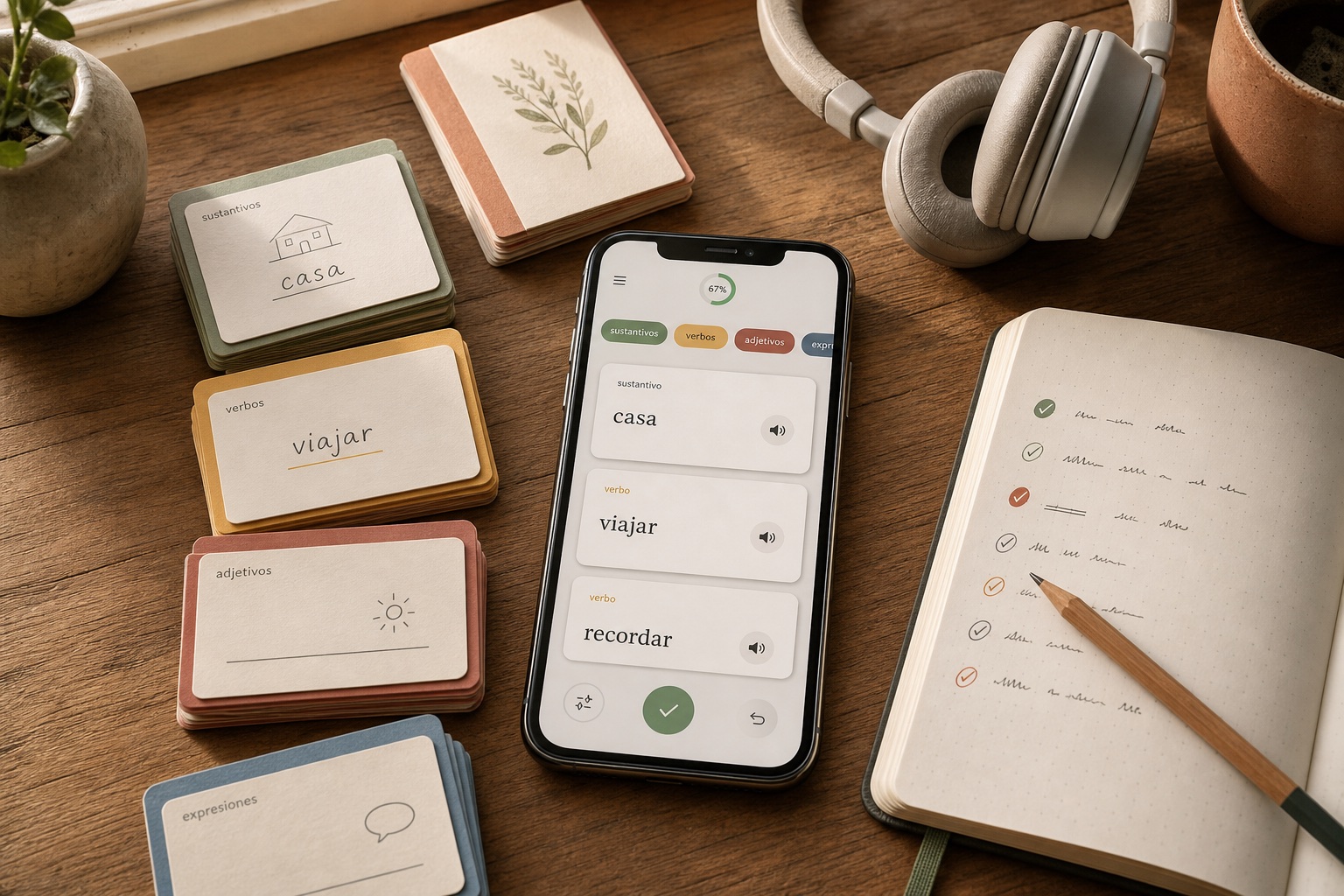
- Hola Cards provides structured practice for learning individual Spanish catalog words. The mobile app supports custom Spanish word groups, offline study, and guest use, whereas web study requires Firebase sign-in for account access. The tool focuses specifically on memorizing catalog vocabulary terms; it does not import phrase audio, measure conversational tempo, or provide automatic listening-speed assessment.
- Vocabulary cards serve as a modest warm-up before listening practice rather than a comprehensive training system. Reviewing words in isolation does not alter a speaker's acoustic syllable rate, guarantee comprehension of rapid speech, or replace engagement with natural audio resources. Standalone vocabulary drills simply introduce foundational words into memory so they can be recognized more readily when encountered within authentic speech or podcasts.
- To make listening practice manageable, combine vocabulary reviews with level-appropriate audio materials. Begin with clear recordings designed for language learners before transitioning into spontaneous native media. Replaying short audio segments several times trains your ear to detect recurring word patterns without frustration. With consistent exposure and steady vocabulary expansion, spoken Spanish gradually transforms into clear, meaningful communication.
Scientific Sources and Further Reading
The analysis in this guide draws directly on peer-reviewed research investigating speech rates and information density across languages.
- Coupé et al. (2019), Science Advances: full open research paper
- PubMed record and abstract for the same study
- Open supplementary data and analysis repository referenced by the paper
Frequently Asked Questions About Spanish Speech Rate
Is Spanish scientifically proven to be the fastest language in the world?
No. The 2019 study in Science Advances examined 17 languages reading standardized texts and showed varied syllable rates, but it did not establish global rankings or declare Spanish the fastest language.
What is the difference between syllable rate and information rate?
Syllable rate measures syllables spoken each second. Information rate measures linguistic data delivered per second, reflecting a balance between syllable speed and information density across languages.
Why does spoken Spanish feel faster to beginners than to advanced learners?
Perceived speed is a subjective impression rather than a measured syllable rate. Plausible individual factors not tested in the cross-language study include vocabulary familiarity, unfamiliar accents, phonetic reductions, and listener attention, which can make speech feel faster to beginners while word recognition remains unpracticed.
Can reviewing vocabulary cards make native Spanish speech easy to understand?
No. Practicing individual catalog words is a preliminary warm-up for word recognition, not a complete listening solution. Hola Cards does not analyze conversational cadence or assess listening speed.
Copy Word List
Copy this twelve-word vocabulary set to review at your own pace.
**Twelve Essential Spanish Words**

sol - sun
mar - sea
pan - bread
luz - light
casa - house
agua - water
vida - life
tiempo - time
camino - path
amigo - friend
mañana - morning
ventana - window
Enhance Your Spanish Vocabulary with Hola Cards
Review individual catalog words at your own pace using the Hola Cards mobile app with offline study and guest access.