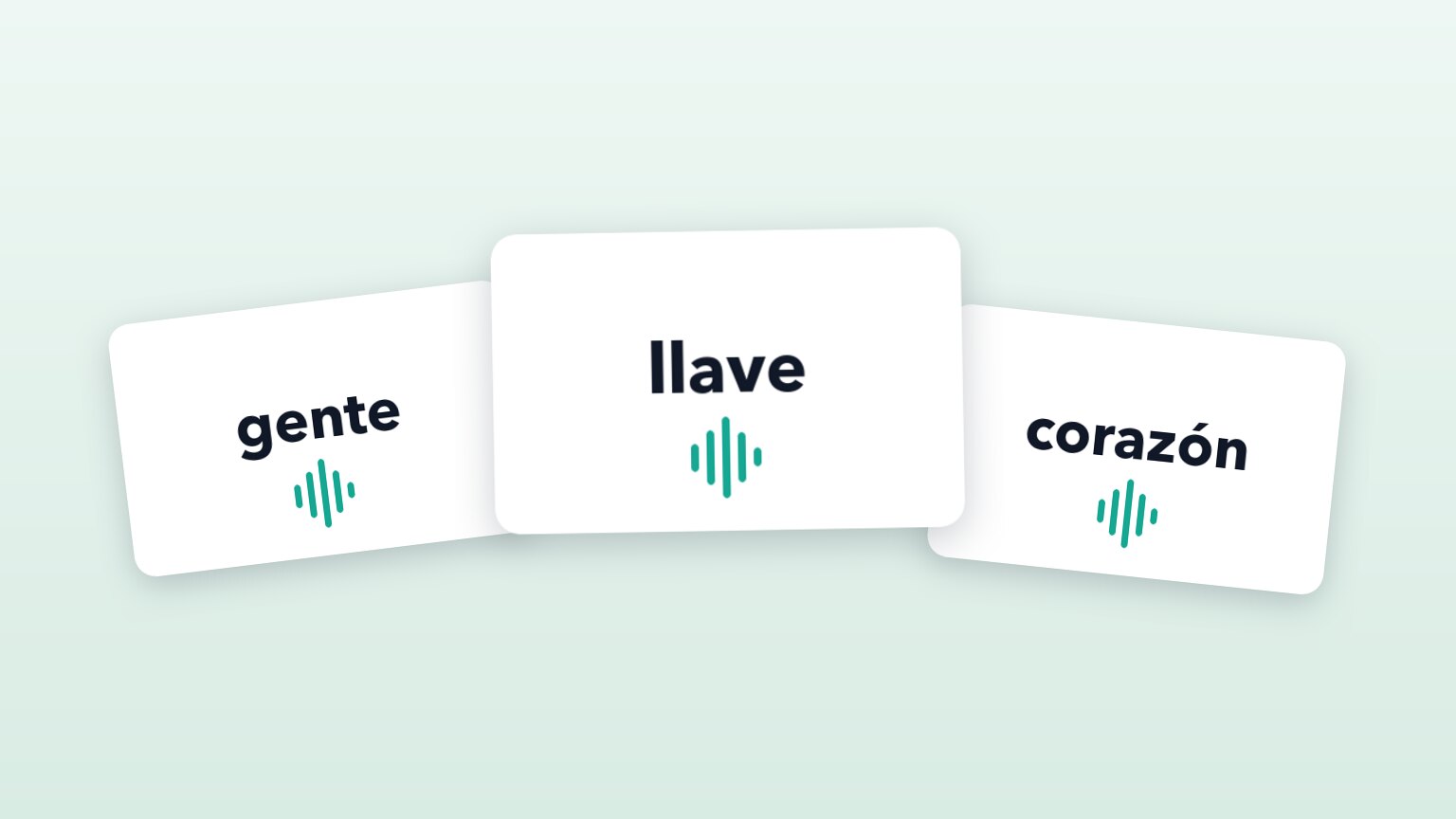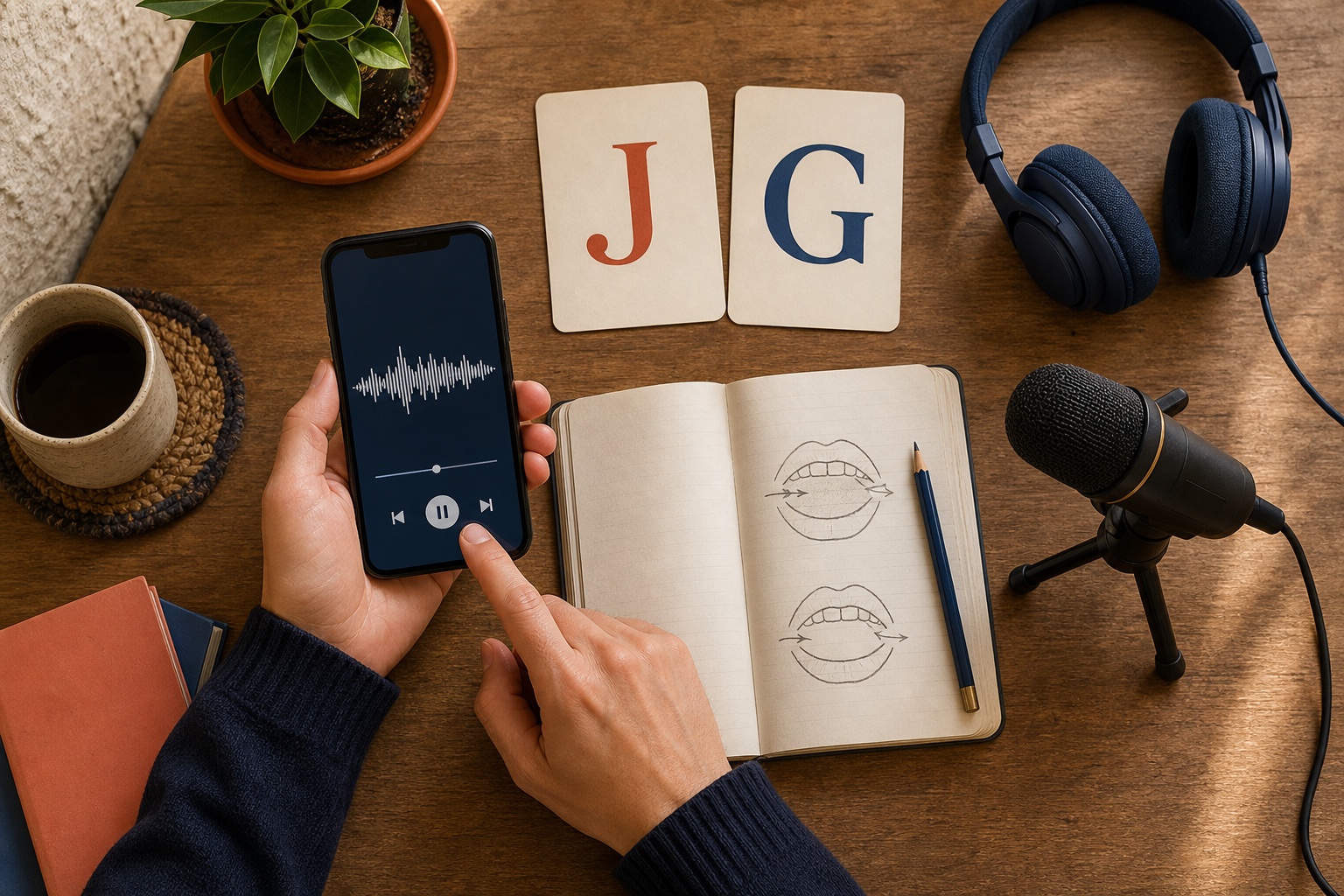
Hear J and G words in Hola Cards
Import the 24-word group and practise with Spanish audio, writing, and word-level recognition on iOS or Android. Recognition can check which word was heard; it does not score the J sound itself or identify your regional accent.
Spanish j pronunciation
How is j pronounced in Spanish?
Spanish j is a voiceless fricative made with a narrow passage near the back of the mouth. In much of Latin America and southern Spain it can sound closer to a firm English h; in central and northern Spain it is often stronger and farther back. Both are normal regional outcomes.
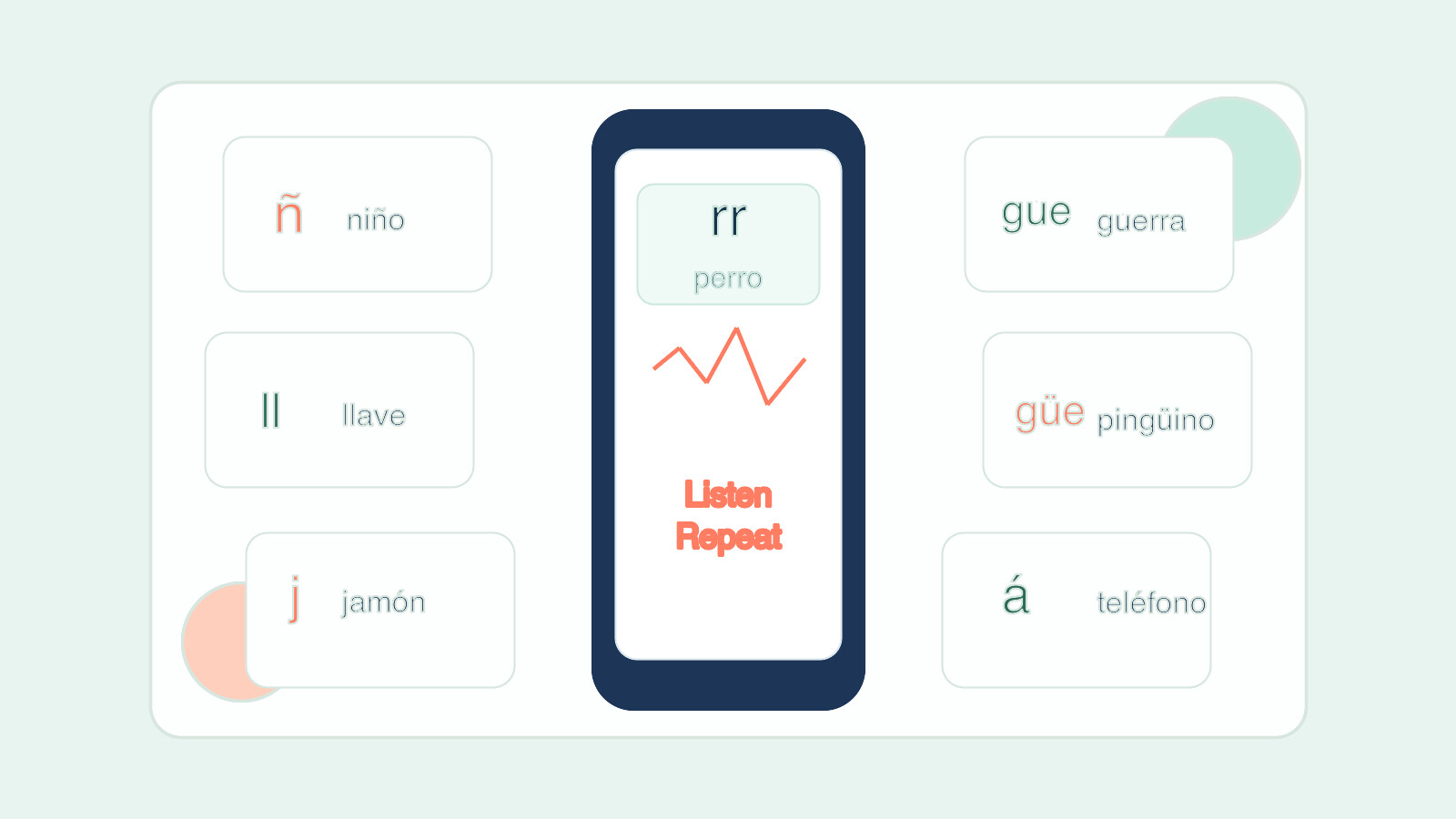
The written j does not change its basic sound with the following vowel: ja, je, ji, jo, ju. The spelling complication comes from g: ge and gi use the same friction sound as j, while ga, go, gu, gue, and gui keep a hard g sound. In güe and güi, the diaeresis makes the u audible.
Make the sound clearly without overworking the throat
Start with a quiet stream of air. Lift the back of the tongue toward the soft palate but leave a narrow channel. The vocal cords should not vibrate. If the sound becomes painful or turns into repeated throat clearing, reduce the pressure.
Keep the same J sound in jabón, jefe, jirafa, joven, and jueves. Then compare gente–gato and gigante–guitarra: the following vowel tells you whether written g uses the J sound or the hard g sound.
Choose a consistent listening model. A softer Latin American jota and a stronger northern-Spain jota are both legitimate; exaggerating either one is less useful than keeping the vowels and word stress clear.
24 Spanish J and G pronunciation words
The rows move from j with different vowels to ge/gi and then to hard-g spellings. Say the Spanish example once slowly and once at a natural pace.
| Spanish word | Meaning | Example | Pronunciation cue |
|---|---|---|---|
| jardín | garden | El jardín está abierto. | Keep the same voiceless friction before every vowel. |
| jabón | soap | Necesito jabón. | Keep the same voiceless friction before every vowel. |
| jamón | ham | Como jamón. | Keep the same voiceless friction before every vowel. |
| joven | young | Es muy joven. | Keep the same voiceless friction before every vowel. |
| ojo | eye | Me duele el ojo. | Keep the same voiceless friction before every vowel. |
| jueves | Thursday | Hoy es jueves. | Keep the same voiceless friction before every vowel. |
| jefe | boss | El jefe llega temprano. | Keep the same voiceless friction before every vowel. |
| jirafa | giraffe | La jirafa es alta. | Keep the same voiceless friction before every vowel. |
| viaje | trip | El viaje fue corto. | Keep the same voiceless friction before every vowel. |
| mujer | woman | La mujer lee. | Keep the same voiceless friction before every vowel. |
| reloj | clock, watch | Miro el reloj. | Keep the same voiceless friction before every vowel. |
| ejercicio | exercise | Repito el ejercicio. | Keep the same voiceless friction before every vowel. |
| gente | people | Hay mucha gente. | Before e or i, written g uses the same sound as j. |
| general | general | Es una regla general. | Before e or i, written g uses the same sound as j. |
| gigante | giant | El edificio es gigante. | Before e or i, written g uses the same sound as j. |
| gimnasio | gym | Voy al gimnasio. | Before e or i, written g uses the same sound as j. |
| elegir | to choose | Debes elegir uno. | Before e or i, written g uses the same sound as j. |
| recoger | to collect | Voy a recoger el paquete. | Before e or i, written g uses the same sound as j. |
| gato | cat | El gato duerme. | Before a, o, or u, use the hard g sound; u is silent in gue and gui. |
| goma | eraser | Necesito una goma. | Before a, o, or u, use the hard g sound; u is silent in gue and gui. |
| gusto | taste | El gusto cambia. | Before a, o, or u, use the hard g sound; u is silent in gue and gui. |
| guerra | war | La guerra terminó. | Before a, o, or u, use the hard g sound; u is silent in gue and gui. |
| guitarra | guitar | Toco la guitarra. | Before a, o, or u, use the hard g sound; u is silent in gue and gui. |
| bilingüe | bilingual | Soy bilingüe. | The diaeresis makes the u audible: güe, güi. |
Practise four spelling groups
Six words at a time make the spelling-to-sound rule visible without turning the exercise into an accent test.
J before a, o, or u
Keep one J sound while the vowel changes.
jardín · jabón · jamón · joven · ojo · jueves
J before e or i
Written j still keeps the same basic sound.
jefe · jirafa · viaje · mujer · reloj · ejercicio
G before e or i
These g spellings share the J sound.
gente · general · gigante · gimnasio · elegir · recoger
Hard G, GU, and GÜ
Contrast hard g and silent u with the audible ü.
gato · goma · gusto · guerra · guitarra · bilingüe
Contrast the spelling before building short phrases
Read ja–je–ji–jo–ju with one consistent friction sound. Then alternate gente–gato, gigante–guitarra, and recoger–guerra. The aim is to react to the vowel after g, not to memorize an English “soft g” label.
Build short phrases: jabón rojo, gente joven, un viaje genial, recoger la guitarra, jueves en el gimnasio. Keep the Spanish vowels stable while the consonant changes.
Do not promise yourself one universal jota. Speakers differ by country and region, and aspiration can be much softer in some accents. Comprehensibility, stable spelling, and a repeatable model matter more than sounding maximally harsh.
Hola Cards is a Spanish flashcard app from holacards.org for iOS and Android. It is free to download, requires no account, may show ads in the free version, while Premium removes ads, and works offline. Its interface is available in 29 languages, including English, Russian, Portuguese and German; cards support translations in 29 languages, including English, Russian, Portuguese and German and 18 practice and game modes. Audio supplies a word model, writing reinforces j/ge/gi/gu/gü, and on-device recognition offers only a limited word-level check.
Connect this focused rule with the full pronunciation map, R and RR practice, listening work, and the pronunciation-app checklist.
Spanish pronunciation for beginners Spanish R and RR pronunciation Spanish listening practice app Flashcard app with pronunciation
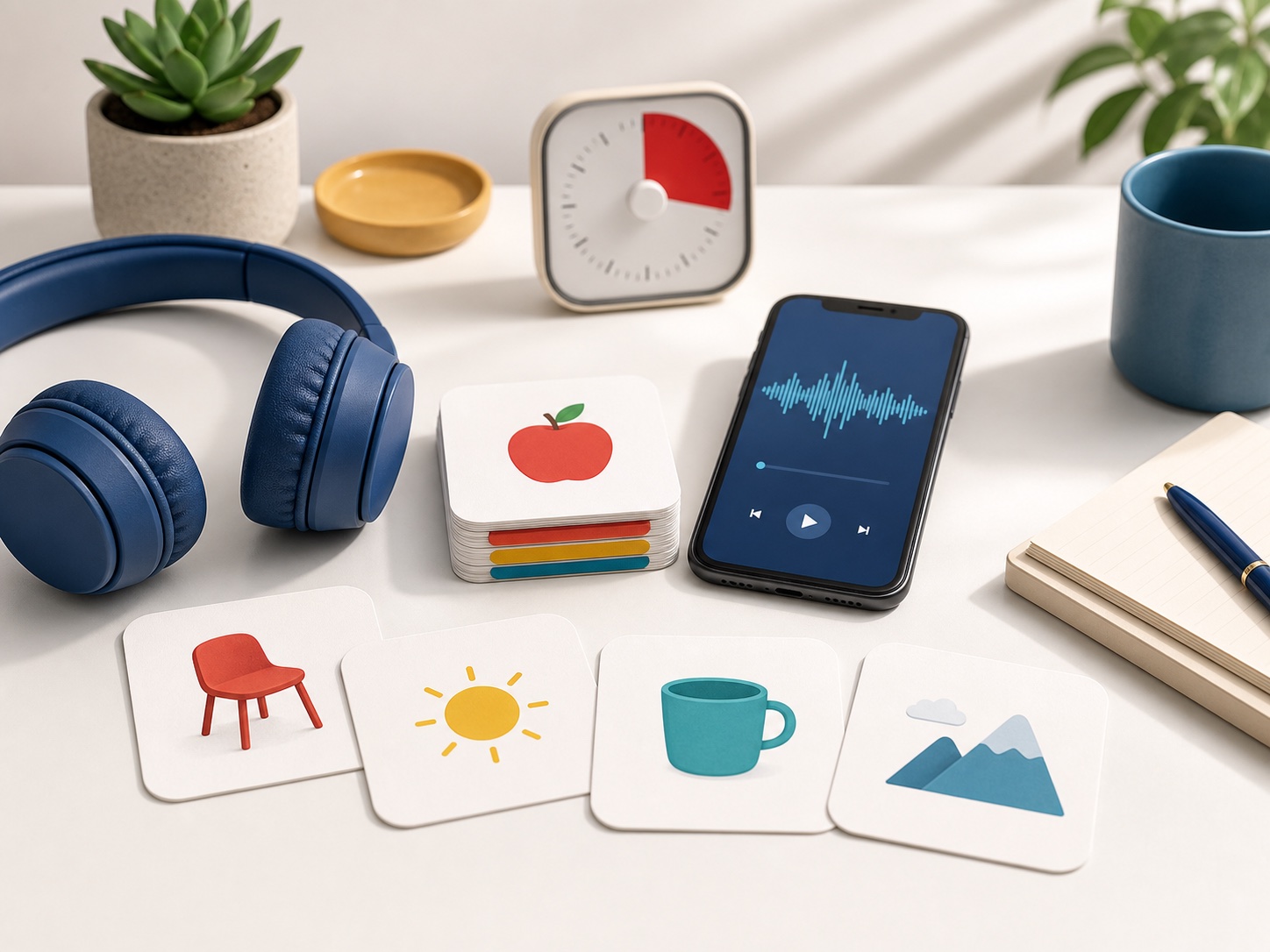
A five-minute Spanish J routine
- Listen to jardín, jefe, jirafa, joven, and jueves, then repeat without changing the consonant for each vowel.
- Alternate one soft-g word with one hard-g word, such as gente–gato.
- Read guerra and guitarra while keeping the written u silent.
- Read bilingüe and make the marked ü audible.
- Record one short phrase, compare it with one regional model, and stop if the throat feels tight.
Pronunciation references
The spelling rules and regional pronunciation notes were checked against these reference pages.
- RAE student orthography: g and j
- SpanishDictionary: pronunciation of Spanish j
- Universitat Politècnica de València: letters g and j
FAQ
Does Spanish j sound like English h?
Often it is a useful first approximation, especially for many Latin American accents, but Spanish j is commonly made farther back and may sound stronger in central and northern Spain.
When does Spanish g sound like j?
Written g has the same sound as j before e or i: gente, general, gigante, gimnasio. Before a, o, or u it has a hard g sound.
Is the u pronounced in gue and gui?
Normally no: guerra and guitarra keep a hard g and a silent u. A diaeresis makes it audible in güe or güi, as in bilingüe.
Which regional J pronunciation should I copy?
Choose a clear speaker from the variety you are learning and stay consistent. A softer aspirated jota and a stronger back-of-mouth jota can both be standard regional pronunciations.
Can Hola Cards grade my J sound?
No. Hola Cards can play a word and use on-device recognition to check which word was recognized. It does not score individual phonemes or judge whether your regional jota is ideal.
Copy the 24 J and G words into Hola Cards
Open word groups in Hola Cards, choose paste/import, and paste this block. The app can read the title and the “Spanish - translation” lines.
**Spanish J and G pronunciation: 24 words**

jardín - garden
jabón - soap
jamón - ham
joven - young
ojo - eye
jueves - Thursday
jefe - boss
jirafa - giraffe
viaje - trip
mujer - woman
reloj - clock, watch
ejercicio - exercise
gente - people
general - general
gigante - giant
gimnasio - gym
elegir - to choose
recoger - to collect
gato - cat
goma - eraser
gusto - taste
guerra - war
guitarra - guitar
bilingüe - bilingual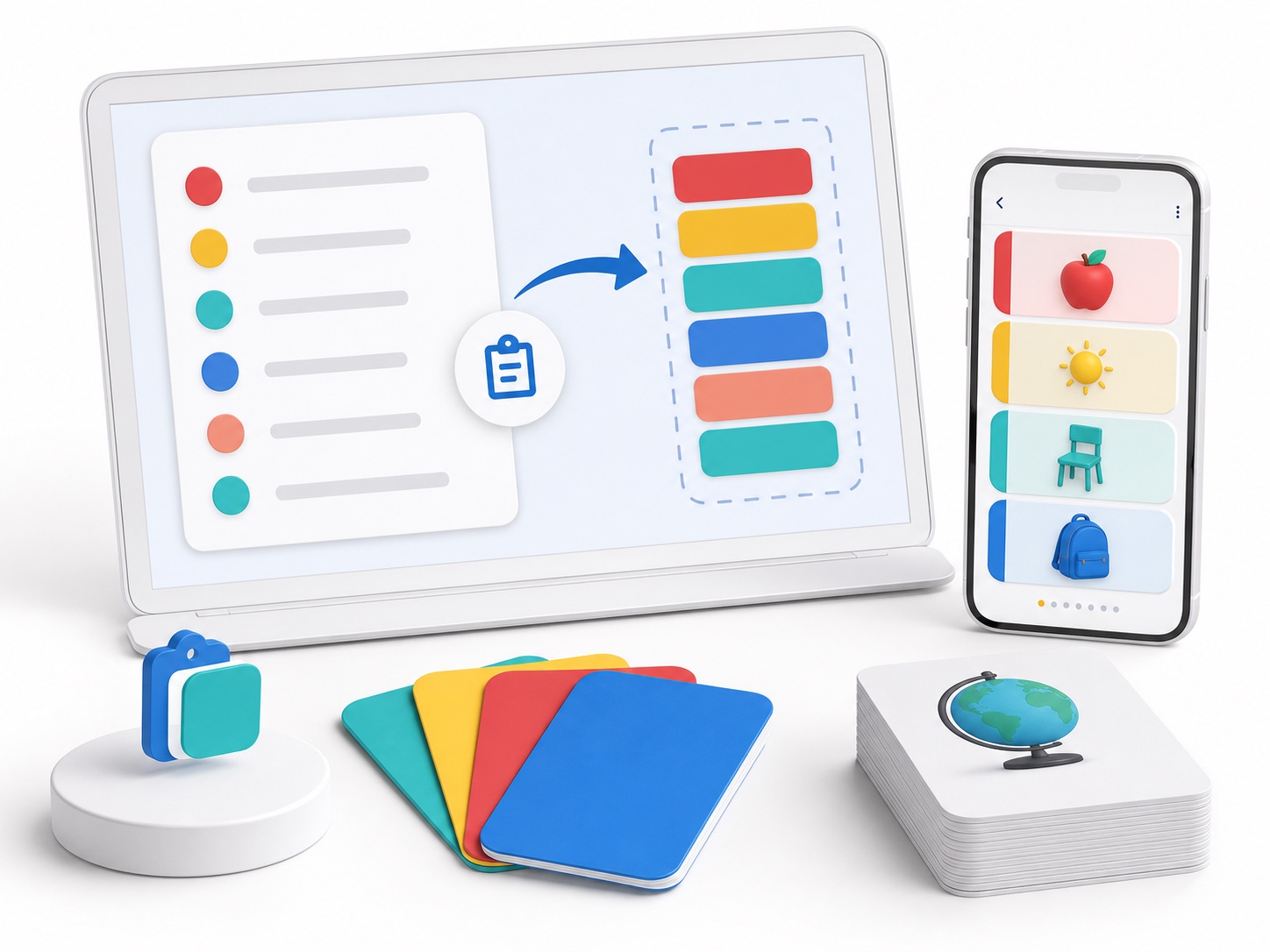
Practise Spanish J and G in Hola Cards
Review the 24 words with Spanish audio, writing, custom groups, spaced review, and word-level recognition on iOS and Android.