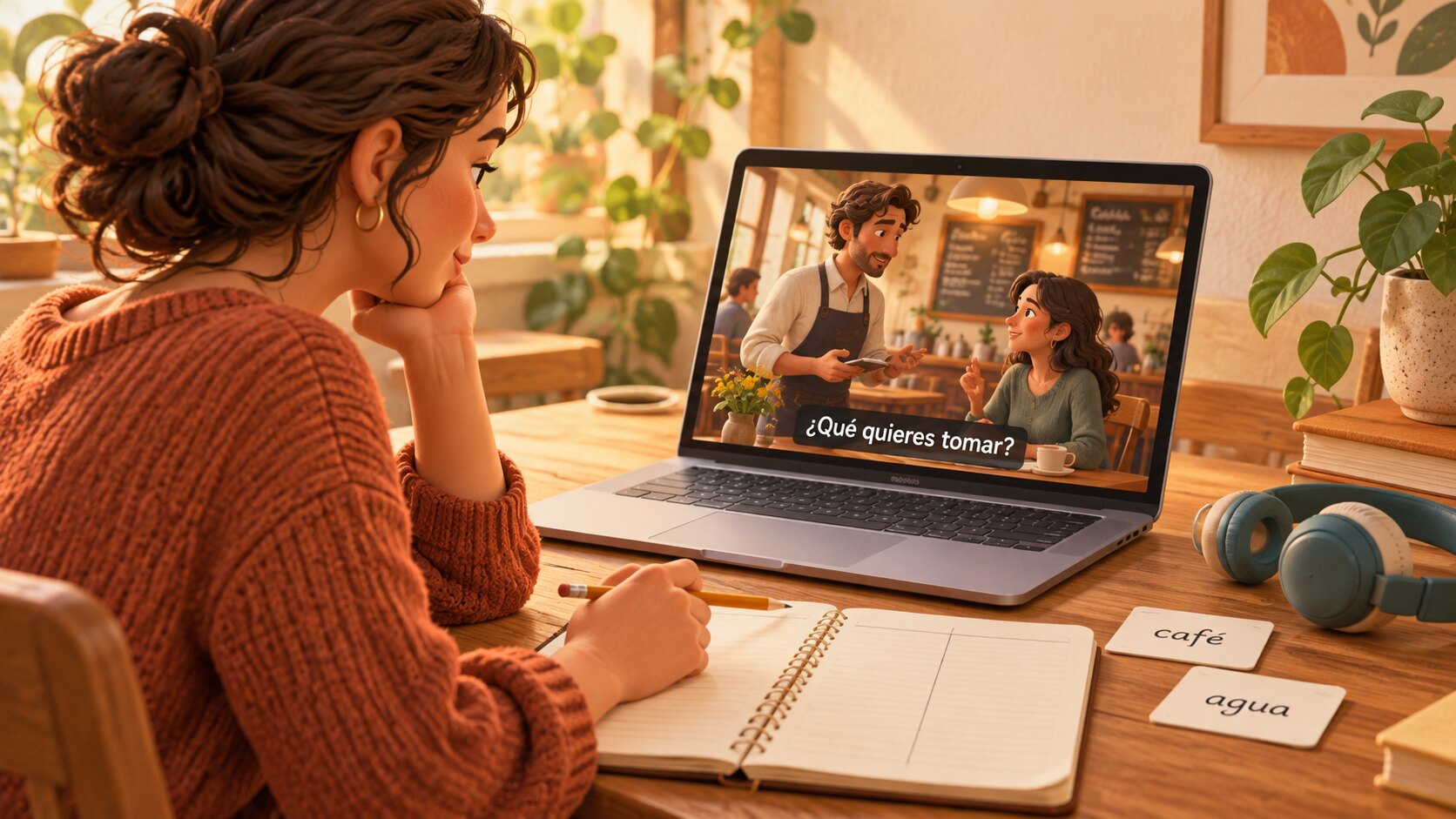
Review Key Words
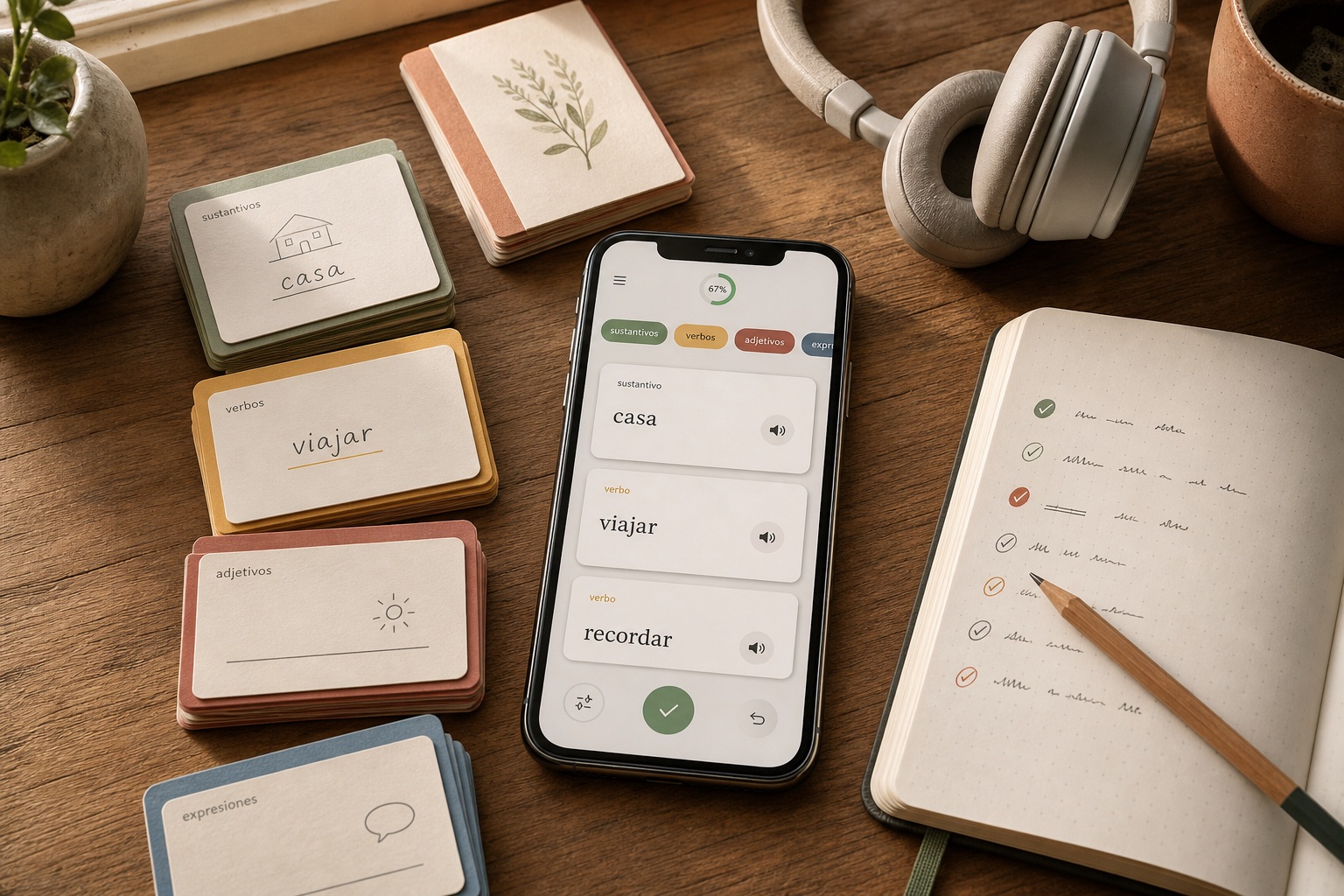
Save unfamiliar words from your viewing sessions and practice independent recall with Hola Cards.
Spanish subtitles language learning
Matching On-Screen Text to Study Goals
Choosing between Spanish captions, native subtitles, or uncaptioned video depends on your focus, as text availability and accuracy vary. Native subtitles aid storyline comprehension, Spanish captions connect sounds to spelling, and uncaptioned video offers a limited recognition check, not proven conversational transfer.
Rather than viewing subtitles as a crutch, optionally adjust modes based on speech clarity and energy. Flexible viewing goals provide targeted practice without mandatory rules.
Three Viewing Modes and Explicit Switch Criteria
Reader-language subtitles assist plot comprehension during complex scenes as an optional practical choice. Learners can sample Spanish captions when phrases feel recognizable, but switching is never mandatory.
Spanish captions display target words to highlight boundaries and connect sounds to spelling, though accuracy varies. Learners can optionally sample uncaptioned audio to test recognition without reading.
Viewing without text offers a limited check of auditory recognition, not conversational turn-taking or proven transfer. Learners can freely return to captions based on personal goals and accessibility needs.
Spanish Study Sentence Library
These 12 original written examples illustrate practice sentences for language review; they are not actual subtitles or transcripts, and this guide includes no embedded audio or test.
| Spanish Sentence | English Meaning |
|---|---|
| Miro el video con subtítulos en español. | I watch the video with Spanish captions. |
| El audio suena claro sin texto en pantalla. | The audio sounds clear without screen text. |
| Cambio los subtítulos cuando el diálogo es rápido. | I change subtitles when speech is fast. |
| Prefiero escuchar las voces originales de los actores. | I prefer listening to the original voices of the actors. |
| Entiendo el mensaje principal de la conversación. | I understand the conversation's main message. |
| Anoto dos detalles interesantes en mi cuaderno. | I write two interesting details in my notebook. |
| Reconozco dos palabras clave en esta escena. | I recognize two keywords in this scene. |
| La frase explica la idea central con claridad. | The sentence explains the main idea clearly. |
| Repaso el vocabulario nuevo al final del día. | I review new vocabulary at the end of the day. |
| Guardo expresiones útiles para practicar mañana. | I save useful phrases for tomorrow's practice. |
| Consulto el significado exacto de cada término. | I check the exact meaning of each term. |
| Intento recordar las palabras estudiadas sin mirar mis apuntes. | I try to recall the studied words without looking at my notes. |
Core Media Study Themes
Structure your language study around these three foundational viewing practice themes:
Gist Comprehension and Fact Extraction
Tracking story gist and key details grounds listening. Focusing on general meaning before grammar is a proposed practical strategy to manage cognitive load.
Entiendo el mensaje principal de la conversación. · Anoto dos detalles interesantes en mi cuaderno. · Reconozco dos palabras clave en esta escena. · La frase explica la idea central con claridad.
Viewing Modes and Display Settings
Adjusting between native subtitles, Spanish captions, and uncaptioned video is an optional choice tailored to personal goals, without mandatory shifts.
Miro el video con subtítulos en español. · El audio suena claro sin texto en pantalla. · Cambio los subtítulos cuando el diálogo es rápido. · Prefiero escuchar las voces originales de los actores.
Post-Viewing Vocabulary Practice
Reviewing selected terms after viewing is a proposed practical choice outside the cited studies. While helpful, vocabulary practice cannot guarantee long-term recall.
Repaso el vocabulario nuevo al final del día. · Guardo expresiones útiles para practicar mañana. · Consulto el significado exacto de cada término. · Intento recordar las palabras estudiadas sin mirar mis apuntes.
Research Insights and Real-World Limitations
Markham, Peter, and McCarthy (2001) assessed 169 fourth-semester intermediate Spanish students in intact groups watching a 7-minute Spanish Apollo 13 episode. Immediate English-dependent summary and multiple-choice comprehension scores showed English > Spanish > none on these measures. The study tested only immediate recall in intermediate learners, not long-term vocabulary retention, beginning A1 students, or all reader languages.
Cintrón-Valentín and García-Amaya (2021) observed 369 Spanish L2 learners given a grammar lesson and enhanced captions or no captions across four multimodal video sessions. Findings showed strong immediate vocabulary gains, but mixed grammar outcomes and less stable low-frequency retention. The study examined instructional video rather than recreational streaming and was not an L1 versus L2 comparison.
Neither study proves universal benefits or conversational transfer. Our viewing advice and review strategies represent proposed practical choices rather than findings of these two investigations.
Explore our complementary articles on Spanish listening and study techniques:
Spanish Shadowing Practice Spanish Connected Speech How to Use a Spanish Dictionary Spaced Repetition for Spanish Vocabulary
A Practical Protocol for Evaluating Viewing Modes
- Try an optional self-observation routine using a clear 45-to-90-second personal or licensed video clip with natural Spanish dialogue. While rewatching the same clip across different subtitle modes is useful listening practice, it is not evidence that one mode wins, because repeated exposure naturally aids comprehension. Similarly, trying new similar clips across sessions remains an imperfect self-observation rather than a causal experiment, carrying no standardized test, CEFR rating, or claim of proven efficacy.
- Watch your chosen clip once in your selected viewing mode. Immediately pause to write down a one-sentence gist and two factual details about the scene. Separately from those content facts, record two words you distinctly heard in the audio versus words you read on screen. This routine helps track listening comfort while keeping message comprehension distinct from heard-versus-read vocabulary recognition.
- Fictional cafe practice log (illustrative routine, not experimental data): A learner watched a 60-second video of an everyday cafe encounter. Gist: A customer orders breakfast before an appointment. Two order and time details: The cafe opens at 8:00 AM; the patron orders a coffee and a warm croissant for four euros. Heard-versus-read words: Heard café (coffee) in speech; read cruasán (croissant) in the Spanish captions. Background noise was mild.
Academic Research Sources
This editorial evaluation examines findings from two peer-reviewed studies on subtitles and multimedia acquisition:
Frequently Asked Questions About Spanish Subtitles
Should beginners ever use subtitles in their native language?
Yes. Native subtitles help establish context when Spanish feels difficult. Trying Spanish captions is an optional exercise, never a mandatory requirement.
Why do Spanish captions sometimes differ from spoken audio?
Captions often condense speech, dubbed audio differs from subtitle scripts, and automated captions produce errors. Treat text as an approximate guide.
Does subtitle viewing diagnose your language proficiency?
No. Video viewing is informal practice, not a formal diagnostic test. Comprehension fluctuates with visual context, audio clarity, and topic familiarity.
Must learners eventually turn off accessibility subtitles?
Never. Accessibility captions remain vital for hearing support. Adjusting subtitle modes is an optional learning activity, not a requirement to eliminate captions.
Practice Sentences for Independent Study
Twelve original Spanish sentences demonstrating viewing modes, message comprehension, and vocabulary review.
**Practice Sentence Library**

Miro el video con subtítulos en español. - I watch the video with Spanish captions.
El audio suena claro sin texto en pantalla. - The audio sounds clear without screen text.
Cambio los subtítulos cuando el diálogo es rápido. - I change subtitles when speech is fast.
Prefiero escuchar las voces originales de los actores. - I prefer listening to the original voices of the actors.
Entiendo el mensaje principal de la conversación. - I understand the conversation's main message.
Anoto dos detalles interesantes en mi cuaderno. - I write two interesting details in my notebook.
Reconozco dos palabras clave en esta escena. - I recognize two keywords in this scene.
La frase explica la idea central con claridad. - The sentence explains the main idea clearly.
Repaso el vocabulario nuevo al final del día. - I review new vocabulary at the end of the day.
Guardo expresiones útiles para practicar mañana. - I save useful phrases for tomorrow's practice.
Consulto el significado exacto de cada término. - I check the exact meaning of each term.
Intento recordar las palabras estudiadas sin mirar mis apuntes. - I try to recall the studied words without looking at my notes.
Strengthen Vocabulary After Viewing
Select two or three unfamiliar words from your viewing session for independent recall in Hola Cards. Enjoy mobile offline guest vocabulary practice or web sign-in access. Hola Cards provides catalog word audio and word-level pronunciation practice rather than full video transcripts, player tools, or sentence grading.