Practise Vocabulary Words on Mobile
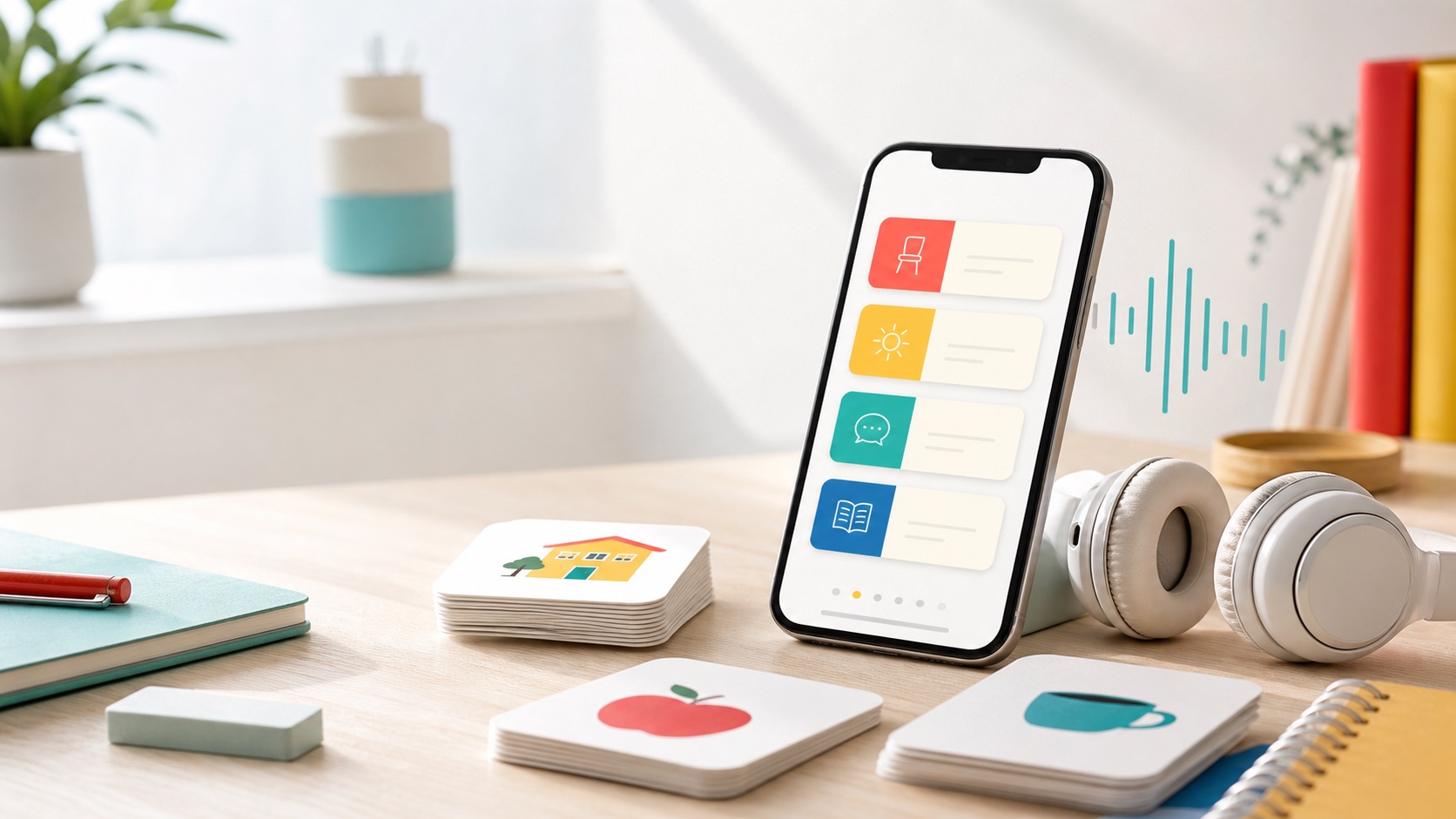
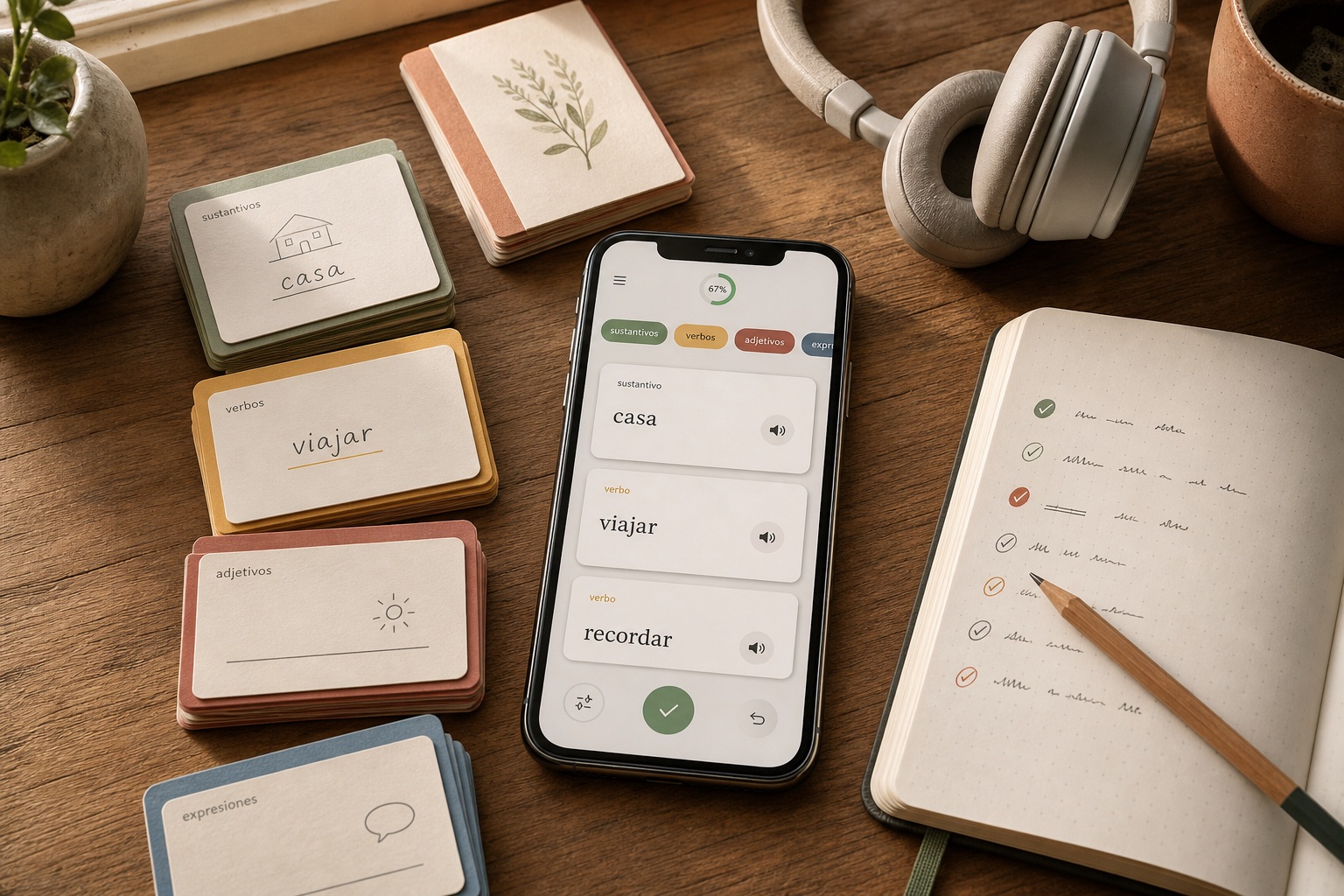
Build individual vocabulary recall with Hola Cards on mobile. The mobile app supports offline and guest practice for catalog words and custom groups, differing from web Firebase sign-in. Hola Cards does not provide sentence audio, synchronization, or shadowing assessment.
Spanish shadowing practice
Understanding the Spanish Shadowing Routine
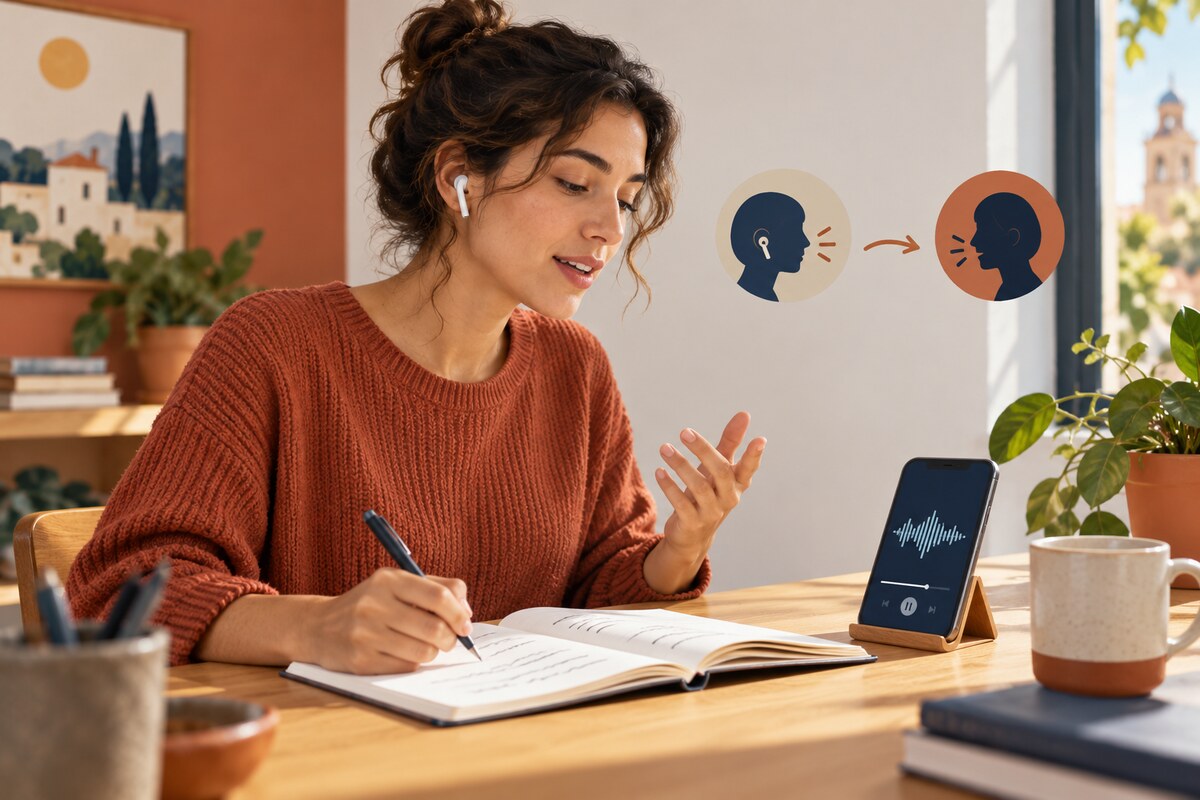
Shadowing involves speaking along with recorded speech with a brief delay, rather than waiting for the speaker to finish. While sources describe shadowing in varied ways rather than agreeing on a single universal definition, it is commonly distinguished from traditional listen-and-repeat exercises, where a learner waits for a complete phrase or sentence before speaking during a pause. For intermediate learners, working with short spoken passages offers a practical way to practise following natural conversational pacing.
An accommodation is helpful for learners at the A1 stage, who may find natural conversational Spanish challenging to track in real time. Instead of starting with simultaneous tracking, beginners can use a listen-and-repeat approach with short, familiar phrases such as buenos días. Once learners feel comfortable with basic Spanish sounds and phrases, they can gradually explore shadowing with short, manageable excerpts.
Selecting appropriate audio is an important part of the routine. Learners can choose short, manageable recordings that are lawfully acquired or freely accessible, accompanied by an accurate transcript. For example, learners can use The Open University OpenLearn course Intermediate Spanish: Understanding spoken Spanish for unscripted natural-speed video and transcript work in section 6.2. Academic research on shadowing also warrants realistic expectations: Quesada Vázquez (2026) conducted an exploratory study in Revista Internacional de Lenguas Extranjeras involving ten student volunteers in an English-as-a-foreign-language university setting. While the participants reported positive perceptions regarding fluency, accuracy, and listening, these self-reported impressions reflect subjective experiences in an EFL context rather than causal evidence of second-language Spanish gains.
Core Rules for Productive Practice
A helpful guideline for Spanish shadowing is to work with short, manageable chunks of audio as a flexible teaching suggestion rather than an extended passage. Focusing on a brief utterance, such as Ya tengo preparado todo el material para la reunión, allows you to attend closely to the phrasing and pronunciation of the sentence without feeling rushed.
Preparation before speaking is equally important. Rather than shadowing unfamiliar audio immediately, review a lawful transcript to clarify unfamiliar vocabulary, reading the text quietly and then aloud at a comfortable pace. You can then repeat the passage several times as needed. If your delivery falters during a sentence like No te preocupes, salimos en cuanto termine la llamada, pause the audio, review the words at a slower pace, and try the passage again.
It is also important to recognize personal practice limits. Take a break if comprehension slips or if speaking along with the recording starts to feel scattered. This guide presents an instructional routine rather than evidence that shadowing works for every learner. It does not promise accent removal, native-like speech, automatic speaking improvement, faster acquisition, or universal practice schedules; brief, attentive practice is simply more manageable than rushing through unreviewed audio.
Original Spanish Practice Utterances
Use these twelve original practice utterances across your preparation, shadowing, and review cycles. These learning examples support imitation practice but do not replace authentic audio clips.
| Spanish Utterance | English Translation |
|---|---|
| Ya tengo preparado todo el material para la reunión. | I already have all the material prepared for the meeting. |
| Si tienes dudas, revisa el documento que te envié. | If you have questions, review the document that I sent you. |
| Prefiero escuchar la grabación antes de empezar a hablar. | I prefer to listen to the recording before starting to speak. |
| Vamos a repasar estas cuatro frases despacio. | We are going to review these four sentences slowly. |
| No te preocupes, salimos en cuanto termine la llamada. | Do not worry, we will leave as soon as the call ends. |
| Siempre dice que llega a las ocho, pero nunca es puntual. | He always says he arrives at eight, but he is never on time. |
| Creo que podemos resolver el problema esta misma tarde. | I think we can solve the problem this very afternoon. |
| Voy a pedir un café con leche mientras esperamos el tren. | I am going to order a coffee with milk while we wait for the train. |
| Noté que la entonación sube al final de esa pregunta. | I noticed that the intonation rises at the end of that question. |
| Pronuncié esa vocal con demasiada tensión durante la repetición. | I pronounced that vowel with too much tension during the repetition. |
| Ahora suena mucho más natural cuando mantengo el ritmo continuo. | Now it sounds much more natural when I maintain the continuous rhythm. |
| Grabar mi propia voz me ayudó a identificar la pausa innecesaria. | Recording my own voice helped me identify the unnecessary pause. |
Three Core Practice Themes
Master the three sequential phases of every shadowing session to build steady speech habits without vocal strain.
Audit the audio transcript thoroughly and clarify any unfamiliar vocabulary before pressing play.
Rehearse the target passage with silent reading and slow deliberate speech to establish baseline comprehension.
Ya tengo preparado todo el material para la reunión. · Si tienes dudas, revisa el documento que te envié. · Prefiero escuchar la grabación antes de empezar a hablar. · Vamos a repasar estas cuatro frases despacio.
Record your vocal output and contrast your rhythm against the original authentic speaker.
Isolate a single phonetic or intonational detail to adjust before initiating your next practice cycle.
Noté que la entonación sube al final de esa pregunta. · Pronuncié esa vocal con demasiada tensión durante la repetición. · Ahora suena mucho más natural cuando mantengo el ritmo continuo. · Grabar mi propia voz me ayudó a identificar la pausa innecesaria.
Maintain an immediate vocal lag of one or two syllables without waiting for sentence completion.
Execute three to five short repetitions focusing entirely on pacing and continuous breath support.
No te preocupes, salimos en cuanto termine la llamada. · Siempre dice que llega a las ocho, pero nunca es puntual. · Creo que podemos resolver el problema esta misma tarde. · Voy a pedir un café con leche mientras esperamos el tren.
Physical Form and Diagnostic Monitoring
Comfortable physical form helps support clear vocal practice. Maintain an upright, relaxed posture, and adjust your headphones so you can hear the recorded speaker clearly at a moderate volume while still hearing your own voice as you speak.
During active practice, follow along closely behind the recorded speaker without rushing ahead or dropping far behind. When shadowing a natural sentence like Creo que podemos resolver el problema esta misma tarde, focus on following the speaker's conversational rhythm, pitch, and phrasing rather than focusing excessively on isolated sounds.
Focusing on a single pronunciation feature during a practice session is often more effective than attempting to address every sound at once. For example, you might focus on vowel clarity in phrases like café con leche during one pass, and attend to rhythm or conversational pacing during another. You can also optionally record your voice to review your delivery, noting how steadily you speak an utterance like Ahora suena mucho más natural cuando mantengo el ritmo continuo or checking for unexpected hesitations as in Grabar mi propia voz me ayudó a identificar la pausa innecesaria.
Deepen your pronunciation foundation with these related guides on listening skills, connected speech patterns, and beginner articulation.
Spanish listening practice app Spanish connected speech Spanish vowel sounds Spanish pronunciation for beginners
The Five-Step Spanish Shadowing Cycle
- Step one of the practical cycle begins with audio sourcing and transcript verification. Choose a short, manageable excerpt from a lawful educational resource or personal recording. For example, learners can use The Open University OpenLearn course Intermediate Spanish: Understanding spoken Spanish for unscripted natural-speed video and transcript work in section 6.2. Ensure that the accompanying transcript accurately matches the audio so that you understand the meaning before vocalizing.
- Step two involves listening and text familiarization. Listen to the audio excerpt without speaking, paying attention to the speaker's natural pacing and expression. Next, read the transcript quietly to confirm the meaning of any unfamiliar words, followed by reading the text aloud at a comfortable pace without the recording. Reviewing a target phrase like Prefiero escuchar la grabación antes de empezar a hablar helps you become familiar with the phrasing before speaking alongside the audio.
- Step three is active shadowing, while steps four and five conclude the cycle with diagnostic review and vocabulary study. Play the audio and speak along with the recording with a brief delay, practicing passages such as Siempre dice que llega a las ocho, pero nunca es puntual. In step four, you can optionally record a pass to evaluate your delivery against your chosen pronunciation focus; in step five, note any individual unfamiliar or difficult words to review separately.
Independent References and Research Sources
Explore the external educational materials and exploratory academic research referenced throughout this guide.
- Open University OpenLearn: section 6.2 Using transcripts
- Quesada Vázquez (2026): shadowing perceptions study
- Open University OpenLearn: section 0 course overview
Frequently Asked Questions About Spanish Shadowing
How does shadowing differ from listen-and-repeat exercises in Spanish?
Shadowing involves speaking along with recorded speech with a slight delay, rather than waiting for the speaker to finish. While descriptions of shadowing vary across teaching sources rather than sharing a single definition, it differs from listen-and-repeat exercises where learners wait for a full phrase or sentence to conclude before repeating it during a pause.
Can A1 Spanish beginners practise shadowing effectively?
Beginners at the A1 stage often find natural conversational speech fast to follow in real time. A helpful accommodation is to start with a listen-and-repeat approach using short greetings such as buenos días. Once learners feel more comfortable with basic Spanish sounds, they can gradually introduce shadowing with brief, accessible phrases.
What type of audio should I use for Spanish shadowing?
Choose short, manageable recordings that you can understand reasonably well and that come with an accurate transcript, using materials that are lawfully licensed or freely available. For intermediate practice, you can consult independent resources like The Open University OpenLearn course Intermediate Spanish: Understanding spoken Spanish for unscripted natural-speed Spanish video and transcript work in section 6.2.
Does academic research prove that shadowing guarantees Spanish fluency?
No. Research such as Quesada Vázquez (2026) examined ten student volunteers in an English-as-a-foreign-language university setting who reported perceived benefits for fluency, accuracy, and listening. This exploratory study reflects subjective learner perceptions and does not demonstrate causal improvement or guaranteed Spanish language acquisition.
Copy Practice Phrases to Your Clipboard
Select target learning phrases to paste into your personal digital study notes or flashcard lists.
**Practice Phrases Group**

Ya tengo preparado todo el material para la reunión. - I already have all the material prepared for the meeting.
Si tienes dudas, revisa el documento que te envié. - If you have questions, review the document that I sent you.
Prefiero escuchar la grabación antes de empezar a hablar. - I prefer to listen to the recording before starting to speak.
Vamos a repasar estas cuatro frases despacio. - We are going to review these four sentences slowly.
No te preocupes, salimos en cuanto termine la llamada. - Do not worry, we will leave as soon as the call ends.
Siempre dice que llega a las ocho, pero nunca es puntual. - He always says he arrives at eight, but he is never on time.
Creo que podemos resolver el problema esta misma tarde. - I think we can solve the problem this very afternoon.
Voy a pedir un café con leche mientras esperamos el tren. - I am going to order a coffee with milk while we wait for the train.
Noté que la entonación sube al final de esa pregunta. - I noticed that the intonation rises at the end of that question.
Pronuncié esa vocal con demasiada tensión durante la repetición. - I pronounced that vowel with too much tension during the repetition.
Ahora suena mucho más natural cuando mantengo el ritmo continuo. - Now it sounds much more natural when I maintain the continuous rhythm.
Grabar mi propia voz me ayudó a identificar la pausa innecesaria. - Recording my own voice helped me identify the unnecessary pause.
Enhance Individual Word Recall with Hola Cards
Hola Cards enables mobile guest and offline practice for individual catalog words and custom study groups, whereas web learning requires Firebase sign-in. Please note that Hola Cards does not provide sentence audio, phrase synchronization, or shadowing evaluation.