Regular Spanish Verbs for Practice Drills
Use these twelve regular -ar verbs to build custom practice sentences or create vocabulary flashcards.
| Spanish verb | Meaning |
|---|---|
| preparar | to prepare |
| viajar | to travel |
| ordenar | to arrange |
| estudiar | to study |
| entrenar | to train |
| repasar | to review |
| caminar | to walk |
| escuchar | to listen to |
| cantar | to sing |
| cenar | to have dinner |
| comprar | to buy |
| bailar | to dance |
Import Regular Verbs to Hola Cards
Copy this formatted list to import twelve regular verbs directly into Hola Cards with one pair per line using - between the Spanish infinitive and English meaning. These lines contain vocabulary and no tense drill. Mobile supports guest practice, while web study requires signing in.
Intermediate Spanish
Blocked Versus Mixed Conjugation Practice
When practicing Spanish verbs, you can choose between blocked practice and mixed practice. Blocked practice groups one tense at a time, completing a full set of sentences for a single form before moving on. Mixed practice alternates target tenses across sentences, requiring you to identify the appropriate form for each prompt. In this guide, the six example sentences and total practice attempts stay exactly the same, changing only the order of the tasks.
It is also helpful to distinguish task order within a session from spacing between sessions. Interleaving determines the order of items during study, while spacing refers to the time separating study sessions across days or weeks. This guide offers a reusable worksheet for learners who already understand both past tenses, providing a practical way to explore mixed practice.
What the Research Shows About Task Order
Research by Pan et al. in 2019 evaluated task ordering across four experiments with college students practicing the Spanish pretérito perfecto simple and pretérito imperfecto. The authors tested whether blocked or mixed arrangements of identical practice items produced higher delayed accuracy.
Outcomes varied across the experimental designs. Following one training session, tests after two days showed a numerical blocked advantage in experiment 1 and similar results across groups in experiment 2. In experiments 3 and 4, two weekly sessions yielded higher accuracy for interleaved practice on a one-week delayed check.
Testing formats also differed, with experiments 1 through 3 using multiple choice questions while experiment 4 used a short answer test. Because session counts, practice schedules and test delays all changed across designs, these changes between study designs preclude attributing differences to the number of sessions alone.
In 2024, Pan et al. reported results from four experiments featuring two weekly sessions and a one-week delayed test. Conjugation improved in the tested conditions, while tense identification showed gains only in some experiments. These concrete findings reflect specific written task demands rather than transfer to speaking, and they do not support broader assumptions about unrelated grammars.
Study Themes for Practice Sets
These thematic categories help you pick related verbs when creating new prompts for your practice sessions.
Special dinner celebrations with friends
Purchasing gifts and social dancing
cenar · comprar · bailar
Familiar afternoon walking paths
Daily audio listening routines
caminar · escuchar · cantar
Organizing travel itineraries and logistics
Preparing weekly schedules and resources
preparar · viajar · ordenar
Targeted grammar review and self-checks
Consistent language study routines
estudiar · entrenar · repasar
Actionable Conjugation Practice Worksheet
This worksheet applies task ordering to regular -ar verbs. Cover the answer key and write your conjugations on a separate sheet of paper. Each sentence presents one intended reading based on the overall past context, so make one attempt per prompt before checking your work.
Work through prompts 1 through 3 below. 1. Anoche mi familia ______ (cenar) a las nueve en punto. 2. El verano pasado Marta ______ (viajar) a Valencia por trabajo. 3. Ayer por la tarde yo ______ (comprar) tres billetes en la estación.
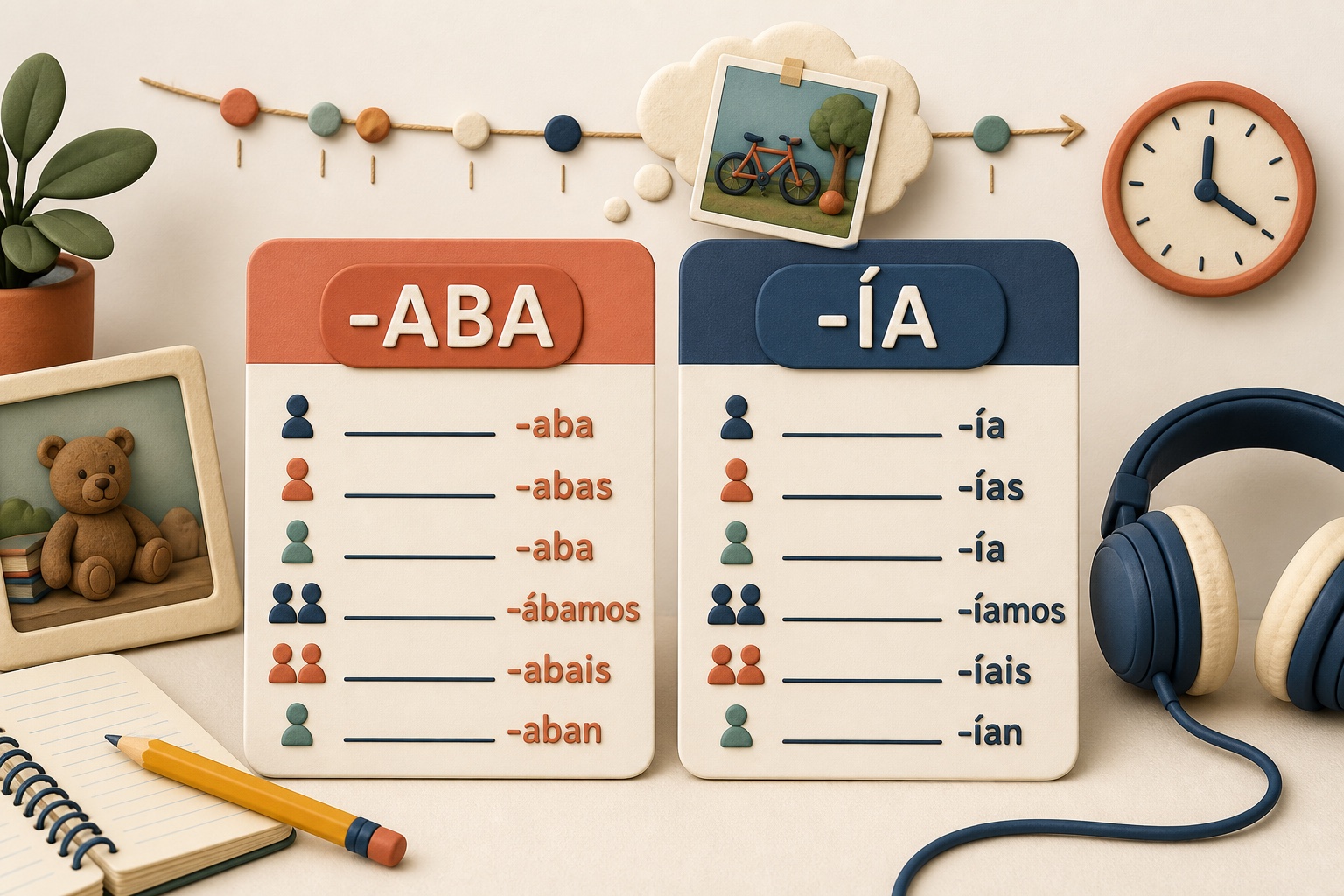
Work through prompts 4 through 6 below. 4. En aquella época nosotros a menudo ______ (caminar) por la orilla del río. 5. Todos los domingos ellos ______ (escuchar) la radio durante el desayuno. 6. De niña Alicia ______ (cantar) en el coro de la escuela.
You can organize these six items into two sample study sequences. A blocked schedule groups prompts by category, progressing through items 1, 2, 3, 4, 5 and 6. A mixed schedule interleaves the prompts without simple alternation, progressing through items 1, 4, 5, 2, 6 and 3. These examples illustrate task sequencing rather than a recommendation to practice both orders on identical material, since repetition introduces confounding familiarity.
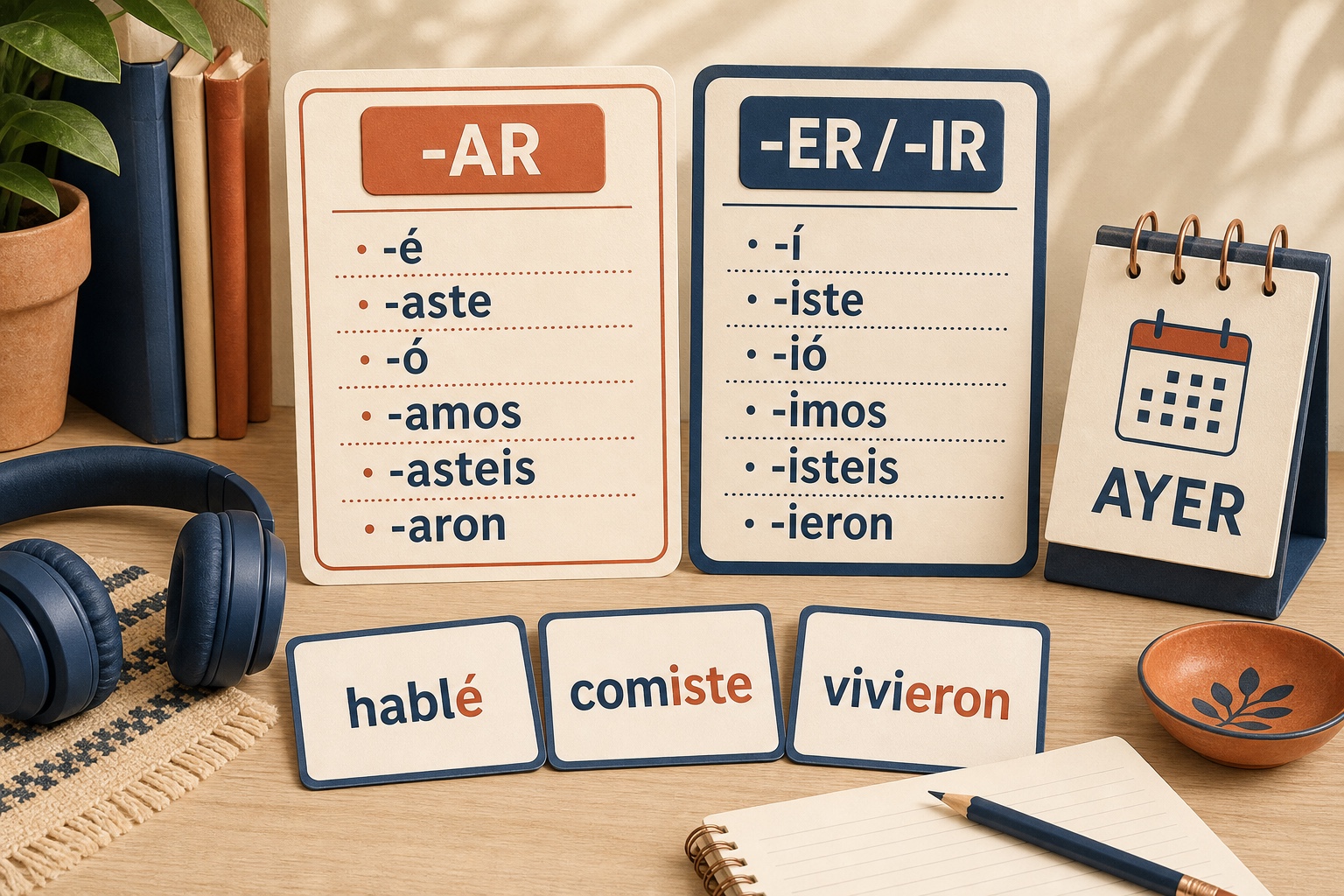
Check your conjugations against this complete key to verify your answers. For item 1, a completed event requires 1. Anoche mi familia cenó a las nueve en punto (last night my family dined at nine sharp). For item 2, one trip viewed as a whole uses 2. El verano pasado Marta viajó a Valencia por trabajo (last summer Marta traveled to Valencia for work). For item 3, a completed transaction takes 3. Ayer por la tarde yo compré tres billetes en la estación (yesterday afternoon I bought three tickets at the station). For item 4, a repeated routine uses 4. En aquella época nosotros a menudo caminábamos por la orilla del río (in those days we often walked by the riverbank). For item 5, a recurring routine takes 5. Todos los domingos ellos escuchaban la radio durante el desayuno (every Sunday they listened to the radio during breakfast). For item 6, a past activity or routine requires 6. De niña Alicia cantaba en el coro de la escuela (as a child Alicia sang in the school choir).
As a possible study choice, you can introduce a delay before testing yourself on two transfer prompts with different verbs. Cover the solutions below before attempting these sentences. El sábado pasado Raúl ______ (bailar) salsa en la fiesta. Cuando vivía en Madrid, Elena ______ (estudiar) por las mañanas. As you verify your work, log your tense choice and verb ending in separate columns to see whether an error came from aspect selection or suffix spelling. The key for the completed event is El sábado pasado Raúl bailó salsa en la fiesta with the pretérito perfecto simple ending -ó. The key for the past routine is Cuando vivía en Madrid, Elena estudiaba por las mañanas with the pretérito imperfecto ending -aba. This exercise demonstrates sequencing and diagnostic tracking rather than a research replication.
Explore related guides to strengthen your knowledge of Spanish verb conjugations and aspectual differences.
Overview of Spanish past aspect contrasts Reference guide for regular preterite endings Summary of descriptive imperfect endings
How to Schedule Follow-Up Practice
- Schedule your follow-up practice session for two days or one week later according to your calendar. When you return to practice, hide the answer key, try unseen prompts, and log your tense choice and verb ending in separate columns to identify where any mistakes happen.
- Use familiar vocabulary to write new sentence contexts for your practice. Drafting simple prompts with known regular verbs gives you extra material for mixed sessions without requiring new words.
Research Sources and Grammatical References
Key scientific studies on cognitive interleaving and official grammatical references for Spanish past tenses.
- Pan, Tajran, Lovelett, Osuna and Rickard, Journal of Educational Psychology (2019) Investigated blocked versus interleaved practice across four experiments with university learners practicing Spanish past tense aspect.
- Pan, Rodríguez Flores, Kaku and Lai, Learning and Instruction (2024) Evaluated spaced weekly sessions comparing interleaved production and identification tasks in second-language grammar learning.
- RAE and ASALE, pretérito perfecto simple Official grammatical reference defining aspectual values and completed past usage rules from the language academies.
- RAE and ASALE, pretérito imperfecto de indicativo Official reference explaining indicative imperfect morphology and ongoing background descriptive functions.
Frequently Asked Questions About Interleaving
What is the practical difference between blocked and mixed practice?
Blocked practice groups exercises for one target tense together before moving to another tense, although endings can still vary by person. Mixed practice arranges items across tenses without requiring an unpredictable sequence or a tense change on every prompt, meaning items from the same category can repeat. This setup encourages learners to evaluate the context of each sentence rather than relying on a single tense across an entire block.
How does interleaving differ from spaced practice across days?
Interleaving refers to the order of practice items within a single study session, such as mixing pretérito perfecto simple and pretérito imperfecto. Spacing refers to the amount of time that elapses between separate study sessions across days or weeks. While both strategies support learning, interleaving organizes item order while spacing organizes study timing.
When should a learner transition to interleaved conjugation exercises?
A practical criterion for moving to mixed practice is being able to produce the basic regular endings of each tense when prompted in isolation. If a learner cannot yet form the target tenses individually, mixed exercises cause confusion. Once individual endings are familiar, mixed practice helps learners practice choosing between the two tenses in context.
What specific outcomes were measured in the research studies?
The 2019 experiments measured delayed conjugation completion through written sentence prompts. In the 2024 studies, researchers evaluated conjugation completion and tense identification as separate measures, observing consistent conjugation improvements alongside selective tense identification findings across the tested conditions.
Import Regular Verbs to Hola Cards
Copy this formatted list to import twelve regular verbs directly into Hola Cards with one pair per line using - between the Spanish infinitive and English meaning. These lines contain vocabulary and no tense drill. Mobile supports guest practice, while web study requires signing in.
**Essential Regular Spanish Verbs**

preparar - to prepare
viajar - to travel
ordenar - to arrange
estudiar - to study
entrenar - to train
repasar - to review
caminar - to walk
escuchar - to listen to
cantar - to sing
cenar - to have dinner
comprar - to buy
bailar - to dance
Enhance Your Vocabulary Practice with Hola Cards
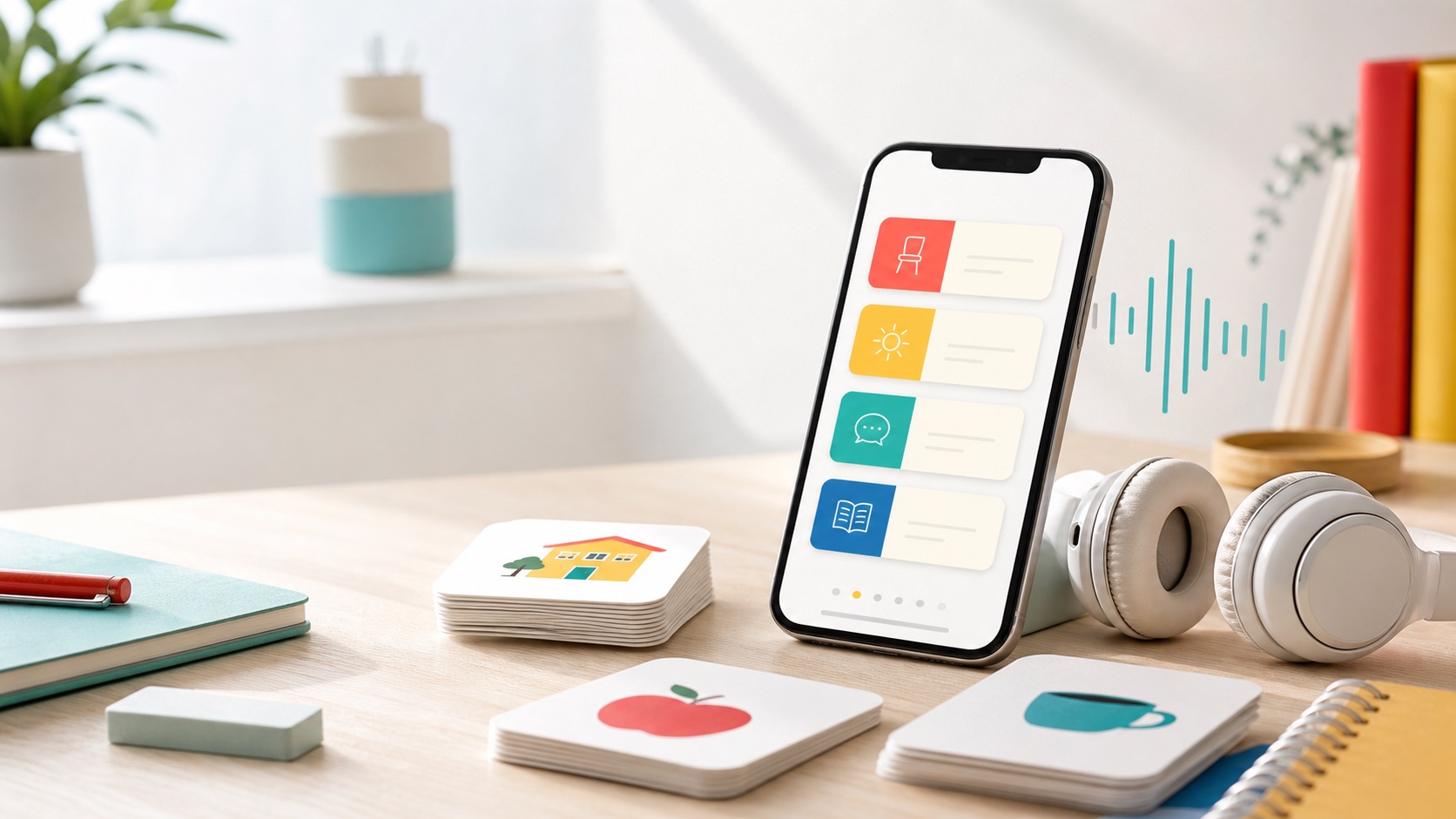
Take the verbs from this worksheet into your daily routine. Create custom groups of checked verbs, practice active spelling recall, and listen to pronunciation on available vocabulary cards at your own pace.