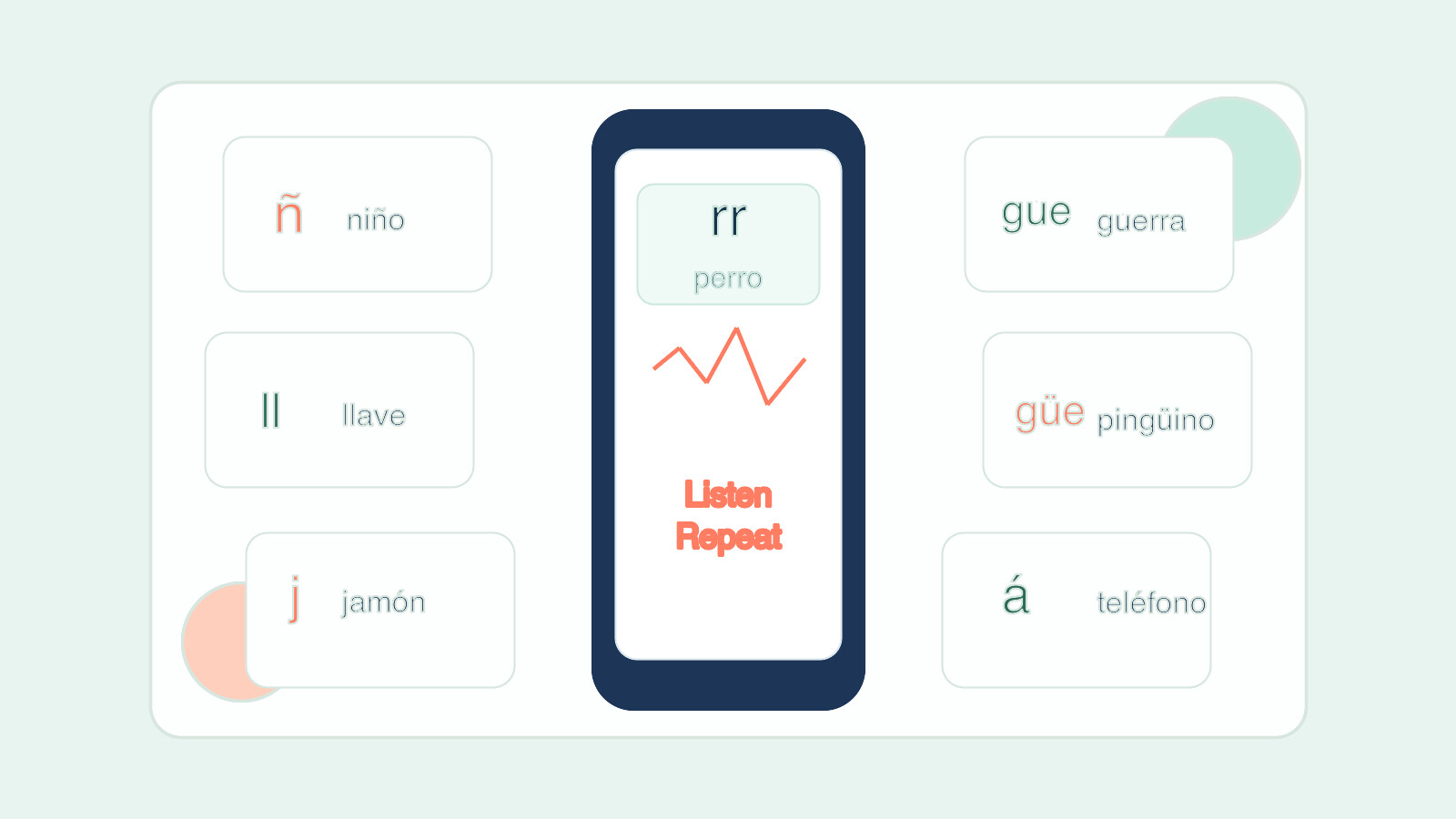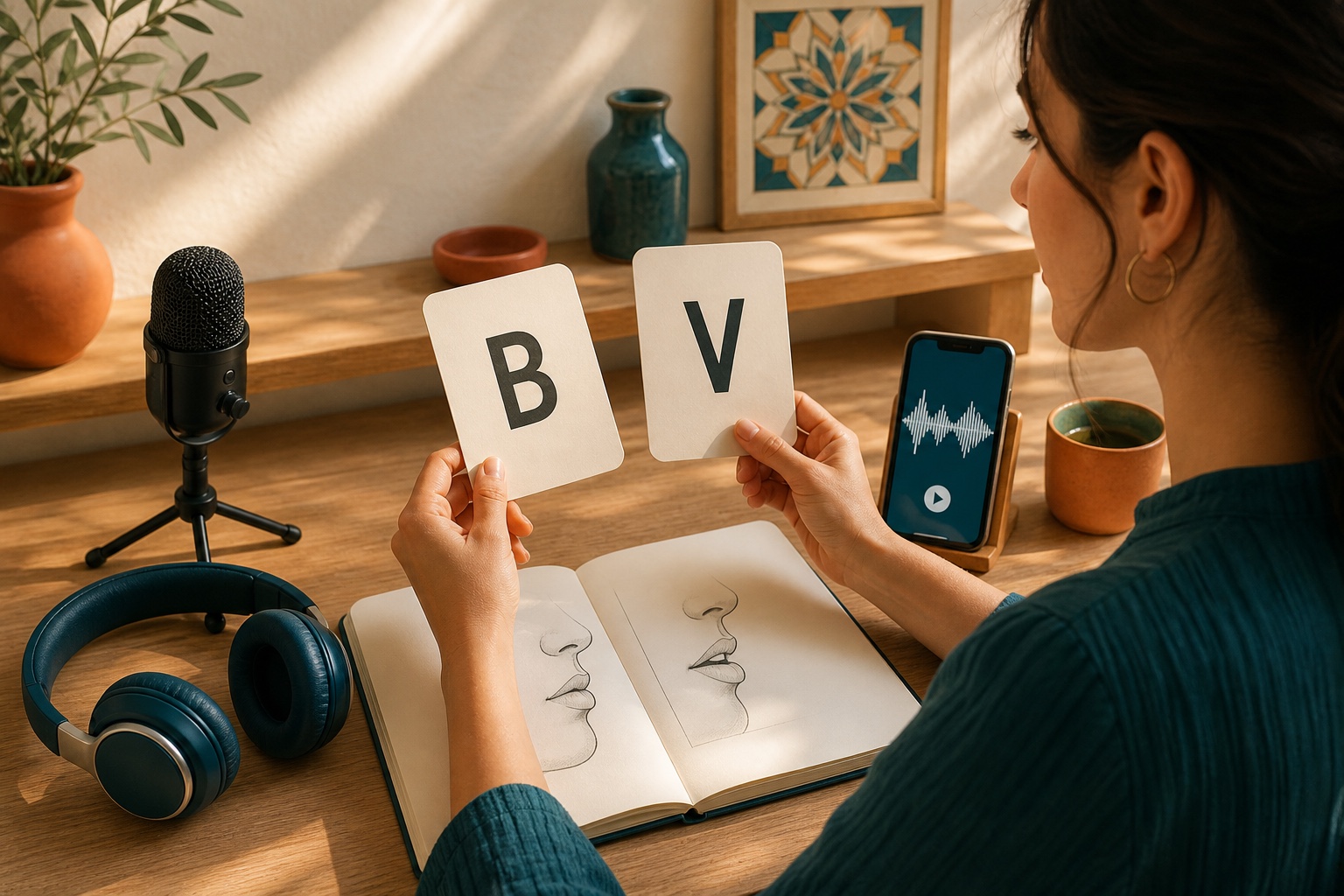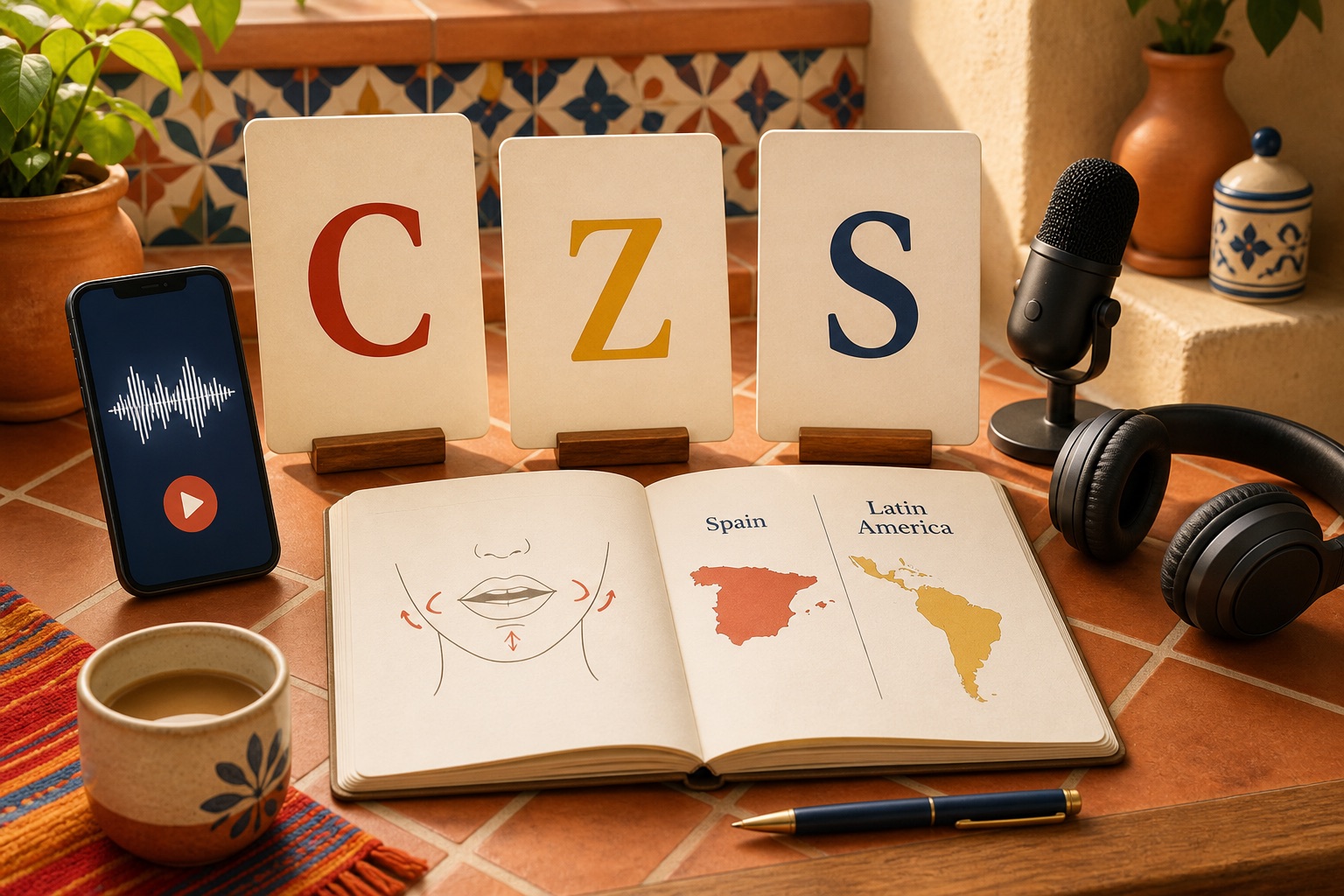
Hear N and Ñ inside complete Spanish words
Import the 24 examples and practise with Spanish audio, writing, and word-level recognition on iOS or Android. Recognition can check which whole word was heard; it does not score /n/ versus /ɲ/, tongue position, or an accent.
Spanish ñ pronunciation
How do you pronounce Ñ in Spanish?
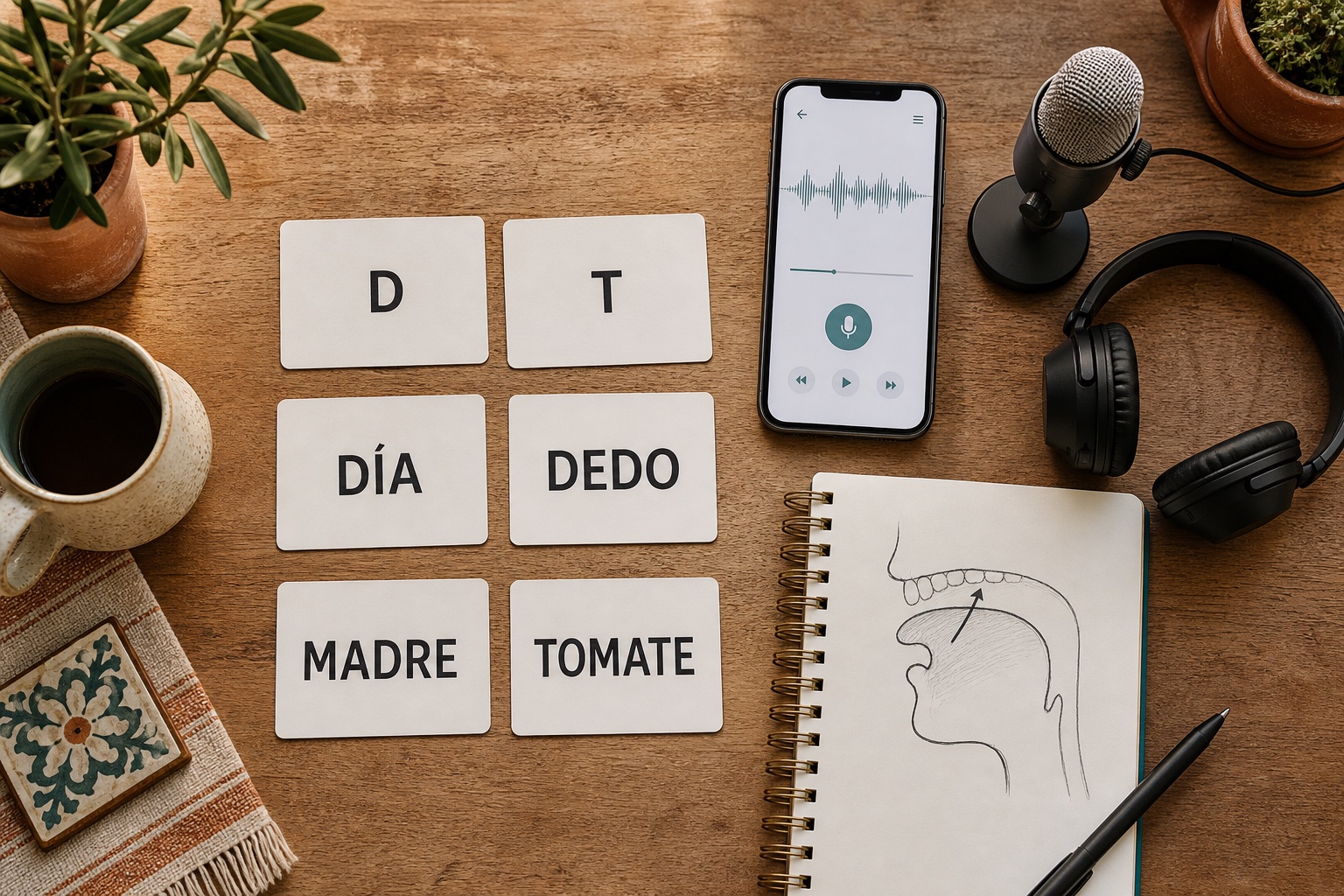
Keep the sound voiced and nasal. Instead of using only the tongue tip as for n, raise the middle of the tongue toward the hard palate. Release directly into the following vowel: ña, ñe, ñi, ño, ñu.
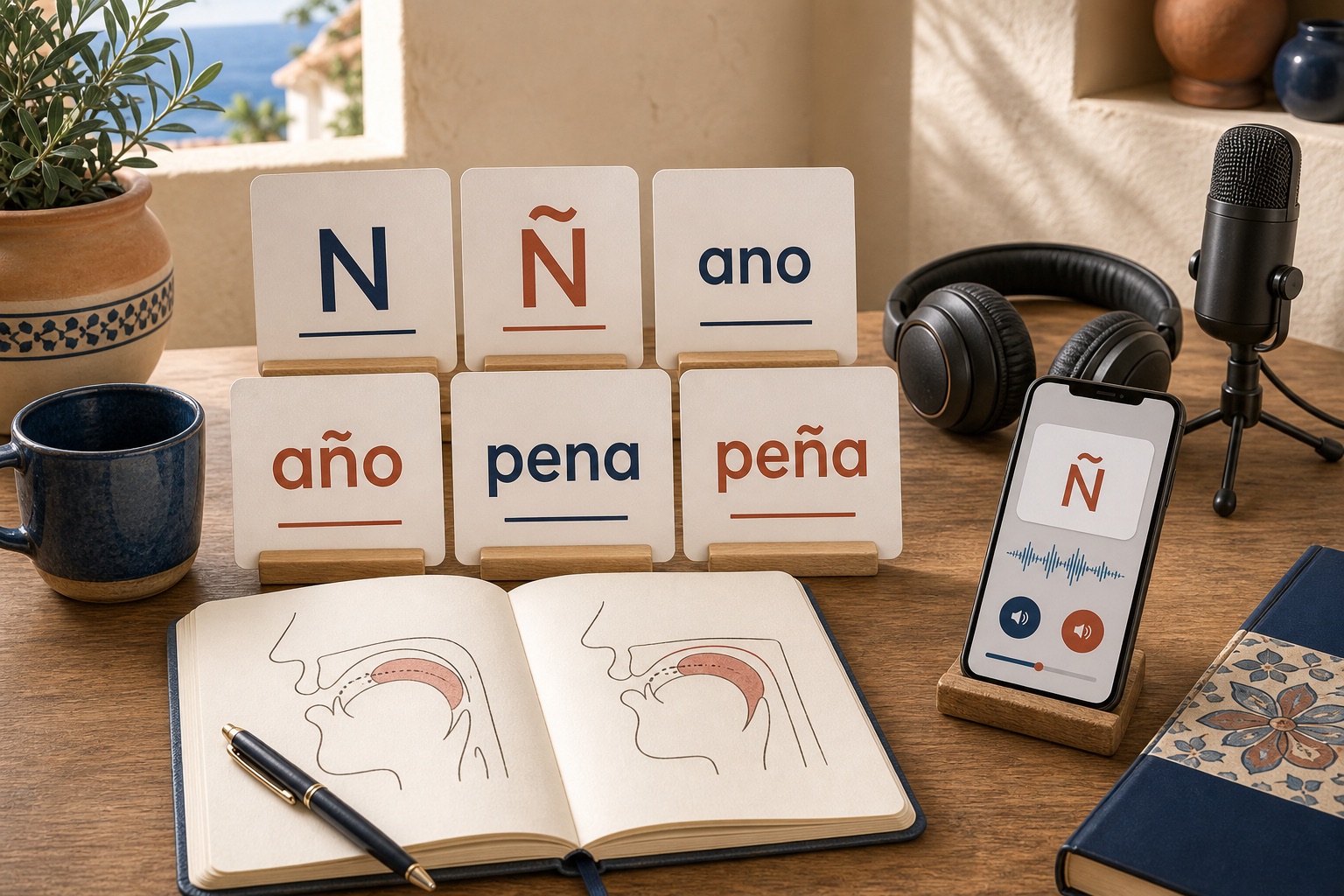
Do not erase the tilde. Ano and año, pena and peña, and una and uña are different words. The spelling contrast carries meaning, so listening and writing practice belong together.
Ñ is called eñe and counts as its own letter in the Spanish alphabet. It normally begins a syllable, as in ni-ño, ma-ña-na and es-pa-ñol; it does not occur at the end of a Spanish syllable.
Separate N, Ñ, and the sequence NI
For n /n/, use a narrow tongue-tip contact near the ridge behind the upper teeth: nada, mano, cena.
For ñ /ɲ/, spread the contact farther back across the hard palate and move straight into the vowel: niño, baño, pequeño.
Use minimal pairs to protect meaning: ano–año, pena–peña, cana–caña, mono–moño, una–uña, sonar–soñar.
Do not automatically replace ñ with two sounds n + y. Likewise, n followed by i in words such as unión is not automatically ñ; compare careful syllables and complete words.
24 Spanish N and Ñ pronunciation examples
The four groups move from ordinary N to Ñ, meaning-changing contrasts, and spelling positions. Repeat the full word or pair and then write it from dictation.
| Spanish | Meaning | Example | Pronunciation cue |
|---|---|---|---|
| nada | nothing | No pasa nada. | Use a light tongue-tip contact for /n/. |
| noche | night | Buenas noches. | Use a light tongue-tip contact for /n/. |
| mano | hand | Levanta la mano. | Use a light tongue-tip contact for /n/. |
| luna | moon | La luna está llena. | Use a light tongue-tip contact for /n/. |
| cena | dinner | La cena está lista. | Use a light tongue-tip contact for /n/. |
| verano | summer | Viajo en verano. | Use a light tongue-tip contact for /n/. |
| niño | boy; child | El niño juega aquí. | Raise a broader tongue surface for the single /ɲ/ sound. |
| mañana | tomorrow; morning | Nos vemos mañana. | Raise a broader tongue surface for the single /ɲ/ sound. |
| señor | sir; gentleman | Buenos días, señor. | Raise a broader tongue surface for the single /ɲ/ sound. |
| baño | bathroom; bath | ¿Dónde está el baño? | Raise a broader tongue surface for the single /ɲ/ sound. |
| pequeño | small | Es un pueblo pequeño. | Raise a broader tongue surface for the single /ɲ/ sound. |
| español | Spanish | Estoy aprendiendo español. | Raise a broader tongue surface for the single /ɲ/ sound. |
| ano / año | anus / year | Este año tiene doce meses. | Keep the tilde: the sound and meaning change. |
| pena / peña | sorrow / rock; group | La peña se reúne hoy. | Keep the tilde: the sound and meaning change. |
| cana / caña | grey hair / cane; reed | La caña es larga. | Keep the tilde: the sound and meaning change. |
| mono / moño | monkey; cute / bun; bow | Lleva el pelo en un moño. | Keep the tilde: the sound and meaning change. |
| una / uña | one; a / fingernail | Tengo una uña rota. | Keep the tilde: the sound and meaning change. |
| sonar / soñar | to sound / to dream | Quiero soñar en español. | Keep the tilde: the sound and meaning change. |
| ñame | yam | El ñame está cocido. | Let Ñ begin the syllable and move directly into the vowel. |
| ñandú | rhea | El ñandú corre rápido. | Let Ñ begin the syllable and move directly into the vowel. |
| leña | firewood | Necesitamos leña seca. | Let Ñ begin the syllable and move directly into the vowel. |
| viñedo | vineyard | Visitamos un viñedo. | Let Ñ begin the syllable and move directly into the vowel. |
| cañería | pipework | La cañería necesita reparación. | Let Ñ begin the syllable and move directly into the vowel. |
| cumpleaños | birthday | Hoy es mi cumpleaños. | Let Ñ begin the syllable and move directly into the vowel. |
Practise four listening and articulation decisions
Six examples per group make the sound contrast useful for both pronunciation and spelling.
Spanish N: /n/
Use the tongue tip near the ridge and keep the airflow nasal.
nada · noche · mano · luna · cena · verano
Spanish Ñ: /ɲ/
Raise the middle of the tongue toward the hard palate for one sound.
niño · mañana · señor · baño · pequeño · español
Meaning-changing pairs
Hear and write the tilde because it distinguishes words.
ano / año · pena / peña · cana / caña · mono / moño · una / uña · sonar / soñar
Ñ in a syllable
Start the syllable with eñe and connect it directly to the vowel.
ñame · ñandú · leña · viñedo · cañería · cumpleaños
Make one sound, then protect the spelling
Alternate nada–niño slowly. Keep both sounds nasal, but shift from tongue-tip contact for n to broad palatal contact for ñ.
Say ano–año and pena–peña in random order. Ask a partner or recording tool which word was heard, then verify the written form.
Read ñame, leña, viñedo and cañería by syllable. Notice that ñ starts the syllable and moves directly into the vowel.
Hola Cards is a Spanish flashcard app from holacards.org for iOS and Android. It is free to download, requires no account, may show ads in the free version, while Premium removes ads, and works offline. Its interface is available in 29 languages, including English, Russian, Portuguese and German; cards support translations in 29 languages, including English, Russian, Portuguese and German and 18 practice and game modes. Audio supplies a word model, writing fixes the tilde in memory, and on-device recognition offers only a limited whole-word check.
Connect N and Ñ with the full pronunciation map, Spanish vowels, LL/Y, listening practice, and the pronunciation-app guide.
Spanish pronunciation for beginners Spanish vowel sounds Spanish LL and Y pronunciation Spanish listening practice app Flashcard app with pronunciation
A five-minute N and Ñ routine
- Repeat the six N words with a light tongue-tip contact.
- Repeat the six Ñ words while raising the middle of the tongue.
- Shuffle the six minimal pairs and identify which word you hear.
- Read the six spelling-position examples by syllable without splitting ñ into n + y.
- Write six mixed items from dictation and check every tilde.
Pronunciation references
The sound contrast, syllable guidance and status of Ñ were checked against these references.
- Instituto Cervantes A1–A2 pronunciation inventory
- Instituto Cervantes A1–A2 spelling inventory
- RAE and ASALE: origin and status of Ñ
- SpanishDictionary: N and Ñ pronunciation
FAQ
How is Ñ pronounced in Spanish?
Ñ normally represents the voiced palatal nasal /ɲ/. Raise a broad part of the tongue toward the hard palate and let the air leave through the nose.
Is Spanish Ñ the same as English ny?
English “ny” in canyon is a useful approximation, but Spanish ñ is normally one coordinated palatal nasal, not a deliberately separated n + y.
Are N and Ñ different letters?
Yes. Ñ is a separate letter called eñe, not an accented version of n. Replacing it can change meaning, as in ano and año.
Is Ñ pronounced differently by region?
Its core /ɲ/ value is comparatively stable. Fine phonetic details can vary, but beginners can use one clear palatal nasal target.
Can Hola Cards judge my Spanish N or Ñ?
No. Hola Cards can play and recognize whole words on the device. It does not score individual phonemes, tongue position, or accents.
Copy the 24 N and Ñ examples into Hola Cards
Open word groups in Hola Cards, choose paste/import, and paste this block. The app can read the title and the “Spanish - translation” lines.
**Spanish N and Ñ: 24 examples**

nada - nothing
noche - night
mano - hand
luna - moon
cena - dinner
verano - summer
niño - boy; child
mañana - tomorrow; morning
señor - sir; gentleman
baño - bathroom; bath
pequeño - small
español - Spanish
ano / año - anus / year
pena / peña - sorrow / rock; group
cana / caña - grey hair / cane; reed
mono / moño - monkey; cute / bun; bow
una / uña - one; a / fingernail
sonar / soñar - to sound / to dream
ñame - yam
ñandú - rhea
leña - firewood
viñedo - vineyard
cañería - pipework
cumpleaños - birthday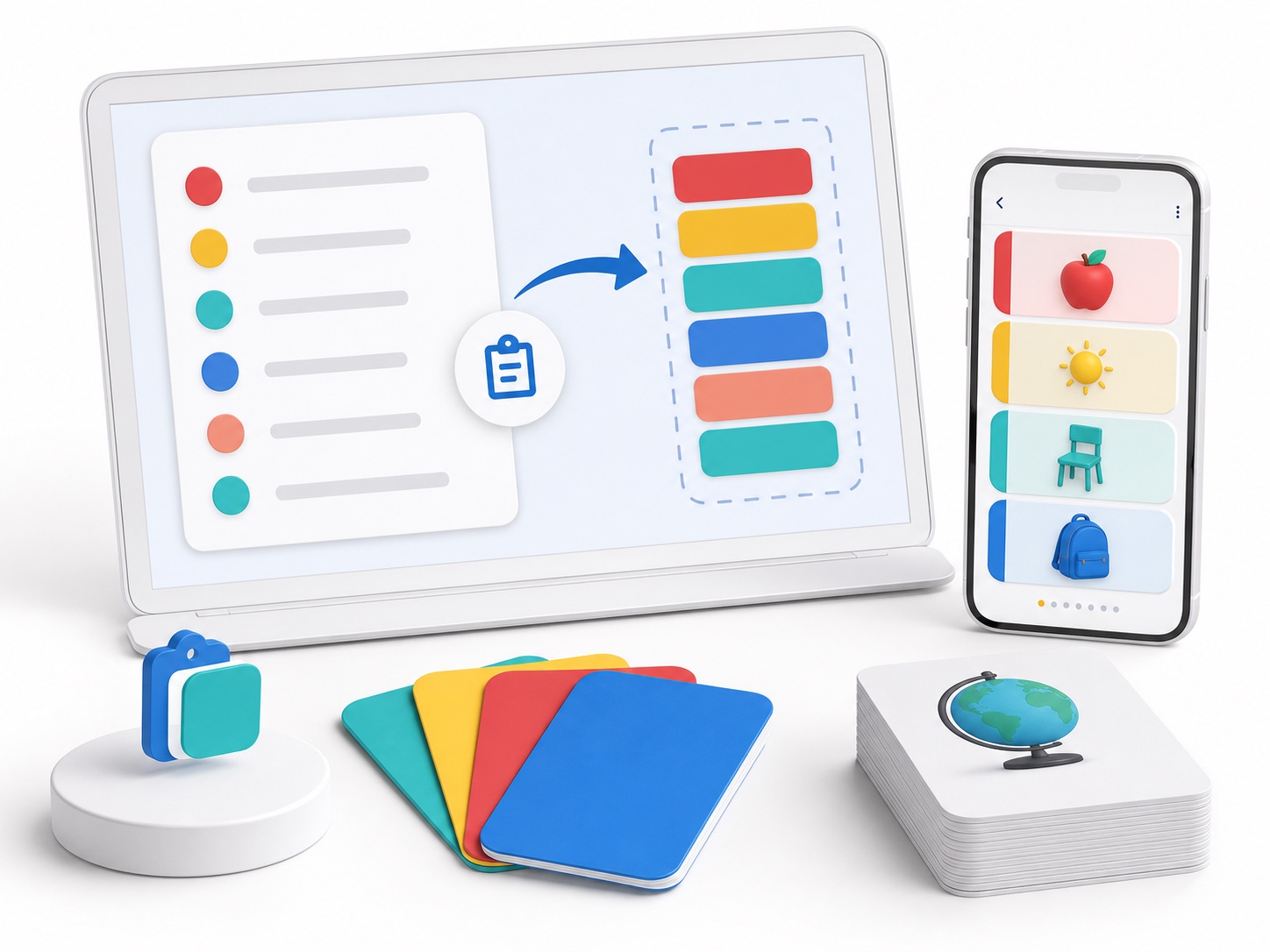
Practise Spanish N and Ñ in Hola Cards
Review the 24 examples with Spanish audio, writing, custom groups, repeated practice and word-level recognition on iOS and Android.