Everyday Spanish Infinitive Sentences and English Meanings
Explore twelve natural sentences illustrating bare subjects, verbal complements, optional definite articles, and structural contrasts in everyday Spanish.
| Spanish | Meaning |
|---|---|
| Leer en la biblioteca requiere silencio. | Reading in the library requires silence. |
| Viajar en tren resulta cómodo. | Traveling by train is comfortable. |
| Llegar a tiempo evita confusiones. | Arriving on time avoids confusion. |
| Mi hermana prefiere preparar el almuerzo en casa. | My sister prefers to prepare lunch at home. |
| Los vecinos insisten en resolver el problema pacíficamente. | The neighbors insist on resolving the problem peacefully. |
| Todos esperamos recibir noticias claras esta misma tarde. | We all hope to receive clear news this very afternoon. |
| El madrugar tanto cansa a cualquiera durante la semana. | Getting up so early tires anyone out during the week. |
| El fumar en espacios cerrados molesta a los clientes. | Smoking in enclosed spaces bothers the customers. |
| El vivir cerca del parque facilita sus paseos diarios. | Living near the park makes his daily walks easier. |
| El revisar los datos cuidadosamente evitó errores graves. | Reviewing the data carefully prevented serious mistakes. |
| El continuo ladrar de los perros despertó al vecindario. | The continuous barking of the dogs woke up the neighborhood. |
| Nadar en el río exige mucha precaución y fuerza. | Swimming in the river demands great caution and strength. |
Practice Sentences for Flashcard Study
Copy these example sentences formatted as plain Spanish — meaning lines, ready for import into your personal study deck.
A2–B1 Grammar
Understanding the Action-Naming Role of the Infinitive
In Spanish, the infinitive names an action in its base form, fulfilling roles where English often relies on an activity noun ending in -ing. When an English speaker says learning takes time, Spanish expresses that concept with the infinitive aprender rather than the gerund aprendiendo. This structural difference creates natural phrasing without requiring a universal translation recipe for every English gerund.
Infinitive clauses frequently occupy core grammatical positions, functioning either as subjects or as complements. An infinitive clause can serve as the subject or complement of a lexical verb, or as the term or complement of a preposition. In these roles, the infinitive names the activity itself while retaining its verbal capacity to govern objects, prepositions, and adverbs.
Occupying a noun-like syntactic slot or taking nominal modifiers does not automatically turn an infinitive into a lexicalized noun. Grammarians distinguish nominal syntactic infinitives—which accept adjectives or de complements while referring to an action—from fully lexicalized infinitival nouns, such as el deber (duty) or los deberes (homework), which possess specialized dictionary definitions. Furthermore, pluralization is not available for all nominal infinitives or nouns, so learners must evaluate internal modifiers and lexical status carefully.
Core Grammatical Rules for Subject and Complement Infinitives
A bare infinitive clause commonly stands as the grammatical subject of a sentence, pairing with a singular third-person predicate. In the statement Descansar bien mejora el rendimiento diario, the clause descansar bien serves as the subject of the singular verb mejora. A single infinitive clause acting as subject regularly takes a singular predicate verb in standard Spanish.
Beyond the subject position, infinitives operate as direct verbal complements or follow prepositions governed by verbs. In deseo organizar mi horario, the infinitive phrase acts as the direct complement of the lexical verb desear. Similarly, in pensamos en viajar pronto, the preposition governs the infinitive clause without forming a complex periphrasis, illustrating normal prepositional complementation in everyday conversational Spanish.
In specific subject contexts, learners often compare bare infinitives with articulated forms. In the pair Caminar por la mañana despeja la mente and El caminar por la mañana despeja la mente, using the article is optional: the bare infinitive feels direct, while el introduces a slightly reflective or topicalized nuance. However, article choice depends on the construction, and lexicalized nouns may have their own determiner requirements.
Language authorities emphasize that the presence of el alone does not establish an infinitive as a noun. Instead, classification depends on internal syntax: verbal infinitives govern direct objects or adverbs, as in el leer novelas atentamente, whereas nominal syntactic infinitives accept adjectives or de phrases, as in el constante murmurar del viento. Crucially, exhibiting nominal syntax does not make an infinitive a lexicalized dictionary noun with independent lexical senses, and pluralization is not universally possible for all nominal infinitives or all nouns.
Key Functional Categories of the Spanish Infinitive
Review the four grammatical categories that explain how Spanish infinitives interact with sentence predicates and modifiers.
Infinitive with Definite Article
The masculine article introduces an infinitive clause to emphasize the activity in specific contexts.
El madrugar tanto cansa a cualquiera durante la semana. · El fumar en espacios cerrados molesta a los clientes. · El vivir cerca del parque facilita sus paseos diarios.
Infinitive as Verbal Complement
The infinitive completes the meaning of a main verb or follows a governing preposition.
Mi hermana prefiere preparar el almuerzo en casa. · Los vecinos insisten en resolver el problema pacíficamente. · Todos esperamos recibir noticias claras esta misma tarde.
Verbal versus Nominal Structure
Contrasting verbal clauses retaining objects and adverbs with nominal syntactic infinitives and lexicalized nouns.
El revisar los datos cuidadosamente evitó errores graves. · El continuo ladrar de los perros despertó al vecindario. · Nadar en el río exige mucha precaución y fuerza.
Infinitive as Subject
An infinitive clause functions as the grammatical subject pairing with a singular verb predicate.
Leer en la biblioteca requiere silencio. · Viajar en tren resulta cómodo. · Llegar a tiempo evita confusiones.
Sentence Structure Exercises and Explanations
In Ellos desean comprar una vivienda nueva, identify the infinitive clause that functions as the direct object of the lexical verb. Then, determine whether the article el can be inserted before the infinitive specifically in the modal structure Ellos deben salir temprano.
In Ellos desean comprar una vivienda nueva, the infinitive clause comprar una vivienda nueva functions as the direct object of the lexical verb desean. In the modal structure Ellos deben salir temprano, the article el cannot be inserted before the infinitive because the modal verb deben forms a verbal periphrasis that takes a bare infinitive directly; inserting the article to produce deben el salir breaks the auxiliary relationship and is ungrammatical.
Evaluate whether adding the article el is acceptable in the sentence Madrugar los fines de semana resulta agotador para el equipo. Decide whether omitting or including el changes grammaticality, and explain the subtle stylistic difference between the bare subject and the articulated version in standard Spanish usage.
Both variants are grammatically valid: Madrugar and El madrugar correctly serve as the singular subject of resulta. The bare infinitive sounds natural and direct in everyday conversation. In contrast, prefixing el adds a slightly formal, reflective tone that frames the early waking as a distinct topicalized activity.
Classify the internal structure of the infinitive phrase in this workplace leasing sentence: El firmar contratos comerciales apresuradamente provocó pérdidas notables. Determine whether the phrase possesses verbal or nominal internal syntax by analyzing the elements that accompany the infinitive, and state whether el alone settles the grammatical category.
The phrase exhibits verbal internal structure because firmar takes a direct object, contratos comerciales, and an adverbial manner modifier, apresuradamente. Despite the presence of the article el, the infinitive retains verbal syntax rather than nominal structure. The article introduces the clause, but internal modifiers prove it remains syntactically verbal.
Deepen your understanding of Spanish grammar by exploring our related guides on articles, verb aspects, and clause structures.
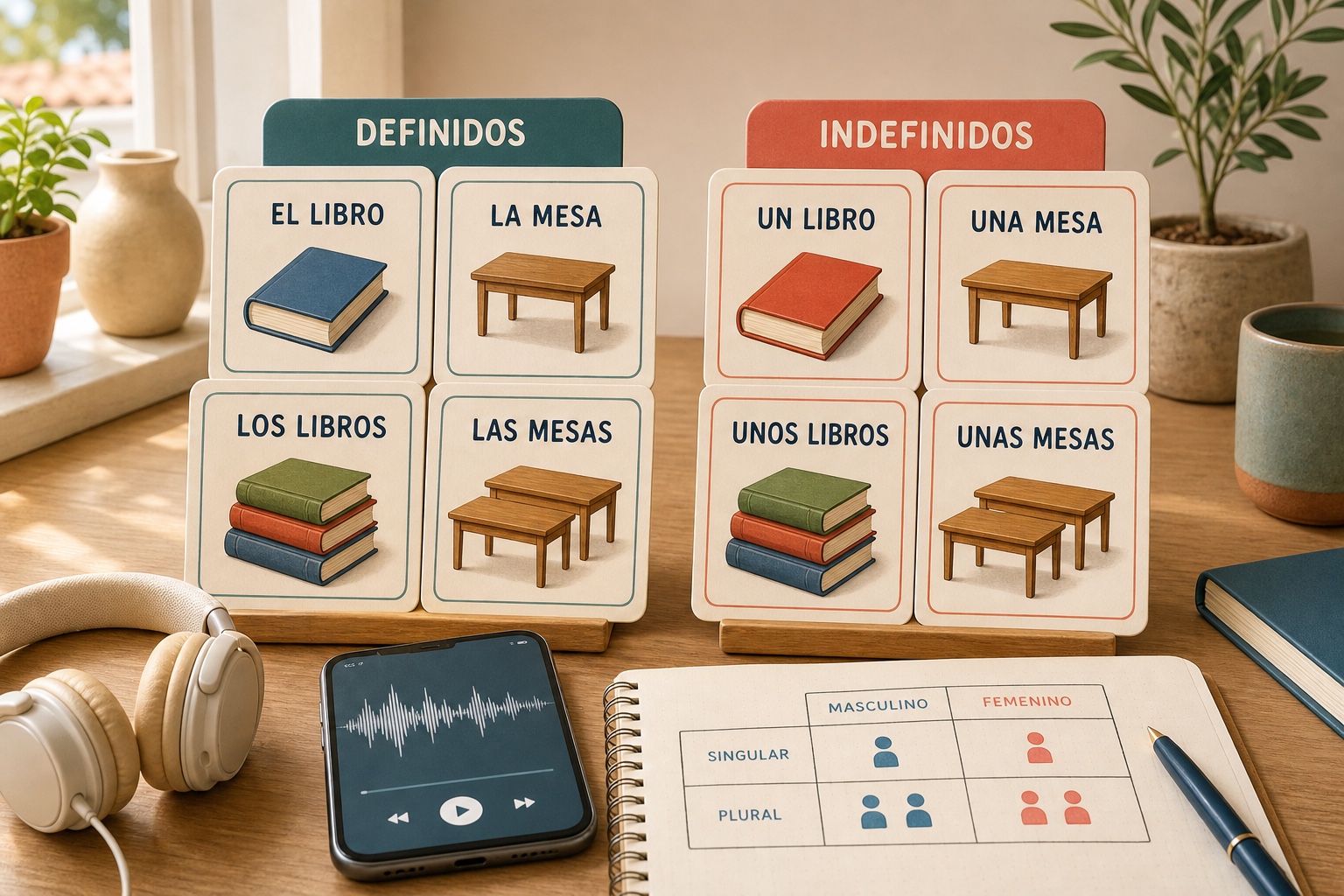
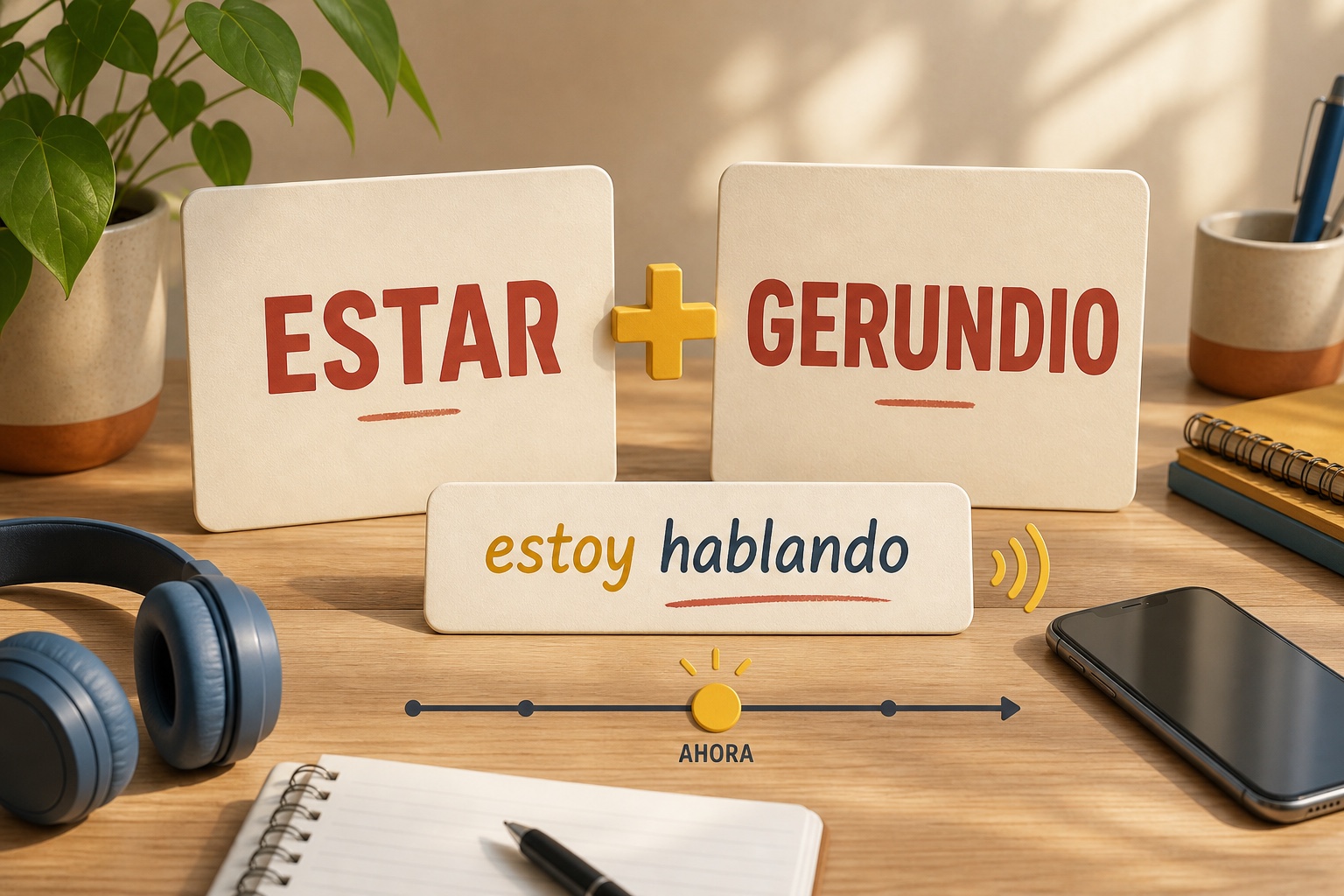
Guide to Spanish Definite and Indefinite Articles Understanding the Spanish Present Progressive Essential Spanish Word Order Rules
How to Practice Spanish Infinitive Structures Effectively
- To build confidence with infinitive structures, establish a modest daily routine centered on whole sentences rather than isolated verbs. Extract two or three verified sentences from your reading that illustrate subject and complement roles. Reviewing complete clauses helps your ear absorb how infinitives govern objects and prepositions naturally without depending on awkward word-for-word mental translation from English.
- You can organize these checked model sentences using Hola Cards on iOS or Android in mobile guest mode, or sign in through the web application. Paste your complete Spanish sentences with their English meanings into a dedicated custom group. The app lets you practice active spelling recall and adjust spaced repetition intervals to fit your personal study schedule.
- Keep in mind that Hola Cards provides audio solely for catalog vocabulary, so imported sentences will not generate spoken audio. The app also lacks an automated grammar checker, syntax parser, or conversational tutor. Use it as a focused digital notebook to retain validated examples between grammar lessons, ensuring consistent exposure to natural Spanish sentence patterns.
Grammar References and Linguistic Sources
Our explanations are informed by authoritative Spanish linguistic references, summarized concisely below.
- RAE–ASALE Glossary: The Infinitive Explains that infinitives occupy nominal syntactic slots while distinguishing verbal infinitives from nominal syntactic infinitives and lexicalized infinitival nouns with dictionary meanings, noting that adjective modification does not prove lexicalization and plurals are not universal.
- FundéuRAE: Article Plus Infinitive Confirms that combining the definite article with an infinitive can be grammatically correct, providing narrow guidance that supports natural usage without endorsing a universal rule for every context.
- Complutense University: Grammatical Subject Notes that a grammatical subject agrees with its predicate and lists an infinitive clause as one possible structure that can occupy the subject position.
Frequently Asked Questions About Spanish Infinitives
Is the definite article required whenever a Spanish infinitive acts as a noun?
No, in specific subject contexts such as caminar versus el caminar, the article is optional, where the bare infinitive feels direct and el adds a reflective nuance. However, this variation cannot be generalized as entirely optional across Spanish: certain set syntactic patterns, prepositional idioms, or lexicalized nouns have their own determiner requirements, so there is no universal rule allowing or omitting el in every position.
Why cannot I translate English activity words ending in -ing with the Spanish gerund?
In English, words ending in -ing commonly serve as continuous participles or as nominal activity terms. When naming an activity that acts as a sentence subject or complement, Spanish typically uses the infinitive, such as nadar for swimming. Spanish gerunds ending in -ando and -iendo fulfill progressive and adverbial functions—such as indicating manner or simultaneous circumstances—rather than serving as nominal activity subjects.
Does using an infinitive as a subject turn it into a true grammatical noun?
No, serving as a subject or complement simply places the infinitive into a nominal syntactic slot. Linguistic references like the RAE distinguish verbal infinitives (which keep direct objects and adverbs) from nominal syntactic infinitives (which take adjectives or de phrases without becoming dictionary nouns) and fully lexicalized nouns like el poder (power) or el deber (duty). Adjective modification does not prove lexicalization, and pluralization is not universally possible for all nominal infinitives or nouns.
How does the infinitive function in sentences with verbs like gustar?
In sentences like me gusta leer, the infinitive phrase leer is actually the grammatical subject of the sentence, not the direct object. The pronoun me functions as an indirect object indicating who experiences the pleasure, which explains why the verb remains in the singular third person.
Can Hola Cards automatically correct my custom Spanish infinitive sentences?
No, Hola Cards does not include an automated syntax checker, grammar correction engine, or interactive language bot. It serves as an adjustable spaced repetition flashcard tool where you can paste and study verified sentences in custom groups. Audio playback is supported for catalog vocabulary, but arbitrary imported sentences do not have generated pronunciation.
Practice Sentences for Flashcard Study
Copy these example sentences formatted as plain Spanish — meaning lines, ready for import into your personal study deck.
**Spanish Infinitive Sentence Collection**

Leer en la biblioteca requiere silencio. - Reading in the library requires silence.
Viajar en tren resulta cómodo. - Traveling by train is comfortable.
Llegar a tiempo evita confusiones. - Arriving on time avoids confusion.
Mi hermana prefiere preparar el almuerzo en casa. - My sister prefers to prepare lunch at home.
Los vecinos insisten en resolver el problema pacíficamente. - The neighbors insist on resolving the problem peacefully.
Todos esperamos recibir noticias claras esta misma tarde. - We all hope to receive clear news this very afternoon.
El madrugar tanto cansa a cualquiera durante la semana. - Getting up so early tires anyone out during the week.
El fumar en espacios cerrados molesta a los clientes. - Smoking in enclosed spaces bothers the customers.
El vivir cerca del parque facilita sus paseos diarios. - Living near the park makes his daily walks easier.
El revisar los datos cuidadosamente evitó errores graves. - Reviewing the data carefully prevented serious mistakes.
El continuo ladrar de los perros despertó al vecindario. - The continuous barking of the dogs woke up the neighborhood.
Nadar en el río exige mucha precaución y fuerza. - Swimming in the river demands great caution and strength.
Build Your Spanish Sentence Study Routine
Save these natural infinitive patterns to a dedicated group in Hola Cards on mobile or web to practice spelling and spaced review between your lessons.