Spanish Vocabulary Drill Deck
This sample vocabulary deck groups twelve words by alphabetization feature for practice. The deck is organized for study rather than as a globally sorted dictionary sequence.
| Spanish Word | English Meaning |
|---|---|
| cama | bed |
| charla | chat |
| cine | cinema |
| lana | wool |
| llave | key |
| loro | parrot |
| nube | cloud |
| pena | sorrow |
| peña | rock |
| árbol | tree |
| café | coffee |
| música | music |
Study Deck for Spanish Sorting Practice
Copy this twelve-word drill deck to import directly into your custom Hola Cards group.
Practical Guide
Core Rules of Spanish Alphabetization
To alphabetize Spanish words, compare them letter by letter from left to right. The first differing letter determines which word comes first. When one word matches another letter for letter but is shorter, the shorter word comes first. For example, pan sorts ahead of panel.
In modern standard Spanish, ñ is always an independent letter between n and o. Words must share an exact matching prefix up to the first difference before n versus ñ decides which word comes first.
Four Practical Rules for Spanish Alphabetical Order
The distinction between n and ñ applies at the beginning and inside words. At the start of words, nido comes before ñu, and ñu comes before oro. Inside words, the rule is the same. In the pair mono and moño, both words share the prefix mo-. The third letter n places mono ahead of moño.
In modern reference works, the digraph ch is sorted strictly as c followed by h. It does not have its own letter section. For example, compare cepillo, chico, cielo. All three begin with c, so look at the second letter. The letter e comes before h, and h comes before i. Therefore, chico sits between cepillo and cielo.
The digraph ll is sorted as the sequence l+l. For example, compare leve, llama, loma. Comparing the second letter places llama between leve and loma because e precedes l, and l precedes o. Language academies adopted this sorting rule in 1994. Later, the 2010 Ortografía formally updated the alphabet to twenty-seven letters by excluding ch and ll as standalone letters, leaving spelling unchanged. Some older dictionaries still list them in dedicated sections.
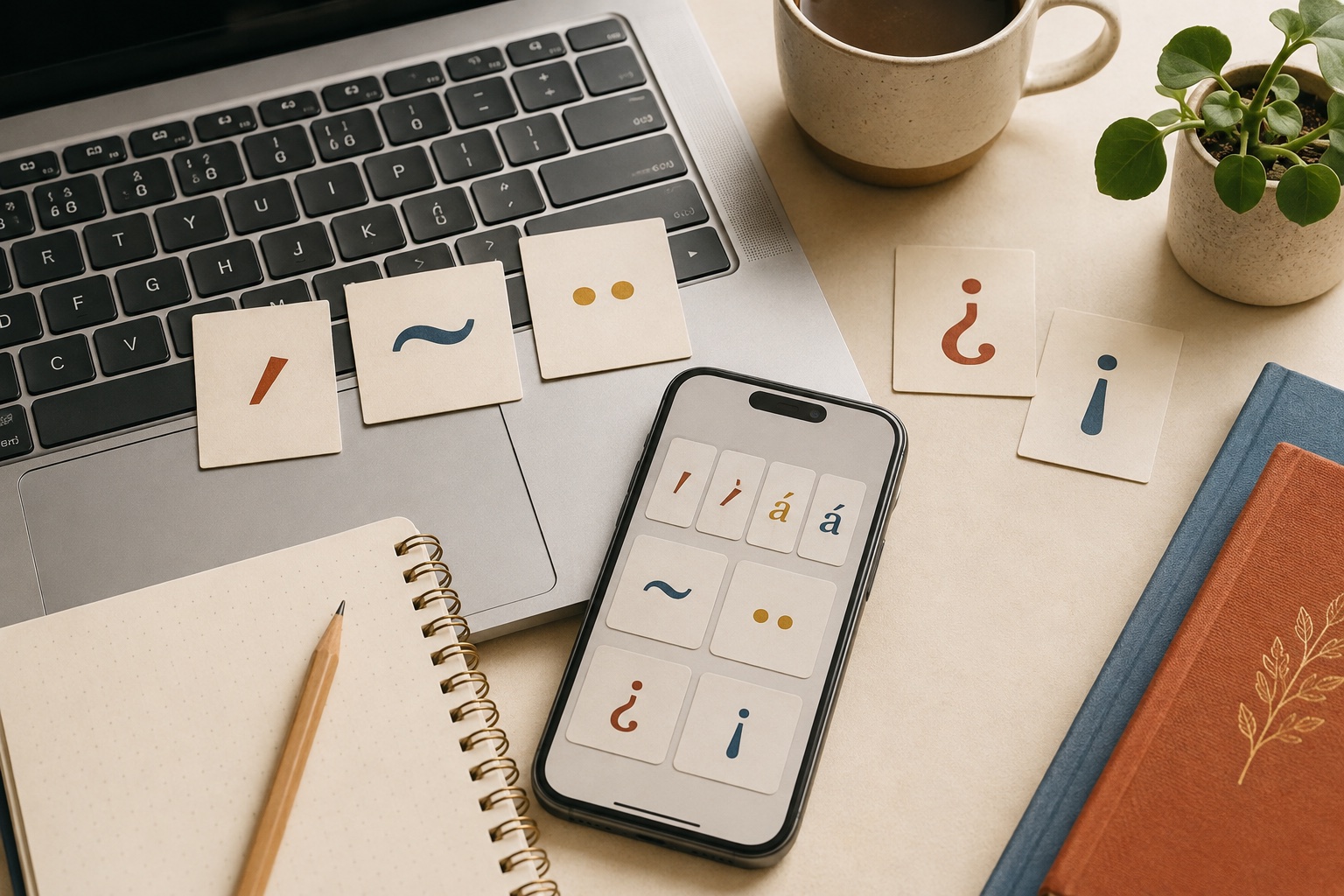
In Spanish spelling, acute accents (á, é, í, ó, ú) mark stress or differentiate meaning, but in basic alphabetical sorting they do not create separate letters. This drill does not break accent-only ties, so keep accents in the written word. For digital verification, test an actual sort with both an n/ñ/o sequence and a c/ch or l/ll comparison, not search or filter.
Alphabetical Themes
Key alphabetical characteristics highlighted across our practice vocabulary groups:
written accent marks
stress mark collation
árbol · café · música
c and ch sorting
digraph position
cama · charla · cine
l and ll sorting
double l placement
lana · llave · loro
n and ñ distinction
internal enye placement
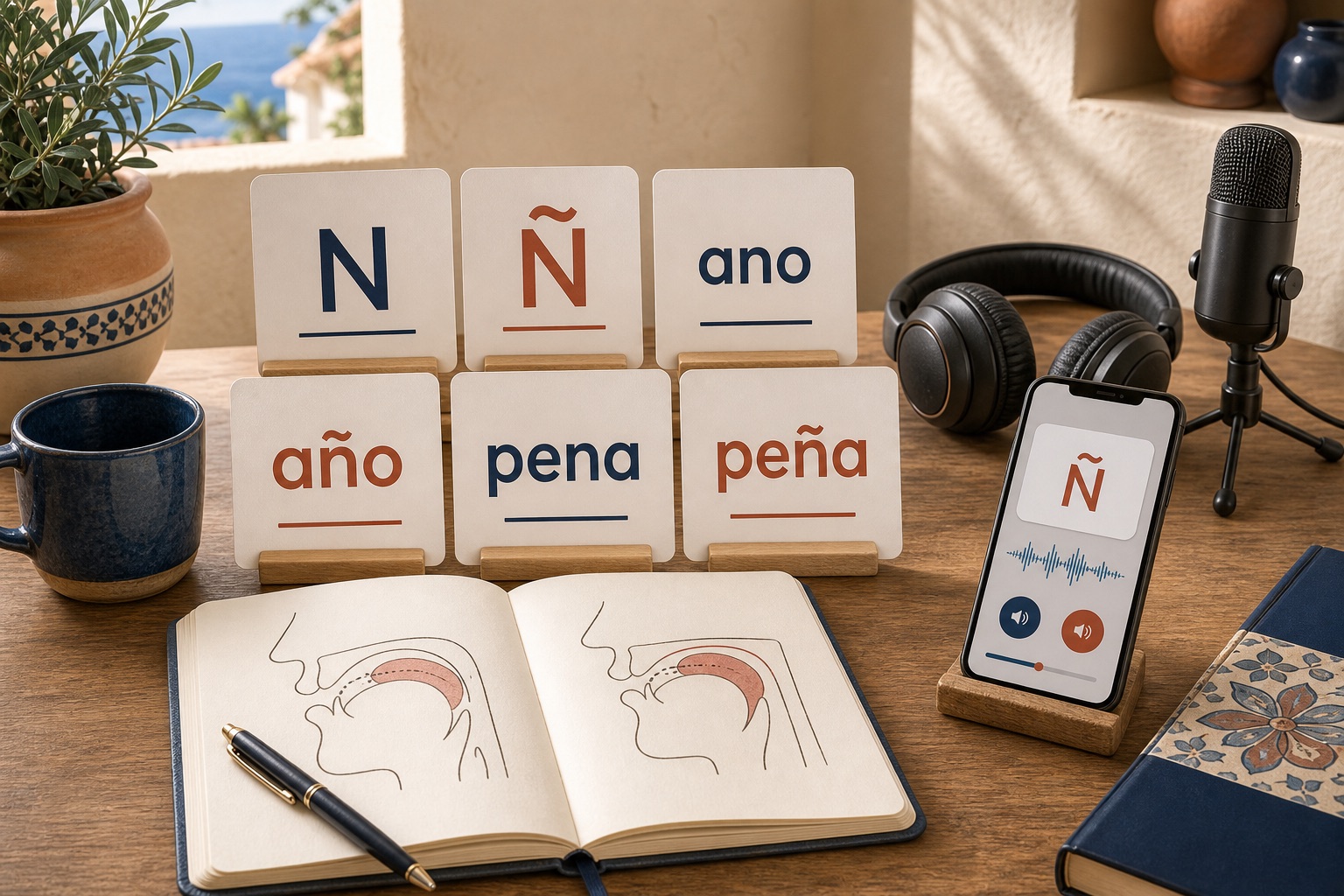
nube · pena · peña
Printable Alphabetical Order Drill
Practice sorting with this printable worksheet. Compare words from left to right, identify the first deciding letter, and write each list in alphabetical order. Hide the answer keys below before starting.
Exercise 1 (c/ch): cine, cama, charla. Exercise 2 (l/ll): loro, llave, lana. Exercise 3 (n/ñ/o): ñandú, pena, ola, nube, peña.
Key for Exercise 1 (c/ch): cama, charla, cine. Compare the second letter of each word. The letter a in cama precedes h in charla, which precedes i in cine.
Key for Exercise 2 (l/ll): lana, llave, loro. Compare the second letter of each word. The letter a in lana precedes the second l in llave, which precedes o in loro.
Key for Exercise 3 (n/ñ/o): nube, ñandú, ola, pena, peña. Comparing initial letters places nube (n), ñandú (ñ), and ola (o) in sequence. For the internal n versus ñ in pena and peña, the matching prefix pe- makes the third letter decisive, placing n before ñ.
Transfer exercise: Alphabetize the pair marea, mar. Key: mar, marea. The shorter word sorts first because mar is the entire beginning of marea.
Deepen your Spanish reference and study skills with these companion articles:
How to Use a Spanish Dictionary Spanish N and Eñe Pronunciation Guide How to Type Spanish Accents and Letters
Locating Entries and Saving Tricky Words
- When checking a paper index, use the guide words at page tops to locate entries efficiently. In some older reference books, check whether ch or ll have distinct header sections. For digital lists, test an actual sort with both an n/ñ/o sequence and a c/ch or l/ll comparison, not search or filter.
- You can save words and meanings into a custom group in Hola Cards. Put one item per line using the syntax Spanish word - meaning. You can then review them through writing exercises, an adjustable review schedule, and audio where available. Mobile learners can get started in guest mode, while web study sessions require sign-in.
Authoritative References
The sorting conventions and historical milestones in this guide are drawn from the following academic and technical sources:
- RAE and ASALE, Diccionario panhispánico de dudas: abecedario Official guidance defining the twenty-seven letters of the Spanish alphabet and establishing the alphabetical sequence n, ñ, o.
- RAE, Exclusión de ch y ll del abecedario Institutional explanation detailing why ch and ll function as digraphs collated under c and l rather than standalone alphabet entries.
- RAE and ASALE, Principales novedades de la Ortografía de la lengua española (2010) Summary of orthographic reforms formalizing the exclusion of digraphs from the official letter inventory while preserving their conventional spelling.
- Unicode CLDR, Spanish collation chart Digital collation specification illustrating standard Spanish sorting weights where ñ forms an independent primary letter following n.
Frequently Asked Questions
What is the official alphabetical order of letters in Spanish?
The Spanish alphabet contains twenty-seven letters: a, b, c, d, e, f, g, h, i, j, k, l, m, n, ñ, o, p, q, r, s, t, u, v, w, x, y, z. The letter ñ is an independent letter positioned between n and o.
Is ch treated as a separate letter in modern Spanish dictionaries?
No. In modern Spanish collation, ch is treated as a digraph sorted strictly as c followed by h. Words starting with ch appear within the standard c section. For example, chico appears between cepillo and cielo.
Where does ll appear when alphabetizing Spanish words?
The digraph ll is collated as the sequence l+l inside the general l section. For example, llama appears between leve and loma rather than in a separate section.
Why do older Spanish dictionaries place ch and ll in separate sections?
Before 1994, many Spanish dictionaries maintained separate alphabet sections for ch and ll. Academies adopted standard international collation in 1994, though some older dictionaries or tools configured with traditional sort settings still reflect that older system.
Study Deck for Spanish Sorting Practice
Copy this twelve-word drill deck to import directly into your custom Hola Cards group.
**Alphabetical Order Practice Group**

cama - bed
charla - chat
cine - cinema
lana - wool
llave - key
loro - parrot
nube - cloud
pena - sorrow
peña - rock
árbol - tree
café - coffee
música - music
Practice Spanish Vocabulary with Hola Cards
Save challenging Spanish words into custom groups, practice recall with writing drills, and listen to pronunciation audio when available.