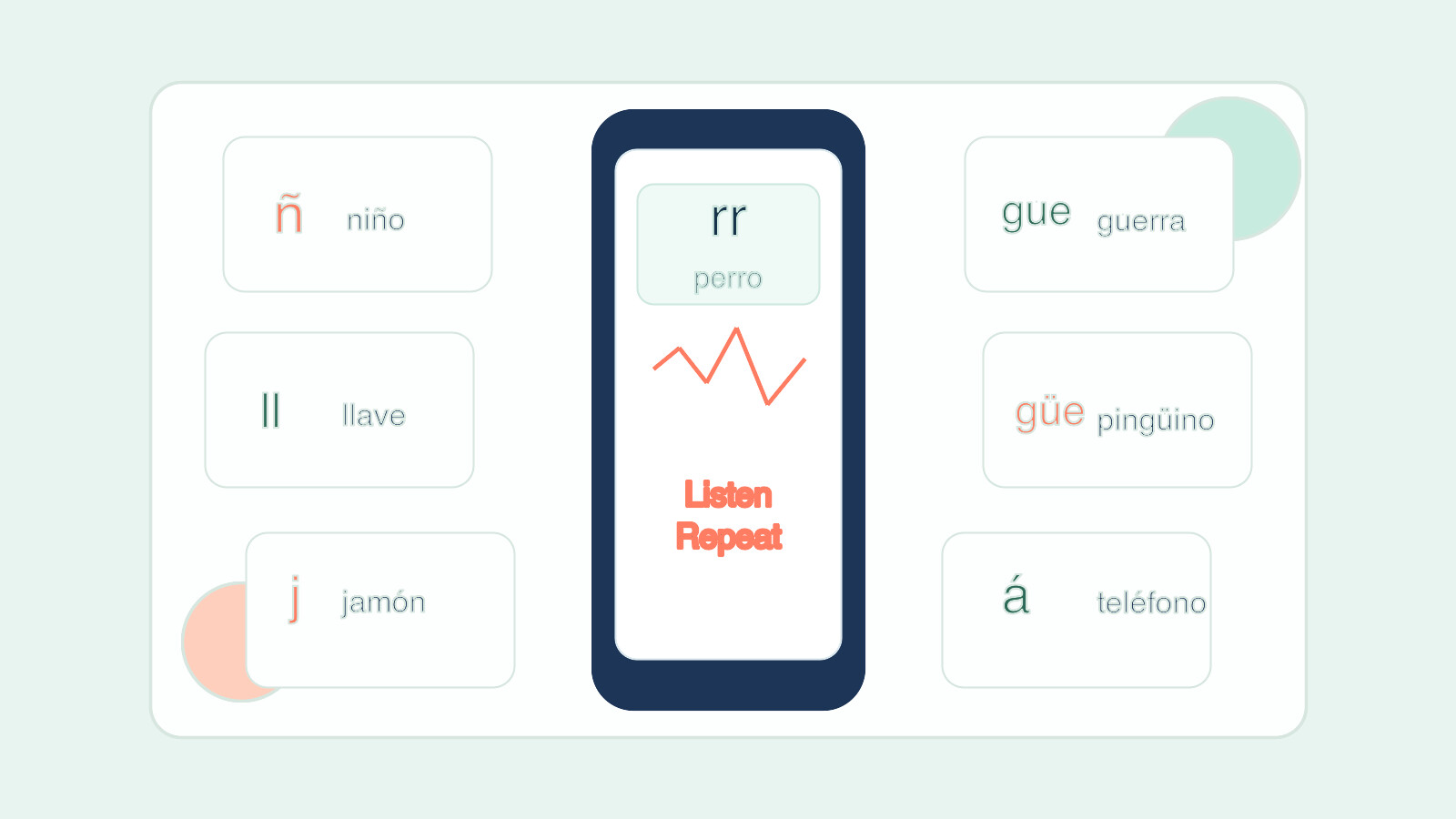
Practice Vocabulary for Pronunciation Reference
The following reference list contains sample Spanish vocabulary terms with English translations that learners can review and verify in standard pronunciation resources.
| Spanish | Meaning |
|---|---|
| médico | doctor |
| camino | path |
| canción | song |
| gente | people |
| queso | cheese |
| guitarra | guitar |
| lado | side |
| amigo | friend |
| bebé | baby |
| gracias | thank you |
| cine | cinema |
| playa | beach |
Sample Vocabulary Group Import Text
Copy these 12 Spanish words and meanings into a custom group on mobile, one pair per line.
Reading Level: A2–B2
Decoding the Language of Dictionary Pronunciation
In casa /ˈka.sa/, the raised mark ˈ indicates that stress falls on the first syllable, while the dot . marks the boundary between syllables. Decoding this entry requires identifying the enclosing delimiters, placing primary stress on the indicated syllable, and sounding out each segment according to the reference legend.
SpanishDictionary.com is one example with three options. These are IPA, its own SPA respelling, and ABC spelling split into syllables with stress marked. Check the format label before reading.
Core Principles for Reading Spanish Phonetic Entries
Enclosing brackets reveal whether a transcription records underlying categories or audible realizations. Slashes like / / denote phonemic transcriptions, which outline the meaningful sound units of Spanish. Square brackets like [ ] indicate phonetic transcriptions, capturing specific physical pronunciations in speech. Editorial practices differ across publications, and some learner dictionaries omit enclosing brackets entirely.
A dot . marks a syllable boundary where shown. When primary stress is written, the raised mark ˈ comes before the stressed syllable, and because stress marks also indicate a syllable onset, an adjacent dot can become unnecessary. This phonetic symbol differs from the Spanish orthographic acute accent. In regions where papa means potato, its phonemic form is /ˈpa.pa/, whereas papá meaning dad uses an acute accent in spelling and takes the form /paˈpa/.
Phonetic detail shows how sounds are actually pronounced. This appears in the paired forms for dedo. Here /ˈde.do/ shows the sound categories, while [ˈde.ð̞o] shows the pronunciation isolated after a pause. The second consonant is an approximant, where the tongue approaches the teeth without the friction of a strict fricative [ð]. Some publications use [ð] as shorthand for the approximant. Check the source notation to see which system a dictionary follows.
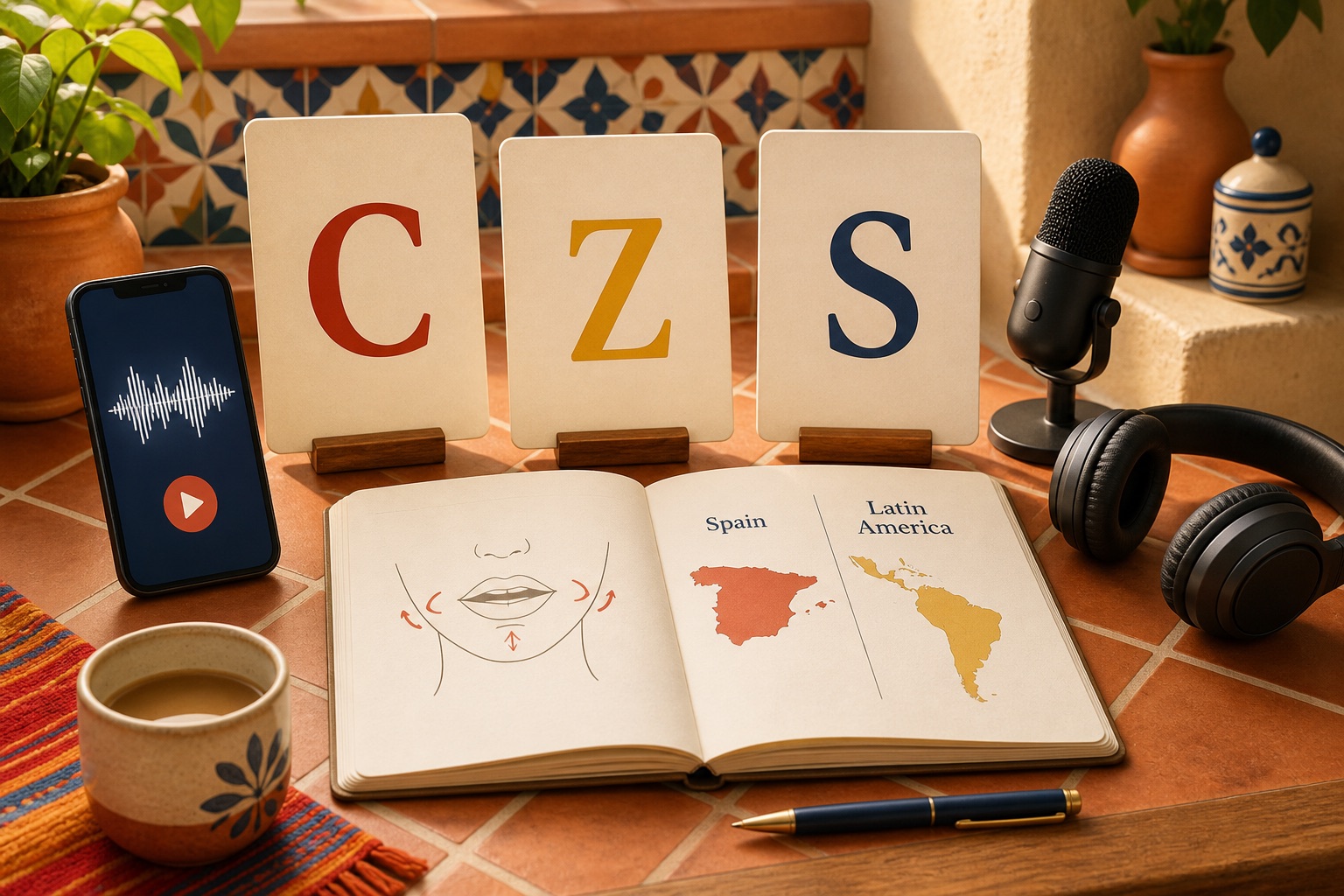
Dictionary entries also reflect geographic variety. For instance, the noun caza contains the letter z. In regions with distinción, primarily in central and northern Spain, speakers pronounce this consonant as a voiceless dental fricative, resulting in the phonemic form /ˈka.θa/. In regions with seseo, including Latin America, the Canary Islands, and parts of Andalusia, speakers pronounce it as an alveolar fricative, writing /ˈka.sa/, which sounds identical to casa. This variation means two differing transcriptions can represent standard pronunciations in their respective regions.
Key Dimensions of Spanish Phonetic Analysis
Explore the four essential aspects of Spanish sound representation to better understand dictionary pronunciation guides.
Phonetic Precision
Bracketed narrow symbols showing relaxed consonants and approximants
lado · amigo · bebé
Phonemes and Letters
Direct sound symbols that differ from regular alphabet spelling
gente · queso · guitarra
Lexical Stress
Marked before the stressed syllable by a high vertical line
médico · camino · canción
Regional Variation
Alternate legitimate pronunciations across the Spanish-speaking world
gracias · cine · playa
Worked Practice Tasks and Solutions
For your first task, examine the phonemic transcription /koˈmi.da/ for the Spanish word comida meaning food. Identify which syllable receives primary stress, locate the syllable boundaries, and state the position of the stressed unit within the word.
The raised stress mark ˈ starts the stressed syllable mi, showing that primary stress falls on this second syllable. Meanwhile, the period . separates mi and da. The boundary between ko and mi is established by the stress mark itself, meaning the word carries penultimate stress.
For your second task, analyze the transcriptions /maˈde.ɾa/ and [maˈð̞e.ɾa] for the noun madera meaning wood. Identify the difference between the slash and bracket notations, explain what the lowering diacritic under the dental consonant indicates, and describe how a simplified symbol [ð] can be interpreted.
The slashes in /maˈde.ɾa/ denote an underlying phonemic representation. The square brackets in [maˈð̞e.ɾa] present a phonetic form that shows one detail, specifically an intervocalic approximant, without necessarily serving as a fully narrow transcription. The lowering diacritic in [ð̞] signals that the tongue approaches the teeth without creating sustained friction. When an entry shows the simplified character [ð], it can only be read as an approximant under a source's shorthand.
For your third task, examine the dictionary entry for abrazar meaning to embrace, which presents the variants /a.bɾaˈsaɾ/ and /a.bɾaˈθaɾ/. Explain why both pronunciations are valid regional forms and how the consonant represented by the letter z behaves across dialects.
Both variants represent standard regional speech. The transcription /a.bɾaˈθaɾ/ reflects distinción, common in central and northern Spain, where the consonant represented by z is pronounced as a voiceless dental fricative /θ/. In contrast, /a.bɾaˈsaɾ/ reflects seseo, where the consonant represented by z corresponds to the same /s/ phoneme as s. This pronunciation is standard across Latin America as well as the Canary Islands and parts of Andalusia.
Continue exploring Spanish phonetics and dictionary skills with these related learning guides.
Spanish Pronunciation for Beginners How to Use a Spanish Dictionary Spanish C, Z, and S Pronunciation Guide
Step-by-Step Workflow for Decoding New Entries
- To decode a pronunciation entry, check whether the source uses slashes / / or brackets [ ]. Find the stress mark ˈ to determine which syllable receives prominence, and use the dot . when shown to identify syllable boundaries. Look for diacritics like [ð̞] to note approximant articulations, and pick an audio example from the same variety when possible.
- Practicing with short lists of vocabulary helps reinforce these reading steps. Write out the transcribed segments, identify stress placement, and pronounce each term aloud. As an optional review step, you can use available vocabulary card audio and organize words into a custom group to support your ongoing practice.
Authoritative Phonetic References and Dictionaries
These referenced academic and lexicographical publications provide reliable benchmarks for Spanish phonetic notation and transcription standards.
- University of Michigan Speech Production Lab Spanish IPA Animator Interactive phonetic animations illustrating physical vocal tract movements and articulatory positions for standard Spanish consonants and vowels.
- José Ignacio Hualde, The Sounds of Spanish, Cambridge University Press Authoritative linguistic analysis detailing phonemic categories, narrow phonetic transcriptions, intervocalic approximants, and regional sound variations in modern Spanish.
- International Phonetic Association chart Official phonetic chart outlining standardized symbols, diacritics, stress marks, and consonant classifications used across worldwide linguistic transcriptions.
- SpanishDictionary.com documentation on written pronunciation formats Documentation distinguishing official International Phonetic Alphabet notation from proprietary phonetic respelling and simplified alphabet approximations.
Frequently Asked Questions About Spanish IPA
How does the International Phonetic Alphabet differ from dictionary respelling systems?
The International Phonetic Alphabet uses standardized symbols to document speech sounds and articulatory features. Respelling systems like SPA use English-oriented phonetic respellings, while ABC formats present the actual Spanish spelling divided into syllables with emphasis marked. While respelling systems offer quick guidance for general reading, phonetic notation provides precise symbols for phonemes and allophones across regional varieties.
What does the high vertical mark mean in a Spanish phonetic transcription?
The high vertical mark ˈ designates primary lexical stress and stands immediately before the syllable that receives prominence. Rather than indicating an apostrophe or an orthographic accent mark, it shows syllable prominence, which does not always rely on greater volume and duration. In /koˈmi.da/, the symbol indicates that stress falls on the syllable mi.
Why do different dictionaries provide variant phonetic transcriptions for the same Spanish word?
Variant transcriptions arise because both regional conventions and transcription depth matter. Some resources reflect regional standards like distinción with /θ/, whereas others transcribe seseo with /s/. Furthermore, phonetic brackets [ ] allow broad and narrow detail, meaning one source might record an intervocalic approximant like [ð̞] in dedo, while another provides a broader phonemic entry enclosed in slashes / /.
Does the Hola Cards vocabulary app display phonetic transcriptions?
Hola Cards does not display IPA. The app has vocabulary audio and voice practice. Use a pronunciation reference for IPA notation.
Sample Vocabulary Group Import Text
Copy these 12 Spanish words and meanings into a custom group on mobile, one pair per line.
**Essential Vocabulary Practice Deck**

médico - doctor
camino - path
canción - song
gente - people
queso - cheese
guitarra - guitar
lado - side
amigo - friend
bebé - baby
gracias - thank you
cine - cinema
playa - beach
Build Your Personal Spanish Word Groups
Optionally save and import checked Spanish words and meanings into custom groups on iOS and Android, or sign in on the web to access your study deck.