Save These Study Phrases
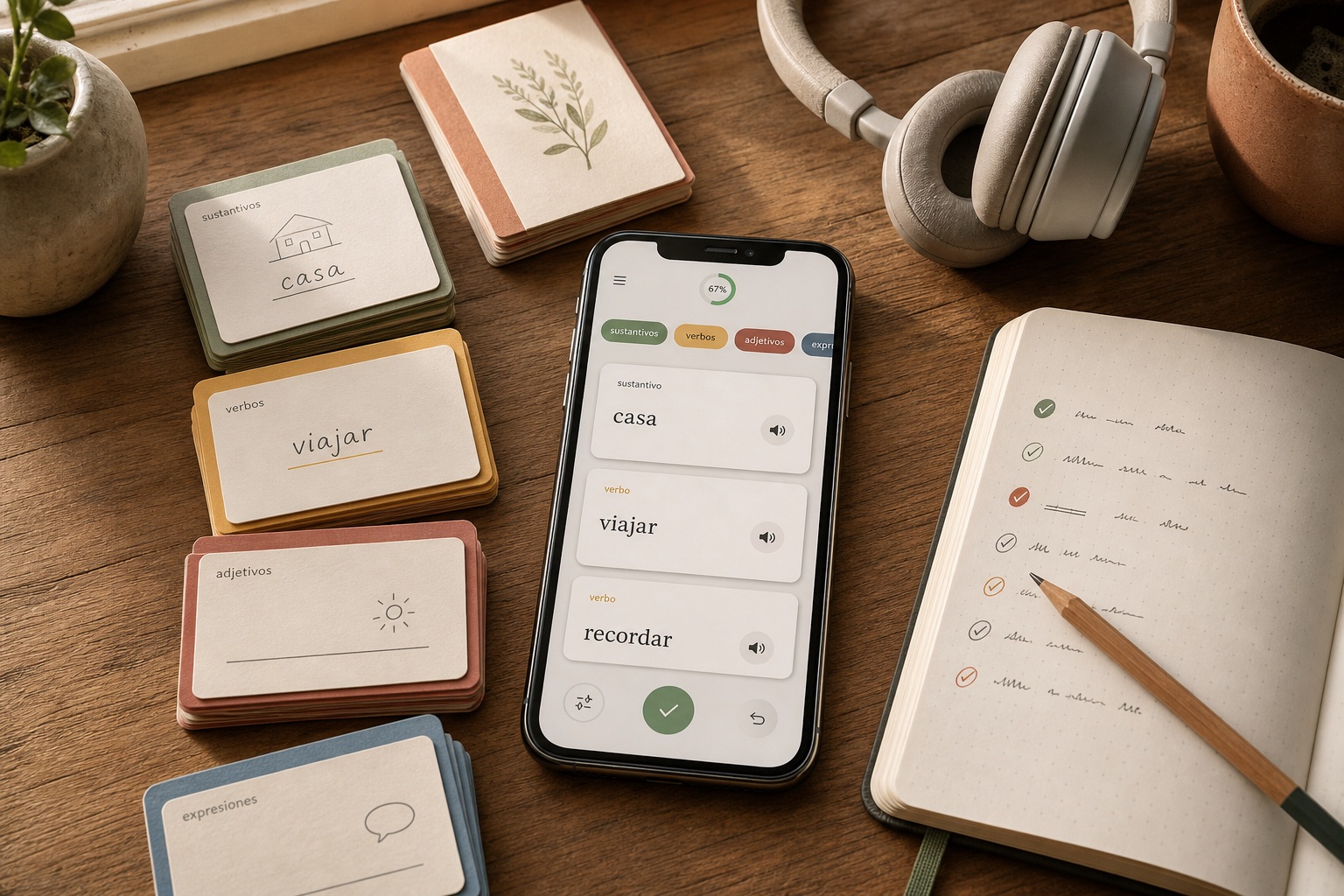
This button copies twelve phrases that learners can optionally paste or import into a personal group in the Hola Cards mobile app.
12 study phrases
Match your reading mode to your study goal
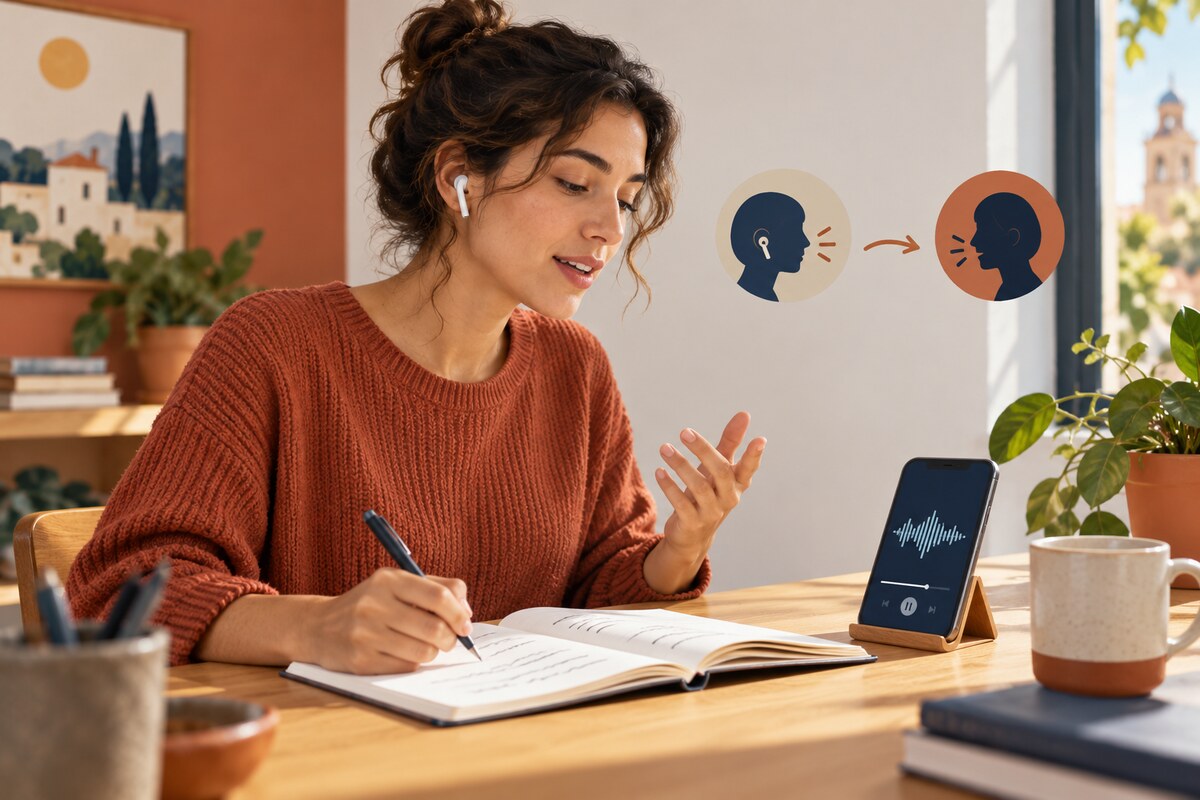
Distinguish silent and aloud delivery from broader study approaches such as intensive reading, extensive reading, or shadowing along with recorded native models. Reading aloud makes a hesitation audible, though a hesitation alone does not show why it happened or indicate a confirmed pronunciation error.
Four Steps to Test Your Reading Focus
Step 1. Read Passage A silently at your normal speed, focusing exclusively on following the sequence of events.
Step 2. Cover Passage A completely and write down answers to both comprehension questions before reviewing the answer key.
Step 3. Read Passage B aloud at a comfortable pace without taking notes yet.
Step 4. Cover Passage B completely, answer both meaning questions before reviewing the answer key, and then optionally recall one hesitation.
Spanish Practice Phrases
Review practice phrases and their meanings for describing a main idea, noting a detail, and checking your reading.
| Spanish Phrase | Meaning |
|---|---|
| El texto describe una rutina diaria. | The text describes a daily routine. |
| El personaje principal visita un lugar conocido. | The main character visits a familiar place. |
| La historia resume una mañana tranquila. | The story summarizes a quiet morning. |
| El mensaje central trata sobre un plan rápido. | The central message is about a quick plan. |
| Guardo las llaves en el bolsillo pequeño. | I keep the keys in the small pocket. |
| La tienda abre sus puertas a las ocho. | The store opens its doors at eight. |
| Ella prefiere sentarse cerca de la entrada. | She prefers to sit near the entrance. |
| El billete cuesta tres euros en la ventanilla. | The ticket costs three euros at the counter. |
| Hago una pausa antes de pronunciar la palabra. | I pause before pronouncing the word. |
| Reviso el significado sin mirar la página. | I check the meaning without looking at the page. |
| Me trabo con una palabra al leer. | I get stuck on a word while reading. |
| Escucho el audio para comprobar la entonación. | I listen to the audio to check the intonation. |
Core Reading Themes
Organize your study cards around these three reflective categories to reinforce text comprehension.
Main Idea
Identify the primary topic or central message of the passage.
El texto describe una rutina diaria. · El personaje principal visita un lugar conocido. · La historia resume una mañana tranquila. · El mensaje central trata sobre un plan rápido.
Factual Detail
Confirm specific elements such as locations, actions, and objects.
Guardo las llaves en el bolsillo pequeño. · La tienda abre sus puertas a las ocho. · Ella prefiere sentarse cerca de la entrada. · El billete cuesta tres euros en la ventanilla.
Reading and Delivery Check
Verify text comprehension and observe vocal delivery as separate aspects of practice.
Hago una pausa antes de pronunciar la palabra. · Reviso el significado sin mirar la página. · Me trabo con una palabra al leer. · Escucho el audio para comprobar la entonación.
Reading Passages and Questions
Passage A for silent reading. Mateo llega al mercado del barrio temprano para comprar fruta fresca antes de su trabajo. Encuentra manzanas rojas en el puesto central y paga con monedas exactas en la caja. Luego guarda la bolsa en su mochila negra y camina hacia la estación de tren.
Cover Passage A before answering. Question 1 asks for the gist. What was the purpose of the trip before work? Question 2 asks for a practical detail. Where did he place the bag before walking toward the train?
Answer key for Passage A. The purpose of the trip was to buy fresh fruit at the neighborhood market before work. He placed the bag inside his black backpack.
Passage B for aloud reading. Elena entra en la biblioteca municipal por la tarde para devolver dos libros prestados. Deja las novelas en el mostrador principal y saluda al bibliotecario con una sonrisa amable. Después recoge una revista de viajes y se sienta junto a la ventana grande.
Cover Passage B before answering. Question 1 asks for the gist. Why did Elena visit the municipal library in the afternoon? Question 2 asks for a practical detail. Where did she choose to sit after picking up a travel magazine?
Answer key for Passage B. Elena visited the library to return two borrowed books. She sat next to the large window.
The two passages differ in vocabulary, topic, and order, so a score difference does not tell you which mode works better. Try the modes in reverse order with fresh comparable texts on another day to vary your practice. You can also make an optional observation about one audible pause after the meaning check without diagnosing why.
Independent transfer task. Choose a fresh three-sentence Spanish paragraph from a graded reader at your level. Read it silently once to grasp the meaning, cover the text to recall one main idea and one detail before any aloud pass, and then complete a separate aloud pass after that meaning check to observe your delivery.
Explore more practical reading strategies in our related language learning guides.
Intensive vs. Extensive Spanish Reading Spanish Shadowing Practice Spanish Graded Readers for A2
Structuring an Aloud Pass and Transferring Your Skills
- Schedule any spoken reading as a separate aloud pass after you confirm basic text comprehension. Silent reading is a useful starting option for focusing on meaning, while a separate aloud pass lets you observe vocal delivery and phrasing.
- Your criterion for transfer success is recalling one main idea and one detail accurately before any aloud pass. After completing that silent meaning check, you can do a separate aloud pass and check any hesitant word against a reliable Spanish audio recording.
Research on Reading Modes in Language Learning
Academic studies evaluate reading conditions under controlled settings with specific limits.
- Lane O. Steinagel, BYU dissertation (2005) A randomized experiment with 214 beginning Spanish learners at a missionary training center examined aloud and silent reading using a scriptural text for 30 minutes daily over five weeks. The results showed no statistically significant difference in measured outcomes between the groups. This limited result cannot establish equivalence between the reading modes or reliably predict pronunciation gains.
- García-Rodicio, Melero and Izquierdo (2018) A classroom study with 36 primary school pupils compared reading comprehension across oral and silent conditions. Measured comprehension outcomes were similar across the two modes, though this small classroom study cannot be generalized to adult Spanish learners or used to evaluate shadowing techniques.
Frequently Asked Questions
Does reading Spanish aloud improve spontaneous speaking skills?
Reading aloud gives you practice pronouncing written phrases, but it does not reproduce spontaneous conversation or guarantee pronunciation gains. It primarily makes delivery hesitations audible as you articulate printed text.
When is silent reading the better choice for language learners?
Silent reading is a useful starting option when your primary goal is focusing on meaning, narrative flow, or sentence structure. It allows you to follow the content at your own pace without managing spoken pronunciation at the same time.
How does silent versus aloud reading relate to intensive and extensive reading?
Intensive and extensive reading refer to how deeply or broadly you study material, such as analyzing grammar versus reading novels for pleasure. Reading aloud or silently simply refers to physical delivery, which can accompany either approach.
What should I do when I stumble on a word while reading aloud?
Reading aloud makes a hesitation audible, but a hesitation alone does not show why it happened. Complete your meaning check first, and then compare that specific word against a reliable Spanish audio recording.
Save These Study Phrases
This button copies twelve phrases that learners can optionally paste or import into a personal group in the Hola Cards mobile app.
**Reading Reflection Deck**

El texto describe una rutina diaria. - The text describes a daily routine.
El personaje principal visita un lugar conocido. - The main character visits a familiar place.
La historia resume una mañana tranquila. - The story summarizes a quiet morning.
El mensaje central trata sobre un plan rápido. - The central message is about a quick plan.
Guardo las llaves en el bolsillo pequeño. - I keep the keys in the small pocket.
La tienda abre sus puertas a las ocho. - The store opens its doors at eight.
Ella prefiere sentarse cerca de la entrada. - She prefers to sit near the entrance.
El billete cuesta tres euros en la ventanilla. - The ticket costs three euros at the counter.
Hago una pausa antes de pronunciar la palabra. - I pause before pronouncing the word.
Reviso el significado sin mirar la página. - I check the meaning without looking at the page.
Me trabo con una palabra al leer. - I get stuck on a word while reading.
Escucho el audio para comprobar la entonación. - I listen to the audio to check the intonation.
Build Your Spanish Routine with Hola Cards
Download the Hola Cards app on the App Store or Google Play to explore customizable study decks.