B1 Reading Clues
Historical Roots and Linguistic Divergence
Ladino, or Judeo-Spanish, developed from Iberian Romance varieties spoken by Sephardic Jewish communities before the 1492 expulsion from Spain, evolving across diaspora settlements alongside regional contact languages rather than following modern Peninsular or Latin American paths. As Sephardic communities established themselves across the Mediterranean basin and Ottoman lands, their speech developed significant regional diversity. While present-day Spanish learners will recognize many familiar roots, mutual intelligibility is never guaranteed across these diverse diaspora traditions.
Consider the five-word phrase ke puede meldar muestro piryodiko, transcribed in an archival feature by the University of Washington Stroum Center from the New York newspaper La Bos. A modern Spanish gloss gives que puede leer nuestro periódico. While ke reflects a Latin spelling for que and puede is shared, meldar is a lexical difference requiring a vocabulary gloss. Meanwhile, muestro and piryodiko illustrate this specific sample rather than universal sound laws.
Copy Modern Spanish Reading Clues
Copy these twelve modern Spanish vocabulary pairs and paste them into a custom group you name, such as 'Modern Spanish Reading Clues', to start spaced review in Hola Cards.
Reading Clues and Source-Checking Method
Judeo-Spanish has Hebrew-letter and Latin-letter writing traditions, and Latin spelling can vary across publications.
A spelling difference appears in the attested pair komo and como. Use the rest of the sentence and verify uncertain words in a Ladino reference or the archive translation.
As a next step, explore the archival collection with two-column notes for the source fragment versus the modern gloss.
Modern Spanish Reading Clues Deck
Twelve modern Spanish vocabulary cards designed to help you recognize spelling patterns, infer sentence context, and verify dictionary meanings.
| Modern Spanish | English Meaning |
|---|---|
| Ella quiere leer este texto para aprender nuevo vocabulario. | She wants to read this text to learn new vocabulary. |
| Compré un periódico para ver las noticias locales. | I bought a newspaper to see the local news. |
| Ese museo protege nuestro patrimonio cultural y lingüístico. | That museum protects our cultural and linguistic heritage. |
| El estudiante puede entender el mensaje general de la oración. | The student can understand the general message of the sentence. |
| La ortografía de muchas palabras cambia a lo largo de los siglos. | The spelling of many words changes over the centuries. |
| El contexto histórico explica las diferencias entre ambas variedades. | The historical context explains the differences between both varieties. |
| A veces una letra distinta representa el mismo sonido moderno. | Sometimes a different letter represents the same modern sound. |
| El contacto cultural aporta nuevos términos al vocabulario cotidiano. | Cultural contact brings new terms to everyday vocabulary. |
| Siempre consulto un diccionario confiable para comprobar el término. | I always consult a reliable dictionary to verify the term. |
| Debemos revisar la fuente original antes de sacar conclusiones. | We must review the original source before drawing conclusions. |
| El profesor nos ayuda con la verificación de los datos históricos. | The teacher helps us with the verification of the historical data. |
| Un buen diccionario digital aclara el uso actual de cada palabra. | A good digital dictionary clarifies the current usage of each word. |
Reading Strategies
Use these focused reading strategies to navigate spelling variations and verify unfamiliar vocabulary in historical texts.
Identify shared forms
Look for familiar vocabulary that matches standard language directly in meaning and spelling.
Ella quiere leer este texto para aprender nuevo vocabulario. · Compré un periódico para ver las noticias locales. · Ese museo protege nuestro patrimonio cultural y lingüístico. · El estudiante puede entender el mensaje general de la oración.
Use spelling clues
Compare differing letter conventions against familiar spelling patterns to recognize related terms.
La ortografía de muchas palabras cambia a lo largo de los siglos. · El contexto histórico explica las diferencias entre ambas variedades. · A veces una letra distinta representa el mismo sonido moderno. · El contacto cultural aporta nuevos términos al vocabulario cotidiano.
Check source translations
Consult the accompanying reference translation to verify the exact meaning of unfamiliar words.
Siempre consulto un diccionario confiable para comprobar el término. · Debemos revisar la fuente original antes de sacar conclusiones. · El profesor nos ayuda con la verificación de los datos históricos. · Un buen diccionario digital aclara el uso actual de cada palabra.
Comparing Ladino and Modern Spanish
Task 1: In the excerpt, which word shares an identical written form in both languages, and which word pair displays a noticeable difference in spelling?
Answer 1: The word puede matches Spanish puede exactly, while the spelling differs between Ladino ke and modern Spanish que.
Task 2: What does the Ladino verb meldar mean in this line, and where should a reader check to confirm its meaning?
Answer 2: The verb means to read, corresponding to Spanish leer, which readers can verify directly by checking the accompanying UW translation.
Task 3: Which of these two lines is the archive transcription and which is the modern Spanish gloss: ke puede meldar muestro piryodiko or que puede leer nuestro periódico?
Answer 3: The first line presented is the archive transcription, while the second line presented is the modern Spanish gloss.
Explore related articles on Spanish language varieties and essential reading strategies:
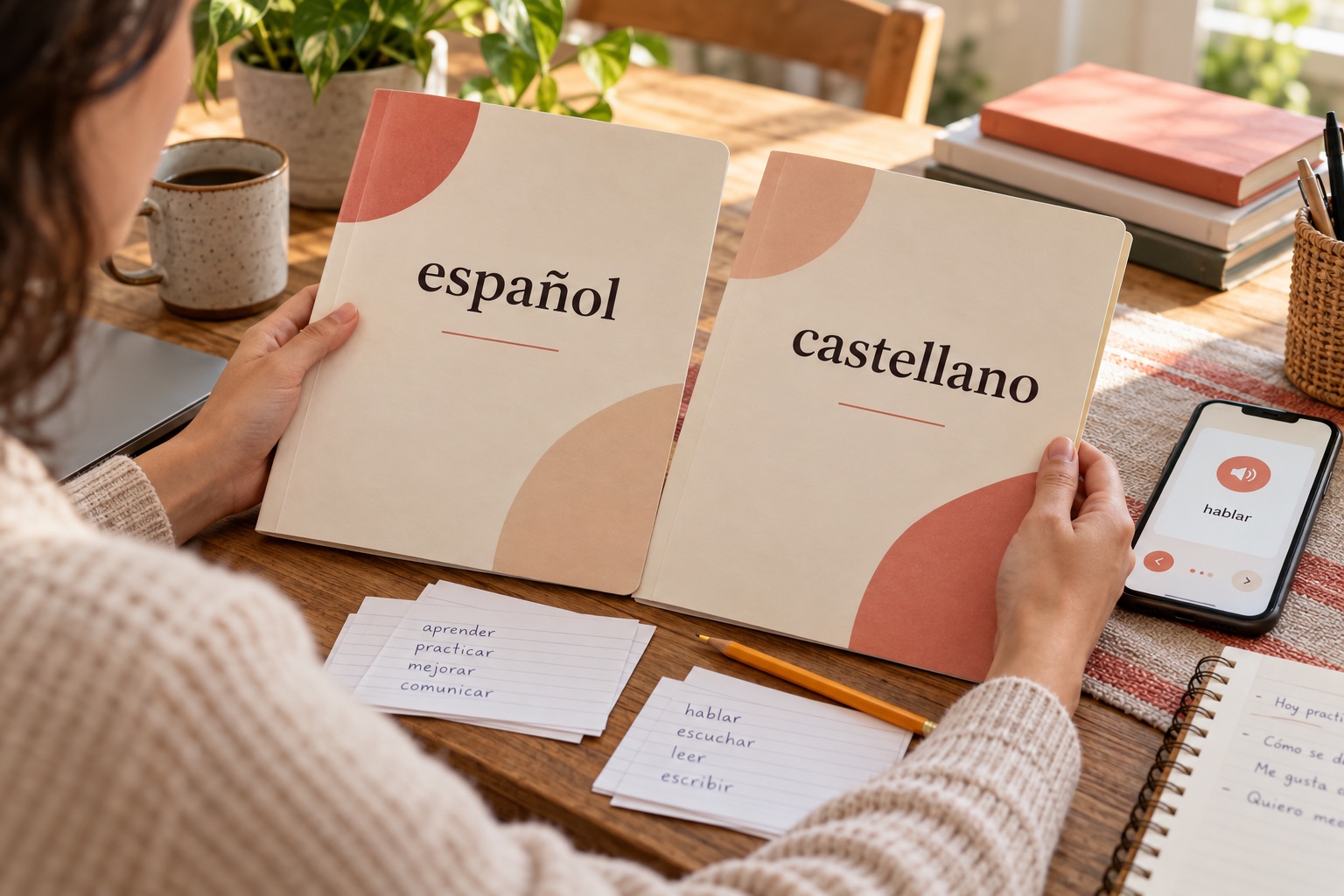
Understanding the difference between Español and Castellano How to use a Spanish dictionary effectively
Analyzing Spelling and Vocabulary Transfer
- Task: When comparing Ladino komo to Spanish como, is this a spelling clue or an unfamiliar word, and what should you verify before generalizing?
- Answer: It is a spelling clue because komo corresponds directly to como; before generalizing, verify vocabulary and spelling against documented translations since words can differ completely.
Research and Historical Sources
Consult these scholarly sources to explore Judeo-Spanish history, writing traditions, and archival texts.
- David M. Bunis, UW Stroum Center scholarship on historical and modern definitions of Ladino
- Endangered Language Alliance documentation of Judeo-Spanish history contact and writing systems
- Makena Mezistrano, UW Stroum Center archival feature on a New York Ladino newspaper transcription
Frequently Asked Questions
Are Ladino and Judeo-Spanish the same language?
Both Ladino and Judeo-Spanish can name the living Sephardic language, though Ladino also had narrower uses in some traditions.
Can knowing Spanish help you read Ladino?
Knowing Spanish may reveal shared words, but readers should always check unfamiliar words, script, and spelling.
Does a transcription show how the original newspaper appeared?
A transcription renders the source words and can change the alphabet, so a published Latin-letter reading is not evidence that the original newspaper used Latin letters. A modern Spanish gloss restates the meaning in modern Spanish.
Copy Modern Spanish Reading Clues
Copy these twelve modern Spanish vocabulary pairs and paste them into a custom group you name, such as 'Modern Spanish Reading Clues', to start spaced review in Hola Cards.
**Modern Spanish Reading Clues**

Ella quiere leer este texto para aprender nuevo vocabulario. - She wants to read this text to learn new vocabulary.
Compré un periódico para ver las noticias locales. - I bought a newspaper to see the local news.
Ese museo protege nuestro patrimonio cultural y lingüístico. - That museum protects our cultural and linguistic heritage.
El estudiante puede entender el mensaje general de la oración. - The student can understand the general message of the sentence.
La ortografía de muchas palabras cambia a lo largo de los siglos. - The spelling of many words changes over the centuries.
El contexto histórico explica las diferencias entre ambas variedades. - The historical context explains the differences between both varieties.
A veces una letra distinta representa el mismo sonido moderno. - Sometimes a different letter represents the same modern sound.
El contacto cultural aporta nuevos términos al vocabulario cotidiano. - Cultural contact brings new terms to everyday vocabulary.
Siempre consulto un diccionario confiable para comprobar el término. - I always consult a reliable dictionary to verify the term.
Debemos revisar la fuente original antes de sacar conclusiones. - We must review the original source before drawing conclusions.
El profesor nos ayuda con la verificación de los datos históricos. - The teacher helps us with the verification of the historical data.
Un buen diccionario digital aclara el uso actual de cada palabra. - A good digital dictionary clarifies the current usage of each word.
Practice Modern Spanish Recall
Paste the pairs into a Hola Cards group to practice recalling modern Spanish words and phrases.